Alloy steel fasteners are engineered for demanding industrial applications where standard carbon steel fasteners cannot meet requirements for high temperature, high pressure, heavy load or corrosive exposure. By adding targeted alloying elements to carbon steel, these fasteners deliver enhanced mechanical strength, hardenability, temperature resistance and toughness — but performance varies widely by alloy system, grade and heat treatment condition. Misaligned grade selection is a common root cause of premature joint failure, unplanned downtime and safety risks in high-stress operating environments.
For design engineers, procurement specialists and technical quality personnel, correct specification and sufficient material verification are critical to reliable joint performance. This guide breaks down the material fundamentals, standardized grades, heat treatment effects and procurement verification practices to support accurate, reliable alloy steel fastener specification and sourcing.
1. What Are Alloy Steel Fasteners?
Alloy steel fasteners are threaded and non-threaded fastening products manufactured from carbon steel with intentionally added alloying elements to improve specific mechanical or environmental properties. They represent a step up from standard carbon steel fasteners for applications that require higher performance under extreme operating conditions.
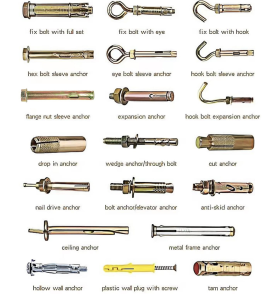
The alloy steel fastener product range includes bolts, nuts, studs, screws, washers and anchors, each designed for different installation and load-bearing scenarios. They are most commonly specified in sectors such as petrochemical processing, power generation, heavy machinery manufacturing, high-pressure equipment and pipeline construction.
Unlike carbon steel fasteners, which are defined primarily by carbon content, alloy steel fasteners derive their performance from both base chemistry and carefully controlled heat treatment. They are not inherently “better” than carbon steel across all use cases — they are a specialized solution for conditions that exceed the limits of plain carbon steel.
2. Alloying Elements and Their Effects on Fastener Performance
The performance characteristics of an alloy steel fastener are directly shaped by its chemical composition. Alloying elements are added in controlled proportions to target specific properties, most notably hardenability, high-temperature strength, toughness and wear resistance. These elements work in combination, and final performance depends on both total composition and heat treatment practice.
Key Alloying Elements and Their Functions
- Chromium (Cr): Improves hardenability and high-temperature strength, and provides mild corrosion resistance. It is a core element in chromium-molybdenum steels widely used for elevated-temperature fasteners.
- Molybdenum (Mo): Significantly enhances creep resistance at high temperatures and further improves hardenability. It is a defining element in grades specified for pressure vessel and petrochemical flanged joints.
- Nickel (Ni): Boosts impact toughness at low temperatures while maintaining ductility, making alloy steels suitable for sub-zero operating environments.
- Vanadium (V): Refines the steel’s grain structure, increasing hardness and fatigue resistance for high-strength, dynamically loaded joints.
- Boron (B): Improves hardenability at very low addition levels, offering a cost-effective way to achieve through-hardening in medium-strength fasteners.
Common Alloy Steel Systems for Fasteners
Typical alloy steel families used in fastener manufacturing include chromium-molybdenum steels, boron-alloyed steels and chromium-vanadium steels, each optimized for different operating priorities.
No single alloy steel formulation delivers maximum performance across all criteria. Higher alloy content generally improves temperature or toughness performance but may reduce machinability, increase material cost and require more precise heat treatment control.
3. Common Grades, Standards and Identification of Alloy Steel Fasteners
Alloy steel fasteners are classified by standardized performance grades, each tied to specific material requirements, heat treatment rules and minimum mechanical properties. The most widely referenced global standard systems are ASTM A193/A194 (for high-temperature bolting), SAE J429 (for inch-series industrial fasteners) and ISO 898-1 (for metric general-purpose fasteners).
3.1 Main Grade Standards and Performance Differences
Each grade corresponds to a defined set of mechanical requirements and a typical base material. The table below summarizes common alloy steel fastener grades for reference.
| Standard | Grade | Typical Base Material | Min. Tensile Strength (MPa) | Min. Yield Strength (MPa) | Typical Service Temperature Range | Primary Application |
| ASTM A193 / A194 | B7 | Chromium-molybdenum steel | ~860 | ~725 | -30°C to ~425°C | Petrochemical flanges, pressure vessels, high-temperature piping |
| ASTM A193 | B16 | Cr-Mo-V alloy steel | ~860 | ~725 | Up to ~550°C | High-temperature valves, boiler and power plant applications |
| SAE J429 | Grade 8 | Medium-carbon alloy steel | ~1034 | ~895 | Ambient to moderately elevated temperatures | Heavy machinery, high-strength structural joints |
| ISO 898-1 | Class 10.9 | Boron-alloyed / chromium steel | 1000 | 900 | -50°C to ~200°C | General high-strength industrial assemblies |
| ISO 898-1 | Class 12.9 | Alloy steel, quenched & tempered | 1200 | 1080 | Ambient to moderate temperatures | Ultra-high-strength precision and load-critical joints |
Note: Property values are reference ranges and may vary by product diameter, heat treatment practice and standard edition. Exact figures require verification against the latest official standard documents. Grades are not interchangeable without engineering review. ASTM grades are predominantly used for high-temperature and pressure-boundary service; ISO/SAE grades are more common for general mechanical and structural applications.
Higher strength grades do not automatically represent an upgrade — they are specified for particular load and temperature conditions and may carry trade-offs in ductility, toughness or hydrogen embrittlement sensitivity.
3.2 How to Identify Alloy Steel Fastener Grades
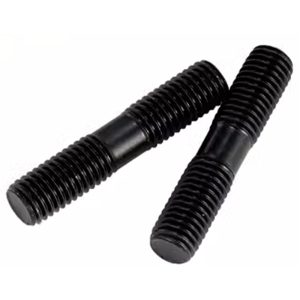
Genuine alloy steel fasteners carry permanent grade and material markings on the bolt head, stud end or nut face for traceability and on-site verification.
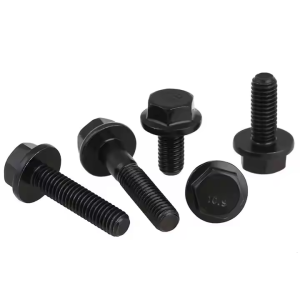
- Metric fasteners (ISO system): Marked directly with the property class number (e.g., 10.9, 12.9) and typically a manufacturer identification mark.
- Inch fasteners (SAE / ASTM system): Identified by radial lines, grade symbols or material letters. For example, SAE Grade 8 typically features 6 radial lines on the bolt head; ASTM A193 B7 studs are commonly stamped with “B7” and the manufacturer’s mark.
Fasteners without legible grade or material markings cannot be reliably verified for performance and should not be used in critical or load-bearing applications.
4. How Heat Treatment Shapes Alloy Steel Fastener Performance
The full performance advantage of alloy steel fasteners is only realized through controlled heat treatment. The primary benefit of alloying elements is improved hardenability — the ability to form a uniform hardened structure through the entire cross-section of the fastener, even in larger diameters. Plain carbon steel, by contrast, can only achieve surface hardening in larger sizes, leaving a softer, lower-strength core.
Quenching and Tempering (Q&T)
Virtually all high-strength alloy steel fasteners are supplied in the quenched and tempered condition:
- Quenching: The fastener is heated above its critical transformation temperature and rapidly cooled in oil or water to form a hard, high-strength martensitic structure.
- Tempering: The hardened fastener is reheated to a precisely controlled lower temperature, held, and then cooled. This step reduces brittleness and creates a controlled balance of strength, ductility and impact toughness.
Tempering temperature directly determines final properties:
- Lower tempering temperatures produce higher hardness and tensile strength but leave the material more brittle and more susceptible to hydrogen embrittlement.
- Higher tempering temperatures reduce ultimate strength but improve toughness, ductility and resistance to impact and fatigue loading.
High-strength quenched and tempered alloy steel fasteners are inherently more sensitive to hydrogen embrittlement, especially after acid-based electroplating processes. For this reason, post-plating hydrogen relief baking is a mandatory quality control step for many alloy steel fastener grades.
For critical alloy steel fastener applications, heat treatment records are an essential part of quality documentation and must be traceable to each production batch.
5. Key Selection Factors: Environment and Joint Requirements
There is no universal “best” alloy steel fastener grade. Optimal selection depends on matching material grade and heat treatment condition to both the operating environment and the mechanical demands of the joint.
5.1 Environmental Conditions and Material Matching
- Elevated temperature service: For continuous operation above 200°C, standard carbon steel experiences gradual strength loss. Chromium-molybdenum grades such as ASTM A193 B7 are widely used for service up to approximately 425°C. For higher temperatures up to roughly 550°C, vanadium-alloyed grades like B16 are typically specified.
- Low temperature service: Properly tempered alloy steels with verified Charpy impact toughness are required for sub-zero conditions to reduce the risk of brittle fracture.
- Corrosive environments: Standard structural alloy steel fasteners offer only marginal corrosion improvement over carbon steel. For mildly corrosive industrial atmospheres, protective coatings such as hot-dip galvanizing or zinc-aluminum flake coatings can extend service life. For highly corrosive chemical or marine environments, stainless steel or specialty alloy fasteners are generally more appropriate — standard alloy steels are not a substitute for corrosion-resistant alloys.
Alloy steel fasteners are selected primarily for mechanical and temperature performance, not for corrosion resistance.
5.2 Joint and Load Requirements for Selection
- Static loads: Moderate-strength alloy grades are usually sufficient for steady, non-cyclic loading when the fastener is properly sized.
- Dynamic / cyclic / fatigue loads: Quenched and tempered alloy grades with good toughness and fatigue resistance are required for joints subject to vibration, repeated loading or impact. Higher tensile strength alone does not guarantee better fatigue performance — balanced ductility and toughness are equally important.
- High preload / torque-controlled assemblies: Alloy steel grades with consistent hardness and predictable friction characteristics are preferred for critical bolted joints requiring precise preload, such as pressure vessel flanges and pipeline connections.
- Large-diameter fasteners: Alloy steels with high hardenability are essential for large bolts and studs, because plain carbon steel cannot achieve uniform through-hardening in larger cross-sections.
6. Procurement Documentation and Material Certificate Verification
Because alloy steel fasteners are most often used in safety-critical and high-stress applications, thorough documentation verification is essential to confirm material grade, heat treatment compliance and mechanical performance. Compared with carbon steel fasteners, alloy steel procurement requires additional verification of alloy composition, heat treatment records and specialized test data.
Core Technical Requirements for Purchase Orders
To avoid delivery mismatches and quality disputes, purchase specifications should clearly define:
- Applicable product standard and exact grade designation
- Required material specification and heat treatment condition
- Surface finish and coating specification
- Size, thread specification and tolerance class
- Any additional testing requirements (impact testing, hardness inspection, non-destructive testing)
Material Certificate (MTC / MTR) Verification
A valid Mill Test Certificate is the primary quality document for alloy steel fasteners. Procurement and quality teams should verify these key points, with special attention to alloy-steel-specific items:
- Chemical composition: Confirm that all alloying element percentages fall within the specified material grade range.
- Mechanical test results: Verify tensile strength, yield strength, hardness and elongation meet the minimum grade requirements.
- Heat treatment records: Confirm quenching and tempering temperatures, hold times and process compliance.
- Impact test data: Check for Charpy V-notch test results when low-temperature or high-toughness performance is required.
- Heat / lot number traceability: Match the batch number on the certificate to the product packaging and product markings.
- Coating / surface treatment report: Confirm coating type, thickness and corrosion test results if specified.
Incoming Inspection Checklist for Alloy Steel Fasteners
- Verify head / end markings match the ordered grade and material
- Confirm coating condition and absence of visible defects or thread damage
- Cross-reference MTC heat/lot numbers with shipment labels
- Perform spot hardness testing for high-criticality orders
- Review heat treatment batch records for large-diameter or high-temperature grade fasteners
7. Final Thoughts: Selecting Alloy Steel Fasteners Properly
Alloy steel fasteners deliver reliable performance in demanding industrial conditions, but only when specified correctly and sourced with verifiable quality. Follow this structured selection framework:
- Define the critical constraints: Identify the primary performance requirement — high temperature, high strength, low-temperature toughness or heavy cyclic load.
- Match the grade and alloy system: Select a standardized grade that meets the most demanding operating condition, without over-specifying unnecessarily.
- Confirm heat treatment compliance: Verify that the fasteners are supplied in the correct heat-treated condition for the specified grade.
- Validate quality through documentation: Require full material test certificates and perform appropriate incoming inspection.
When properly selected and installed, alloy steel fasteners provide a durable, cost-effective solution for joints that exceed the limits of standard carbon steel fasteners. For custom applications, extreme operating conditions or specialized project requirements, consult a qualified fastener engineer or supplier to obtain application-specific recommendations.












