






Understanding these differences is important when selecting the right product for a construction or industrial project. Choosing an anchor based only on its diameter or general product name may result in a mismatch between the fastener, base material, and installation conditions.
This guide explains the common types of anchor bolts and mechanical anchors, their structural characteristics, basic installation methods, and the main factors to consider when selecting and purchasing them.
1. What Are Anchor Bolts?
1.1 Definition and Basic Function of Anchor Bolts
Anchor bolts are fastening components designed to connect structural or non-structural elements to a supporting base material. In construction and industrial applications, they are commonly used to secure components to concrete foundations or other substrates suitable for the selected anchoring system.
Unlike ordinary bolts that typically connect two or more components through aligned holes and threaded engagement, anchor bolts transfer forces from an attached component into a supporting base material through an anchoring mechanism or an embedded section.
Common applications include:
- Securing steel columns and base plates to concrete foundations.
- Fixing machinery and equipment to concrete floors or foundations.
- Installing support brackets, frames, and mounting structures.
- Connecting structural components to concrete or other approved substrates.
- Securing certain fixtures and building components.
The specific function of an anchor depends on its design, installation method, base material, and the loads involved. Therefore, the appropriate product should be selected according to the actual connection requirements rather than its name alone.
1.2 Anchor Bolts and Concrete Anchors: Understanding the Terminology
The terms anchor bolts and concrete anchors are sometimes used interchangeably, but they do not always describe exactly the same product category.
In many construction applications, an anchor bolt refers to a threaded fastening component embedded in concrete, often during the concrete placement process. In broader commercial and product catalog contexts, the term may also be used to describe post-installed anchors that secure components to an existing concrete structure.
Concrete anchors can include several product categories, such as:
- Cast-in anchor bolts installed before or during concrete placement.
- Mechanical expansion anchors installed in pre-drilled holes.
- Internally threaded anchors designed to receive compatible bolts or threaded rods.
- Other anchoring systems designed for specific base materials and applications.
Mechanical anchors are generally installed after the base material has been formed. They develop their anchoring action through a mechanical mechanism, such as expansion against the sides of a drilled hole.
It is important to distinguish these products because their installation procedures, connection methods, and performance requirements are not identical. Product names can also vary between manufacturers and markets. Before ordering, buyers should confirm the exact anchor type, product design, and intended application with the supplier or project specification.
2. Common Types of Anchor Bolts and Mechanical Anchors
Anchor products are available in different designs to meet different installation and connection requirements. The following are common types used in construction and industrial fastening applications.
2.1 Cast-In Anchor Bolts
Cast-in anchor bolts are positioned in the required location before or during concrete placement. Once the concrete hardens, the embedded portion helps secure the bolt within the concrete, while the exposed threaded section provides a connection point for other components.
Common structural designs may include:
- Straight anchor bolts with an embedded section.
- Hooked anchor bolts.
- Bent anchor bolts.
- Anchor bolts with other specially designed embedded ends.
The appropriate design depends on the connection requirements and engineering specifications. For example, cast-in anchor bolts may be used to connect steel base plates or equipment supports to concrete foundations.
Accurate positioning is important during installation. The bolt location, projection above the concrete surface, orientation, and embedded length should be coordinated with the dimensions of the component being installed.
Because cast-in anchor bolts are installed as part of the concrete construction process, they differ from mechanical anchors that are inserted into drilled holes after the concrete has hardened.
2.2 Wedge Anchors
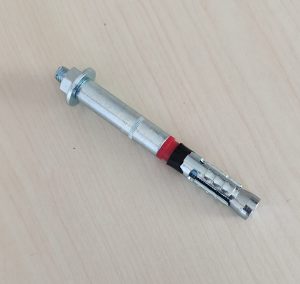
Wedge anchors are post-installed mechanical expansion anchors commonly used in suitable concrete applications.
A typical wedge anchor consists of a threaded stud and an expansion clip or wedge assembly near its lower end. During installation, tightening the nut draws the threaded stud upward, engaging the expansion mechanism and causing the wedge component to press against the sides of the drilled hole.
This mechanical expansion helps secure the anchor in the base material.
Common characteristics include:
- An externally threaded connection.
- An expansion mechanism near the embedded end.
- Installation in a pre-drilled hole.
- A requirement for the base material and installation conditions to meet the product specifications.
Wedge anchors are often selected for applications involving concrete fixtures, brackets, support structures, and equipment installations. However, suitability depends on the specific anchor design, concrete condition, load requirements, and installation details.
Buyers should check the specified drill-hole diameter, embedment requirements, edge distance, spacing, and installation procedure for the selected product. These details should not be assumed to be the same across different sizes or manufacturers.
2.3 Sleeve Anchors
Sleeve anchors are another type of post-installed mechanical anchor. They typically consist of a threaded bolt or stud and an expansion sleeve surrounding part of the anchor body.
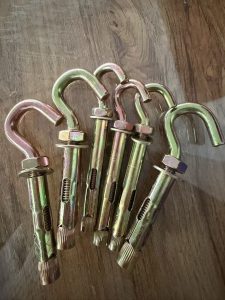
When the fastener is tightened, the expansion mechanism causes the sleeve to expand against the surrounding base material. This creates the mechanical anchoring action.
Depending on the design, sleeve anchors may be supplied with different head styles or connection configurations. Some versions use a nut and washer, while others have a different fastening arrangement.
Important characteristics include:
- A sleeve that expands during tightening.
- A threaded section for attaching the fixture or component.
- Different product configurations for different installation requirements.
- The need to match the anchor design to the base material and application.
Sleeve anchors and wedge anchors both use mechanical expansion, but their structures and expansion mechanisms are different. They should not automatically be treated as interchangeable.
Before purchasing, confirm the sleeve anchor’s dimensions, head or connection style, material, finish, base material suitability, and installation requirements.
2.4 Drop-In Anchors
Drop-in anchors are internally threaded mechanical expansion anchors designed to be installed in pre-drilled holes.
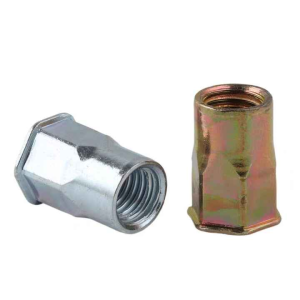
A typical drop-in anchor has an internal thread and an expansion component inside its body. During installation, a compatible setting tool is used to activate the expansion mechanism and secure the anchor in the base material.
After installation, a matching bolt or threaded rod can be screwed into the internal thread to create the required connection.
Their main characteristics include:
- An internally threaded body.
- An internal expansion mechanism.
- Installation using a compatible setting tool.
- A separate bolt or threaded rod for the final connection.
Drop-in anchors are commonly considered when a flush or internally threaded anchoring point is required. They differ from wedge and sleeve anchors, which generally provide an externally threaded connection as part of the anchor assembly.
The thread size of the anchor must match the bolt or threaded rod used for the connection. Buyers should also verify the required drill-hole dimensions, setting tool, embedment conditions, and approved base material. Suitability for a particular concrete condition should be confirmed through the product documentation.
3. Structural Differences and Installation Methods
Understanding the structure of an anchor helps buyers identify the product and understand how it creates a connection. Installation methods also vary according to the anchoring mechanism.
3.1 Key Structural Components of Different Anchor Types
Although different anchor products may contain threaded sections and expansion components, their structures are not identical.
| Anchor Type | Typical Structural Features | Anchoring Method | Connection Style |
|---|---|---|---|
| Cast-in anchor bolt | Threaded end and embedded section, which may be straight, hooked, or specially formed | Embedded during concrete placement | Usually an exposed external thread |
| Wedge anchor | Threaded stud and expansion clip or wedge assembly | Mechanical expansion in a drilled hole | External thread |
| Sleeve anchor | Threaded bolt or stud with an expansion sleeve | Sleeve expands against the hole wall | Usually an external threaded connection |
| Drop-in anchor | Internally threaded body and internal expansion component | Internal expansion activated by a setting tool | Internal thread for a separate bolt or threaded rod |
The table describes typical product configurations. Actual designs can vary by manufacturer and product series.
When comparing anchor products, buyers should pay attention to more than the visible shape. The expansion mechanism, connection type, dimensions, and installation requirements are equally important.
3.2 Installation Methods for Common Anchor Types
Each anchor type has its own installation process. The following descriptions explain general installation considerations, not a substitute for the manufacturer’s instructions or project-specific requirements. The exact sequence may vary depending on the anchor design and whether the product is installed before or through the fixture.
Cast-in anchor bolts
Cast-in anchor bolts are generally installed as part of the concrete construction process.
A typical sequence includes:
- Confirm the bolt layout and required positions against the project drawings.
- Position and secure the anchor bolts using an appropriate template or fixing arrangement.
- Check alignment, spacing, projection, and orientation before concrete placement.
- Place the concrete while maintaining the specified bolt positions.
- Allow the concrete to reach the required condition before installing the connected component.
- Check the exposed threads and connection dimensions before final assembly.
The positioning and fixing method should prevent unintended movement during concrete placement.
Wedge anchors
A typical wedge anchor installation process includes:
- Confirm the required anchor size, installation location, and approved base material.
- Drill a hole using the specified diameter and depth.
- Clean the hole using the method required by the product instructions.
- Position the fixture over the hole if the product is designed for through-fixture installation. For other approved installation arrangements, follow the manufacturer’s specified sequence.
- Insert or drive the anchor into the hole to the required embedment depth, as directed by the product instructions.
- Install or position the washer and nut as required, then tighten the anchor using the specified installation torque and procedure.
The hole dimensions, embedment depth, and tightening requirements must match the selected product. Some wedge anchors are designed to be installed through the fixture, so the installation sequence should not be assumed to be identical for every model.
Sleeve anchors
A typical sleeve anchor installation process includes:
- Identify the required anchor size, connection style, and suitable base material.
- Drill the hole according to the product specifications.
- Remove drilling dust and debris as required.
- Position the fixture and insert the sleeve anchor through its mounting hole if the product is designed for through-fixture installation. Otherwise, follow the specified pre-installation sequence.
- Position the anchor to the required depth and ensure the fixture is correctly aligned.
- Tighten the fastener according to the manufacturer’s instructions so that the sleeve expands as designed.
The sleeve must be installed correctly so that its expansion mechanism can operate as intended. Hole dimensions, embedment requirements, and tightening procedures vary by product.
Drop-in anchors
A typical drop-in anchor installation process includes:
- Confirm the internal thread size and compatible setting tool.
- Drill a hole to the specified diameter and depth.
- Clean the hole according to the installation instructions.
- Insert the drop-in anchor into the hole in the orientation specified by the manufacturer.
- Use the compatible setting tool to activate the expansion mechanism.
- Check that the anchor has been set according to the product instructions.
- Install the matching bolt or threaded rod into the internal thread.
Using an unsuitable setting tool or failing to complete the setting operation can affect the installation.
For all post-installed mechanical anchors, the actual drilling, cleaning, positioning, setting, and tightening requirements should be taken from the technical documentation for the specific product.
3.3 Why Correct Installation Matters
Correct installation is essential to achieving the intended anchoring performance. Even a suitable anchor product may not perform as designed if the installation conditions do not meet its requirements.
Several factors deserve attention:
- Drill-hole dimensions: An incorrect hole diameter or depth may prevent the anchor from being installed as specified.
- Hole cleanliness: Dust and drilling debris can interfere with installation for products that require a clean hole.
- Embedment depth: The anchor must be installed to the specified depth.
- Edge distance and spacing: The location of an anchor relative to concrete edges and neighboring anchors can affect the connection design.
- Base material condition: Cracks, deterioration, insufficient thickness, or other substrate conditions may influence product suitability.
- Installation tools: Some anchors require specific setting tools or installation equipment.
- Tightening procedure: The specified tightening method and torque, where applicable, should be followed.
Installation requirements differ among anchor types and product models. A procedure suitable for one wedge anchor should not automatically be applied to a sleeve anchor or drop-in anchor.
For structural applications, installation should follow the approved design documents, applicable requirements, and manufacturer’s instructions. Where required, installation should be performed or supervised by appropriately qualified personnel.
4. Key Factors to Consider When Selecting Anchor Bolts
Selecting the right anchor involves more than matching a product name or nominal diameter. The base material, load requirements, installation environment, and connection design all influence the choice.
4.1 Base Material and Concrete Conditions
The base material is one of the first factors to evaluate when selecting anchor bolts.
Different anchoring products are designed for different substrates. An anchor intended for a particular concrete application should not automatically be assumed suitable for masonry, hollow blocks, or other materials.
Important considerations include:
- Base material type: Determine whether the anchor will be installed in concrete, solid masonry, hollow masonry, or another substrate.
- Concrete condition: Check whether the concrete is cracked or uncracked when this distinction is relevant to the product and design.
- Concrete strength: Confirm that the base material meets the requirements of the selected anchor.
- Base material thickness: Ensure that sufficient material is available for the required embedment and connection design.
- Existing damage: Cracks, deterioration, voids, or other defects may affect anchor suitability.
- Installation location: Consider the distance from edges, openings, and adjacent anchors.
Not all mechanical anchors are suitable for every concrete or masonry condition. Some products may have specific limitations regarding cracked concrete, concrete strength, masonry type, or installation location.
The applicable product documentation and engineering design should determine whether an anchor is suitable for the intended base material.
4.2 Load Requirements and Anchor Performance
Anchor selection must account for the forces transferred through the connection.
Two common load directions are:
- Tension: A force that pulls the anchor away from the base material.
- Shear: A force that acts across the anchor, generally parallel to the supporting surface.
Some connections are subject to both tension and shear. Other applications may involve vibration, repeated loading, or changing load conditions.
When evaluating anchor performance, consider:
- The expected load direction and magnitude.
- Whether tension and shear act separately or together.
- The number and arrangement of anchors.
- The anchor’s embedment and installation conditions.
- The base material and its properties.
- The distance between anchors and from the anchor to the edge of the base material.
- Potential failure modes of the anchor and base material.
- The design requirements and applicable performance documentation.
Anchor capacity cannot be determined from the anchor diameter alone. The performance of the complete connection depends on the anchor, the base material, the installation conditions, and the design arrangement. Depending on the application, relevant failure modes may include anchor steel failure, pullout, concrete breakout, or other substrate-related failures.
For structural or safety-critical applications, selection should be based on appropriate engineering calculations and verified product performance data. Generic product descriptions or nominal dimensions are not sufficient to establish a safe load rating.
4.3 Installation Environment and Exposure Conditions
The installation environment can influence the material and surface finish required for an anchor.
For example, an anchor installed in a dry indoor environment may face different exposure conditions from one used outdoors or in a location exposed to moisture or corrosive substances.
Consider the following factors:
- Indoor or outdoor use: Outdoor applications may involve rain, condensation, or changing environmental conditions.
- Moisture exposure: Areas with persistent moisture may require additional corrosion protection.
- Corrosive environments: Industrial or coastal environments may expose fasteners to substances that accelerate corrosion.
- Temperature conditions: High or low temperatures may influence material selection and product suitability.
- Chemical exposure: Contact with certain chemicals may affect the durability of the anchor or its protective finish.
Common material and finish options may include carbon steel with a protective coating or stainless steel. However, the correct choice depends on the actual exposure conditions and product specifications.
A coating or material should not be described as universally corrosion-proof. Buyers should verify the material grade, coating type, applicable test information, and environmental limitations before making a decision.
4.4 Connection Design and Compatible Components
The anchor must also match the component being secured.
Even when an anchor is suitable for the base material, an incompatible thread or connection arrangement can prevent correct assembly.
Check the following details:
- Thread diameter and pitch: Confirm that the anchor thread matches the mating nut, bolt, or threaded rod.
- Connection length: Ensure that sufficient thread engagement is available for the intended assembly.
- Fixture hole size: Check that the hole in the attached component is compatible with the anchor.
- Fixture thickness: Confirm that the exposed threaded length or anchor configuration accommodates the component.
- Nuts and washers: Verify that the supplied or separately purchased components are compatible with the anchor.
- Installation clearance: Consider whether there is enough space for the anchor, fastening tools, and final assembly.
The connection arrangement differs between anchor types. For example, a drop-in anchor uses an internal thread to receive a separate bolt or threaded rod, while many wedge anchors provide an external threaded section.
These differences should be considered during product selection and procurement to avoid ordering incompatible components.
5. Anchor Bolt Specifications and Installation Requirements
Once the application and anchor type have been identified, the next step is to confirm the product specifications and installation conditions.
5.1 Key Dimensions and Product Specifications
A complete product specification helps ensure that the selected anchor matches the intended application.
Depending on the product type, important specifications may include:
| Specification | What to Check |
|---|---|
| Product type | Cast-in anchor bolt, wedge anchor, sleeve anchor, drop-in anchor, or another specified design |
| Nominal diameter | The specified anchor or threaded section diameter |
| Overall length | The total product length according to the manufacturer’s dimension definition |
| Thread specification | Thread diameter, pitch, and applicable thread standard |
| Embedment requirements | Required embedment or setting depth for the selected product |
| Material | Carbon steel, stainless steel, or another specified material |
| Surface finish | The required coating or surface treatment |
| Connection components | Compatible nuts, washers, bolts, or threaded rods |
| Product configuration | Head style, sleeve design, internal thread, or other structural details |
Not every specification applies to every anchor type. For example, an internally threaded drop-in anchor and an externally threaded wedge anchor have different connection dimensions.
Buyers should therefore use the manufacturer’s drawing or technical data sheet for the exact product rather than applying a generic dimension checklist without adjustment.
5.2 Drilling, Embedment, Edge Distance, and Spacing
For post-installed anchors, installation dimensions are particularly important.
Before installation, confirm the following:
- Drill-hole diameter: The diameter must match the requirements of the selected anchor.
- Drill-hole depth: The hole must be deep enough for the specified installation.
- Embedment depth: The anchor must reach the required setting or embedment position.
- Edge distance: The anchor must be located at an appropriate distance from the edge of the base material.
- Anchor spacing: The distance between neighboring anchors must meet the applicable design and product requirements.
- Base material thickness: The supporting material must be suitable for the required installation.
These dimensions are related but are not interchangeable. For example, drill-hole depth and effective embedment depth do not necessarily refer to the same measurement.
The required values depend on the anchor model, diameter, base material, and design conditions. They should be obtained from the relevant technical documentation rather than assumed from another product.
For cast-in anchor bolts, the corresponding checks include positioning, embedded length, projection above the concrete surface, spacing, and coordination with the connected component.
5.3 Applicable Standards and Technical Documentation
Product standards and technical documentation help buyers determine whether an anchor meets the requirements of a particular application or market.
Depending on the product and project, relevant information may include:
- Product standards and dimensional specifications.
- Material specifications.
- Design or construction requirements applicable to the project.
- Product performance assessments or approval documents, where applicable.
- Manufacturer technical data sheets.
- Installation instructions.
- Test reports and quality records.
Not every anchor product is covered by the same standard or approval system. A standard applicable to one mechanical anchor type should not automatically be treated as applicable to another product category.
When reviewing technical documents, confirm:
- The exact product type and model covered.
- The standard number and edition, where relevant.
- The material and dimensional specifications.
- The approved base materials and application conditions.
- The performance information and its stated limitations.
- The installation instructions associated with the product.
For international procurement, buyers should also identify the requirements of the destination market and the project specification. If a particular certification or approval is required, it should be confirmed for the exact product being purchased.
6. What to Check Before Purchasing Anchor Bolts
For distributors, contractors, and industrial buyers, purchasing the correct anchor begins with a clear technical specification. Providing only a general product name may not give a supplier enough information to identify the required item.
6.1 Confirm Product Type and Application Requirements
Start by defining the intended application and the type of anchor required.
Before requesting a quotation, confirm:
- Whether the project requires cast-in anchor bolts or post-installed anchors.
- Whether the required mechanical anchor is a wedge, sleeve, drop-in, or another type.
- The base material in which the anchor will be installed.
- The component or fixture that needs to be secured.
- The expected load conditions and relevant project requirements.
- Whether the product must meet a specific standard or approval requirement.
A clear product description reduces the risk of receiving an anchor that looks similar but uses a different anchoring mechanism or connection arrangement.
For example, a request for a drop-in anchor should specify the required internal thread size and compatible connection arrangement, rather than simply asking for a concrete anchor.
6.2 Verify Dimensions, Materials, and Product Compatibility
After confirming the product type, review its detailed specifications.
A purchasing checklist may include:
- Product model and structural design.
- Nominal diameter and overall length.
- Thread diameter and pitch.
- Embedment or installation dimensions.
- Material grade and surface finish.
- Required nuts, washers, bolts, or threaded rods.
- Applicable drawings and dimensional tolerances.
- Packaging and quantity requirements.
If the product is part of a larger assembly, confirm the compatibility of all mating components.
For customized or project-specific requirements, buyers should provide drawings or a detailed specification sheet where available. Any changes to dimensions, materials, or finishes should be confirmed before production or order acceptance.
6.3 Review Quality Documents and Supplier Information
Technical and quality documentation provides additional information for evaluating whether the supplied product matches the order requirements.
Depending on the project and product, buyers may request or review:
- Product drawings and specification sheets.
- Material certificates or material information, where applicable.
- Surface treatment specifications.
- Relevant product test reports or approval documents.
- Inspection records and batch identification.
- Packaging and product labeling information.
The required documents should be agreed upon before ordering. Their availability depends on the product, supplier, manufacturing arrangement, and project requirements.
Buyers should also ensure that the final order clearly records the agreed product type, dimensions, material, finish, quantity, and any required technical documentation.
A well-defined purchasing specification helps reduce misunderstandings between buyers and suppliers and makes it easier to check the delivered products against the original requirements.
7. Common Mistakes When Selecting and Installing Anchor Bolts
Some anchor selection and installation problems occur because buyers or installers focus on only one product feature while overlooking other important conditions.
The following mistakes are worth avoiding.
| Common Mistake | Why It Matters | Better Practice |
|---|---|---|
| Treating all anchor bolts as the same product | Different anchor types use different structures, anchoring mechanisms, and installation methods | Confirm whether the requirement is for a cast-in bolt or a specific post-installed anchor |
| Choosing an anchor based only on diameter | Diameter alone does not establish product suitability or connection performance | Consider the base material, loads, embedment, and connection design |
| Ignoring base material conditions | An anchor may not be approved or suitable for the actual substrate | Confirm the material type, condition, and product limitations |
| Using incorrect drilling or embedment dimensions | Incorrect installation dimensions can prevent the anchor from being installed as specified | Follow the exact product installation instructions |
| Selecting incompatible fasteners and accessories | Mismatched threads or connection components can prevent proper assembly | Check thread size, pitch, engagement, and component compatibility |
| Overlooking technical documents | A general product description may not confirm the required performance or application suitability | Review drawings, specifications, installation instructions, and relevant approvals |
These issues are especially important in structural and equipment installation applications, where the anchor is part of a larger load-transfer system.
A careful review of the product specification before ordering, followed by correct installation, helps reduce avoidable selection and assembly problems.
8. FAQs About Anchor Bolts
8.1 What Are Anchor Bolts Used For?
Anchor bolts are used to secure structural components, equipment, brackets, and other fixtures to a supporting base material, commonly concrete. Typical applications include steel base plates, machinery foundations, support structures, and building components. The specific anchor type depends on the connection design and installation conditions.
8.2 What Is the Difference Between Wedge Anchors and Sleeve Anchors?
Both wedge anchors and sleeve anchors are post-installed mechanical expansion anchors, but their structures differ.
A wedge anchor typically uses an expansion clip or wedge assembly near the embedded end of a threaded stud. A sleeve anchor uses an expansion sleeve surrounding part of the anchor body. Their installation details and product configurations may also differ, so the two should not be treated as automatically interchangeable.
8.3 Are Drop-In Anchors Suitable for Every Concrete Application?
No. Drop-in anchors have specific installation and application requirements. Their suitability depends on factors such as the concrete condition, product design, internal thread size, embedment requirements, and load conditions. Buyers should check the manufacturer’s technical documentation and the project design before selecting one.
8.4 How Do I Choose the Right Size of Anchor Bolt?
The correct size depends on more than the nominal diameter. Buyers and engineers should consider the required connection, load conditions, base material, anchor type, embedment, fixture dimensions, thread compatibility, and applicable design requirements. For structural applications, the final selection should follow the relevant engineering design and verified product data.
8.5 Can Anchor Bolts Be Used in Cracked Concrete?
Some anchor products may be approved for use in cracked concrete, while others may have different limitations. Suitability depends on the exact product, its supporting performance documentation, the installation conditions, and the engineering design. Do not assume that every mechanical anchor is suitable for cracked concrete.
8.6 What Information Should I Provide When Ordering Anchor Bolts?
A useful purchasing specification should include the anchor type, product dimensions, thread details, material, surface finish, quantity, base material, application, and any applicable standards or approval requirements. Drawings and technical documents can also help the supplier confirm the correct product configuration.
9. Conclusion
Anchor bolts include different products with distinct structures, anchoring mechanisms, and installation requirements. Cast-in anchor bolts are installed as part of concrete construction, while post-installed mechanical anchors such as wedge anchors, sleeve anchors, and drop-in anchors are installed in prepared holes using different expansion mechanisms.
Choosing the right product requires a clear understanding of the base material, load requirements, installation environment, connection design, and product specifications. Buyers should also verify compatible components, installation dimensions, and relevant technical documents before placing an order.
For construction contractors, engineers, and fastener distributors, a detailed product specification is an important starting point for sourcing suitable anchor products. Confirming the exact anchor type and application requirements helps ensure that the selected product matches the intended project needs.





