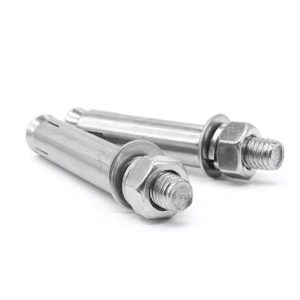
Many sourcing problems with industrial fasteners do not begin on the production floor. They begin earlier, when a buyer evaluates an industrial fasteners supplier in China on the wrong criteria: a low quotation, a polished catalogue, a folder of certificates, a reassuring answer about capacity. Each of those signals is easy to produce and hard to verify. None of them tells you whether the supplier can make your part, to your standard, consistently, and take responsibility when something goes wrong.
This checklist is written for purchasing teams, importers and distributors who are selecting a supplier and who cannot rely on frequent site visits. It sets out what to verify, in what order, what evidence to ask for, and which answers should stop a project rather than slow it down. The sequence matters: entity verification comes before capability, capability before documentation, documentation before commercial terms. Skip a layer, and every later conclusion rests on an assumption you never tested.
What “Evaluation” Has to Cover Before You Compare Quotes
Fasteners are low-value, high-consequence components. A container of bolts is a small line in a purchase budget; a batch that fails at assembly becomes a line in a production stoppage, a rework order and a customer complaint. That asymmetry is why price-first comparison is structurally misleading. A quotation is a claim about a future outcome, and a claim carries no evidence of its own.
Evaluation therefore has four layers, and they must be worked in order:
- Entity reality. Is the company you are talking to the company that will manufacture, invoice, receive payment and export the goods?
- Manufacturing capability. Can it run your process route in-house, with controlled heat treatment and finishing, at a consistent batch-to-batch standard?
- Quality evidence. Do the documents it issues bind to the material and batches actually shipped?
- Commercial and delivery terms. Are acceptance criteria, claims and packaging obligations written down before the first order?
If layer one fails, layers two to four are irrelevant, because you are collecting evidence about a party that may not be the manufacturer. The common failure chain runs exactly this way: unverified entity, accepted verbal capacity claim, a good sample, a first bulk order that drifts on material or heat treatment, and no documentary basis for a claim.
Use this article as a working document rather than a reading exercise. For each item, record the evidence you received and mark it either blocking (do not place an order until resolved) or open (acceptable with a documented follow-up).
Defining the Scope: What Counts as an Industrial Fastener Order
Before evaluating any supplier, define precisely what you are buying. “Industrial fasteners” covers a wide set of product families with different process routes, different equipment, and often different suppliers.
Product families typically grouped under the term
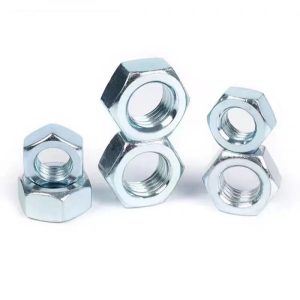
A more useful grouping: by process route
- Cold- or warm-headed parts, which account for most standard bolts, screws and nuts
- Turned parts, for small volumes, large diameters and non-standard geometries
- Stamped and pressed parts, such as washers and brackets
- Cast or forged specials
Process route determines which machines, which tooling and which secondary operations a supplier must control. Cold heading, thread rolling, heat treatment and coating are four separate capabilities, and a supplier strong in one is not automatically competent in the others. When a single RFQ mixes cold-headed standard parts with turned specials and a zinc-flake finish, you are often asking one supplier to subcontract two of the three, and to own quality it does not control.
Splitting the RFQ
Split by process route and by standard-versus-custom status. Standard parts can be quoted from a standard number plus size, property class and coating. Custom parts require a complete drawing and a written technical package before any price is meaningful.
| RFQ dimension | Standard part | Custom part |
| Primary input | Standard number, size, property class, coating | Drawing plus technical package |
| Tooling | Existing, usually no charge | New tooling, quoted separately |
| Sample basis | Catalogue sample | First article from production tooling |
| Comparison basis | Price per 1,000 at fixed specification | Price plus tooling, MOQ and validation cost |
Standard Alignment: GB/T, ISO, DIN and ANSI Are Not Interchangeable
This is the single most consequential misunderstanding in Chinese fastener sourcing. A supplier that says “we make to national standard” is describing its domestic production and inspection baseline. Your order may be written to ISO, DIN, ANSI/ASME or ASTM. The translation between the two happens at three levels: drawing, tooling and inspection. If any one of them is left to assumption, the delivered part will differ from the specified part in ways that appear only at inspection or at assembly.
Mechanical properties
The ISO 898-1 property-class system (8.8, 10.9, 12.9 and similar) is the reference most export orders use. The class designation encodes two things: the first digit gives nominal tensile strength in units of 100 MPa, and the second gives the ratio of nominal yield strength to nominal tensile strength. The actual minimum values are tabulated in the standard and do not always follow that shorthand exactly. Class 12.9, for example, carries a specified minimum tensile strength of 1220 MPa, not 1200. Quote the class, then test the properties rather than reading the number as a specification.
GB/T 3098.1 addresses the same subject for the Chinese market and uses a comparable class system, but it is a separate national standard. Matching class numbers is not the same as matching material specification, hardness limits, decarburization allowance or test methods. If you need class 10.9, specify the standard, the material restriction and the test regime, not just the number.
Dimensional standards
Head dimensions, thread length, across-flats and tolerance classes differ between systems, even for parts that look identical in a photograph.
| Function | ISO | DIN | ANSI/ASME | GB/T |
| Hex bolt, partially threaded | ISO 4014 | DIN 931 | ASME B18.2.1 | GB/T 5782 |
| Hex bolt, fully threaded | ISO 4017 | DIN 933 | ASME B18.2.1 | GB/T 5783 |
| Hex nut | ISO 4032 | DIN 934 | ASME B18.2.2 | GB/T 6170 |
| Plain washer | ISO 7089 | DIN 125 | ASME B18.22.1 | GB/T 97.1 |
| Structural bolting assemblies, non-preloaded | EN 15048 | — | — | — |
| Structural bolting assemblies, preloaded | EN 14399 | — | — | — |
| High-strength structural bolts | — | — | ASTM F3125 | GB/T 1228 |
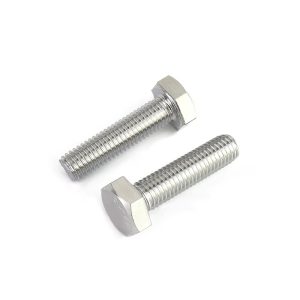
Standard numbers only. Confirm the current edition of each before it enters a purchase order.
Note the different objects in the last three rows. The European structural standards govern bolting assemblies tested as assemblies; ASTM F3125 and GB/T 1228 govern the bolts themselves. They are not interchangeable points of reference, and quoting one against the other produces a specification nobody is measuring against.
Thread and tolerance
External threads on bolts are normally tolerance class 6g and internal threads in nuts 6H, with acceptance by go/no-go gauges. State the tolerance class and the gauge practice in the technical package, because “standard thread” is not a specification.
The technical package: six items for every RFQ
- Material grade, with an explicit statement on permitted substitutions
- Property class, or tensile and hardness requirements where no class applies
- Dimensional standard and thread tolerance class
- Coating type, coating class and any salt-spray requirement
- Marking and traceability requirements
- Inspection document type required, as set out in the section on quality documents
| Missing item | Typical consequence |
| Material substitution clause absent | Supplier offers an equivalent-grade substitute; properties differ at the margin |
| Property class only, no test regime | Class marking present, hardness and decarburization not verified |
| Dimensional standard omitted | Head size or thread length to a different system |
| Coating class omitted | Thickness and corrosion performance vary between lots |
| Traceability omitted | Certificate cannot be tied to the shipped batch |
Supplier Entity Types in China and What Each One Owes You
The second common failure is evaluating a trading company as if it were a factory. An industrial fasteners supplier in China can take three legal and operational forms, and each carries a different accountability boundary — a different answer to the question “who is responsible if the parts are wrong.”
Three entity types
| Entity type | Strength | Structural risk | What to lock in the contract |
| Manufacturing plant | Direct control of the process chain; auditable; owns process responsibility | Export documentation and compliance experience may be thin; product range may be narrow | Named production site; process route; in-house versus outsourced operations |
| Trading or export company | Strong on export procedures, documentation, customer handling and product range | Process responsibility is relayed rather than owned; can switch source factories | The actual manufacturing site must be named, and any change requires written approval |
| Mill-linked agent or wire agent | Strong on raw material supply and grade control | Weak on heading, heat treatment and finishing; may broker finished parts from elsewhere | Whether material and finished part come from the same controlled chain |
Entity verification: three documents, one consistency test
- Business license. Confirm the legal name, the unified social credit code, the registered address, and whether the business scope includes fastener manufacturing. A scope listing only “sales of hardware” tells you the entity is not the producer.
- Customs consignee or consignor registration. This confirms the entity can export in its own name. If it cannot, a third party will appear on the export documents, and that third party becomes part of your chain.
- Consistency across four roles. The quoting entity, the contracting entity, the receiving entity and the entity named on export documents should be the same legal person. Any mismatch needs a written explanation and, if accepted, a contractual guarantee from the entity you can actually pursue.
Sample source and bulk source
One further check is often skipped: ask which factory produced the sample and which factory will produce the bulk order. A confident answer naming a specific site is a good sign. A vague answer is a warning that the sample may have been brokered from elsewhere.
Capability Evidence: What to Ask For Instead of What to Accept
Suppliers commonly describe themselves as having large capacity and short lead times. Those statements are not evidence and cannot be compared between suppliers. Replace them with artifacts you can inspect.
Process chain inventory
Walk the route and ask, for each step, whether it is in-house or outsourced:
- Heading, cold or warm
- Thread rolling versus thread cutting
- Heat treatment: quenching and tempering, stress relief, de-embrittlement baking
- Surface finishing: zinc electroplating, zinc-nickel, zinc flake, hot-dip galvanizing
- Sorting, gauging and packaging
Heat treatment is the question that matters most
For property classes 10.9 and above, three things depend on whether heat treatment is under the supplier’s control: batch-to-batch consistency of mechanical properties, hydrogen embrittlement risk after coating, and heat-number traceability from raw material to finished carton. None of them can be verified downstream.
If heat treatment is outsourced, ask which furnace is used, what incoming verification the supplier performs on treated lots, and how the outsourced heat number is carried into the inspection certificate. If the answer is “we trust them,” you have found the weakest link in the chain.
Evidence that substitutes for a capacity claim
| Claimed by supplier | Evidence to request instead |
| “Large monthly capacity” | Dispatched volumes for comparable parts over the last 12 months, redacted |
| “Modern equipment” | Equipment list with machine type, size range and nameplate photographs |
| “Stable tooling” | Tooling register with die life, maintenance interval and replacement policy |
| “Fast sampling” | Sample lead time stated per process route, with the production step the sample is taken from |
| “Short lead time” | Current production schedule extract for the relevant work center |
Tooling, samples and MOQ
Clarify early whether the sample is produced from production tooling or made by hand; who pays sample and tooling cost; who owns the tooling; and whether the tooling can be transferred if you change supplier. A sample produced by turning rather than heading proves nothing about a cold-headed production part.
Minimum order quantity is rarely a single number. It is the sum of the supplier’s economic batch size, tooling amortization, the material mill’s minimum, and the minimum load for a coating bath. Ask for the breakdown, then ask which element drives the number. If coating bath load is the driver, consolidating two similar parts may reduce the MOQ without changing the process.
Two verification actions worth the cost
A video factory walk that follows the process order rather than a curated tour, and an unannounced dimensional and hardness check on a sample the supplier believes has already been accepted.
Quality Documents and Inspection: Reading Evidence, Not Cover Pages
A folder of certificates is not quality evidence. What matters is whether the document is specific to your batch, contains measured values, and can be tied to the parts in your carton.
Reading a quality management certificate
Check the scope statement. It must cover fastener manufacturing and the actual production address, not a group headquarters or a trading office. Check the issuing body and the certificate’s current validity status. ISO 9001 is the baseline. IATF 16949 is relevant only when your supply chain requires automotive-level process control. ISO 14001 concerns environmental management and is not a product quality signal; treat it as background rather than evidence.
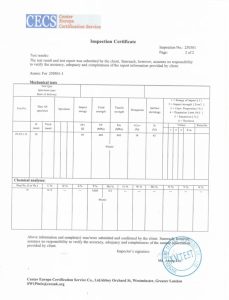
Inspection document types
Under EN 10204, a type 3.1 inspection certificate is issued by the manufacturer’s authorized inspection representative, organizationally independent of production, and reports specific test results for the supplied batch with heat traceability. A type 3.2 certificate adds independent verification by a third party or the buyer’s designated inspector. Because that witnessing happens during testing, a 3.1 cannot be upgraded to a 3.2 after the fact. In fasteners, ISO 16228 defines the corresponding document types, which is the more precise reference for this product family.
| Document | Issued by | Covers | Usable as |
| EN 10204 type 2.1 / ISO 16228 F2.1 | Manufacturer | Declaration of compliance, no test values | Low-risk standard parts only |
| EN 10204 type 3.1 / ISO 16228 F3.1 | Manufacturer’s independent inspection | Measured values, heat traceability | Default requirement for engineering parts |
| EN 10204 type 3.2 / ISO 16228 F3.2 | Manufacturer plus independent witness | F3.1 content with third-party verification | Safety-critical, structural, regulated |
| Third-party inspection report | Inspection agency or laboratory | Sampling results at an agreed stage | Shipment release input, not a substitute for the mill certificate |
Test results to request, matched to the part
Tensile or proof load, hardness at surface and core, decarburization depth, thread gauging results, salt-spray performance for the specified coating class, hydrogen embrittlement assessment where high-strength coated parts apply, and assembly torque or preload data where the application requires it.
Binding the document to the goods
The heat or batch number on the certificate must appear on the packaging label of the shipped cartons. A perfect certificate for a different heat is worse than no certificate, because it looks like assurance.
Where third-party inspection fits
Decide three things in advance: who inspects, at which stage, and against which sampling plan. Who means an international inspection agency, an independent laboratory or your own representative. Which stage means pre-production, during production or pre-shipment. Which plan means an AQL level or full inspection on defined characteristics.
Be clear about what inspection does not do. It samples a moment in time and does not transfer product liability. The purchase contract still has to define acceptance.
Destination compliance
Confirm what your market actually requires before writing it into a supplier’s obligations. For construction products in the EU, CE marking for structural bolting applies to bolting assemblies tested as assemblies under the relevant harmonized standards. Separate bolts or nuts that have not been tested as an assembly lot fall outside that route and cannot carry CE marking on that basis. Elsewhere, RoHS and REACH SVHC declarations, and UKCA where applicable, are documentary requirements to confirm per product and per market rather than assumptions to carry between destinations.
Sample and Pre-Production Validation: A Sequence, Not a Formality
A passing sample answers one question: can this supplier make one part to drawing? It does not answer whether the process holds across a batch. Close that gap with a fixed sequence.
The sequence
- Technical package sign-off. The supplier confirms in writing, line by line, what it will make, including any point it intends to interpret.
- Sample, with declared provenance. Ask which step produced it. Only a production-tooled sample is useful.
- Sample verification. Full dimensional inspection against the drawing, plus property and coating checks against the technical package, performed by you or a laboratory you appoint rather than by the supplier alone.
- Pilot batch. A small run on production equipment to test process stability, tooling wear and batch-to-batch consistency.
- First article approval. A documented approval that closes the loop: drawing version, technical package, inspection results and any approved deviations.
- Production release. Only after approval, with the approved documents as the reference for incoming inspection.
Typical breakpoints
In rough order of frequency:
- Sample turned, production cold-headed
- Sample heat-treated as a single piece, production treated in a batch
- Sample inspected 100 percent, production sampled against an unstated plan
- Sample coated on a different line from the production coating line
Change control
Any change of material source, heat-treatment subcontractor, coating subcontractor or tooling must trigger re-approval. Write this into the contract, not into an email.
Packaging, Marking, Delivery Terms and Export Documents
Correct parts can still fail on arrival because packaging was never specified.
A packaging specification should state
Quantity per inner box and per carton, inner packaging material and corrosion protection such as desiccant or VCI where specified, carton grade and stacking limits, pallet size and wrapping, label content and barcode rule, and where the batch or heat number is printed. Ambiguity here produces mixed batches, damaged threads and receiving disputes.
Marking and traceability
Head marking — property class, manufacturer mark, size — must match the label and the certificate. Mixed batches in one carton are a traceability failure even when every part is individually correct.
Trade terms
FOB, CIF and DDP transfer different obligations at different points. Quotations are comparable only when they use the same term, the same port and the same packaging basis. Otherwise you are comparing two different products.
Export documents
Expect a commercial invoice, packing list, export declaration, certificate of origin as required by the destination, and the compliance documents identified for your market. Confirm which certificate of origin type applies rather than accepting a default.
Transit and calendar planning
Mode selection follows from volume, value density and the consequence of delay. Production and sailing schedules around Chinese New Year deserve a specific conversation with each supplier, because shutdown and restart patterns differ by region and by factory. Treat any calendar assumption as something to verify with the supplier rather than a general rule.
Commercial Terms and Risk Allocation
Normalize quotations before comparing them
Require every quote to carry the same fields: drawing or standard version, material, property class, coating, packaging, MOQ, tooling cost, sample cost, trade term, quotation validity and payment terms. A quote missing three of these is not a lower price. It is a different scope.
Payment structure
Deposit and balance split, payment against shipping documents, and letters of credit where order value or a new relationship justifies the cost. The general principle is that payment timing should track verified progress.
Quality clauses that decide who pays
Name the acceptance standard and the sampling method, not just “quality to be guaranteed.” Define the treatment of non-conforming goods — rework, replacement, debit or return — the claim window, and who bears the burden of proof and the cost of evidence.
Change control, tooling ownership and liability
State drawing and tooling ownership, exclusive use of your tooling, and a no-subcontracting clause for the manufacturing process. Keep liability and force majeure wording to conventional commercial practice. This article is not legal advice, and governing law and arbitration venue should be decided with your counsel.
Communication Protocol and Escalation Path
Named contacts, with backups. One commercial contact and one technical contact, identified by name. A salesperson answering technical questions on behalf of the process engineer is a warning sign, not a convenience.
Written change control. Technical deviations, waivers, concessions and schedule changes must be confirmed in writing. Messaging apps are fine for speed and useless as a record.
RFQ response quality is itself an evaluation item. Score the response on four dimensions: technical compliance against each line of the package, completeness, transparency about points the supplier cannot meet, and timeliness. A supplier that flags a limitation is more reliable than one that promises full compliance and stays silent.
Escalation. Define the path from account manager to quality manager to management, and set expected response times in the contract rather than in a conversation.
The Pre-Order Checklist
Twenty-two items, grouped. Blocking items must be closed before the first purchase order; open items may be carried with a documented plan. Work down the list twice: first mark every blocking item, then return to the open items, recording what evidence you accepted and who accepted it.
| # | Item | Evidence | Level |
| 1 | Quoting, contracting, receiving and exporting entities are the same | Business license, customs registration, bank details | Blocking |
| 2 | Production site named in the contract | Contract clause | Blocking |
| 3 | Business scope includes fastener manufacturing | Business license | Blocking |
| 4 | Export capability confirmed | Customs registration | Blocking |
| 5 | Technical package signed line by line | Signed document | Blocking |
| 6 | Material grade and substitution limits stated | Technical package | Blocking |
| 7 | Property class with test regime specified | Technical package | Blocking |
| 8 | Dimensional standard and thread tolerance class stated | Technical package | Open |
| 9 | Coating type and class stated | Technical package | Blocking |
| 10 | Heat treatment in-house or outsourced identified | Written disclosure | Blocking |
| 11 | Process route confirmed for each part family | Process inventory | Open |
| 12 | Sample provenance declared | Written statement | Open |
| 13 | Sample verified by buyer or appointed laboratory | Inspection report | Blocking |
| 14 | Inspection document type agreed | Contract clause | Blocking |
| 15 | Certificate-to-label traceability method agreed | Contract clause | Open |
| 16 | Third-party inspection scope and stage agreed | Inspection plan | Open |
| 17 | Packaging specification signed | Specification document | Blocking |
| 18 | Trade term, port and packaging basis fixed | Quotation and contract | Blocking |
| 19 | Export and destination compliance documents listed | Document list | Open |
| 20 | Acceptance standard and sampling method stated | Contract clause | Blocking |
| 21 | Claim window and non-conformity remedies stated | Contract clause | Open |
| 22 | Change control for material, heat treatment, coating and tooling | Contract clause | Open |
Minimum blocking set if you must compress: items 1, 2, 5, 7, 9, 14, 17 and 20.
Red Flags That Should Stop the Process
| Signal | Risk it points to | Action |
| Refuses to provide a business license or customs registration | Entity may not be the manufacturer or may not export | Stop |
| Quoting entity differs from the receiving entity | Payment and liability trail breaks | Stop until explained in writing |
| Refuses to name the production site in the contract | Sample and bulk may come from different factories | Stop |
| Cannot say whether heat treatment is in-house | Process control unknown at the critical step | Stop for 10.9 and above |
| Technical package “simplified” before quoting | Price is being given for a different product | Reissue the package |
| Sample provenance not disclosed | Comparison to production is meaningless | Require disclosure |
| Only certificate cover pages supplied | No batch-specific measured values | Request 3.1 or F3.1 content |
| Certificate heat number absent or unmatched | Document not bound to shipped goods | Stop shipment release |
| Quote missing specification and trade-term fields | Not comparable to other quotes | Reject for comparison |
| Refuses to write acceptance criteria into the contract | No basis for a claim | Stop |
| Demands full prepayment on a first order | Order risk transferred entirely to the buyer | Renegotiate |
The pattern behind every row is the same. A party that cannot produce specific evidence is asking you to accept a general assurance.
FAQ
How do I verify an industrial fasteners supplier in China without visiting the country?
Start with documents rather than assurances: business license, customs registration, and consistency across quoting, contracting, receiving and exporting entities. Then request batch-specific inspection documents with measured values, a declared process route and sample provenance. Add a video factory walk that follows the process order, and an independent laboratory check on the sample. Three aligned documents and one independent test will tell you more than any number of calls.
Should I buy from a factory or a trading company?
It depends on what you need to control. A factory gives you direct process responsibility and an auditable production site, but may be narrow in range and thin on export documentation. A trading company handles export complexity well but relays process responsibility. If you use one, name the actual manufacturing site in the contract and require written approval for any change of source.
My supplier says the parts are made to national standard. What am I missing?
GB/T is a domestic baseline, not a translation of your specification. Confirm which standard governs the dimensions, which governs mechanical properties, which thread tolerance class applies, and what coating class you require. Then put all four in the RFQ. Matching a property class number is not the same as matching material, hardness and test method.
Should I ask for an EN 10204 3.1 or 3.2 certificate?
3.1 for most engineering orders: batch-specific measured values with heat traceability, issued by the manufacturer’s independent inspection function. A 3.2 adds third-party witnessing during testing, which suits structural, safety-critical and regulated applications. It must be planned at production time, because a 3.1 cannot be converted afterward. In fasteners, reference ISO 16228 F3.1 and F3.2 as the product-specific equivalents.
A sample passed but the bulk order failed. Where does that usually break?
Between sample and process. Typical causes: the sample was machined rather than headed, heat treatment was done one piece at a time rather than in a production batch, coating came from a different line, or sampling criteria were never written down. Fix it with a pilot batch and a formal first article approval before releasing production, and make any change of material, heat treatment, coating or tooling trigger re-approval.
How should payment be structured on a first order?
Align payment with verified progress: a deposit covering material and tooling, a balance against shipping documents, and letters of credit where order value or a new relationship justifies the cost. Full prepayment on a first order transfers the entire risk to the buyer. If a supplier insists, treat it as a commercial red flag rather than a negotiation point.
Conclusion
The discipline this article describes reduces to three moves: verify the entity before discussing capability, verify the process before accepting documentation, and fix the terms before releasing the first order. Everything else — standards alignment, inspection documents, packaging specifications, claim clauses — follows from those three.
The practical next step is to issue one RFQ built on a six-item technical package, split by process route, with the consolidated checklist attached as the basis for comparing responses. The supplier that answers line by line, flags what it cannot meet, and produces batch-specific evidence is the one worth a pilot batch, regardless of where its quotation sits in the stack.
Product families, dimensional references and inspection document expectations for each fastener category are set out on the fastener product pages of this site. Use them to build the technical package before approaching an industrial fasteners supplier in China.