Anchor bolt embedment depth is not printed on the anchor. It is a value assigned to one model in one base material by a qualification document, which is why the same M12 can come back with two different depths from two suppliers and neither figure is wrong. What follows separates the three numbers that travel under the word depth, names the four documents entitled to state one, and shows how far subtraction carries you before any document arrives.
Anchor Bolt Embedment Depth: Three Numbers, One Design Value
The three dimensions called depth in anchor work are not interchangeable, and swapping them ships a correct anchor at the wrong length.
Overall length (L) is the number on the catalogue line: the whole item from the stud end to the sleeve tip. Nominal embedment (hnom) is the drilled depth the installation instruction asks for. Effective embedment (hef) is the depth over which the anchor transfers load into the concrete, and it is shorter than hnom by the hole-depth tolerance the assessment document allows.
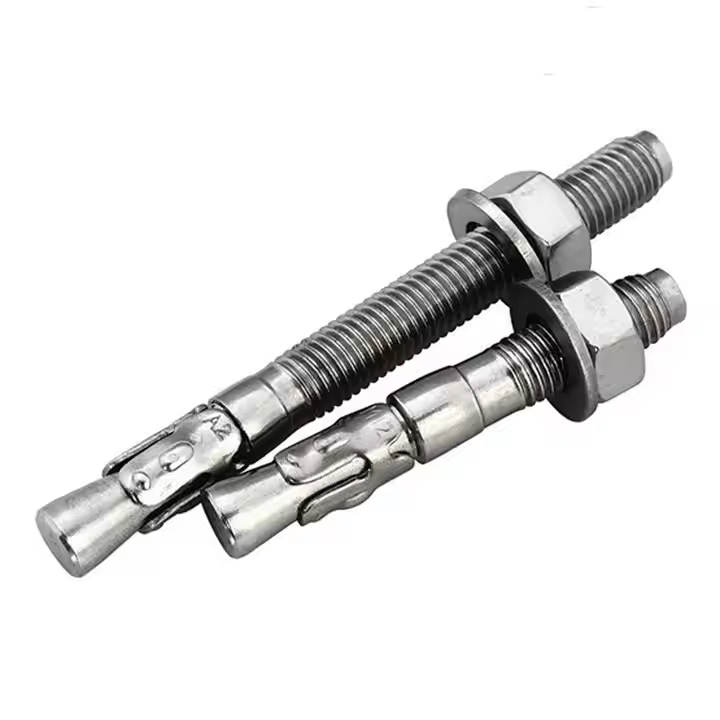
The product pages for our concrete anchors publish size range and length. None of them carries an hef column, a hole depth or a drill diameter, so a catalogue line answers one of the three numbers.
A drawing that carries a single unnamed number is asking for hef, because the drawing governs the fixing. A purchase order that carries a single number is asking for L, because the order governs the shipment. Swap the two and the delivery is compliant and still unusable.
Find out which of the three your document carries, and write the symbol beside the number before comparing suppliers.
Where the Number Comes From, and Who Holds It
Four document types are entitled to state an embedment depth, and they do not carry equal weight.
| Source |
What it fixes |
Who normally holds it |
| Project design to ACI 318 Ch.17 or EN 1992-4 |
the depth this fixing has to meet |
engineer of record |
| Assessment document: EAD 330232-00-0601, ICC-ES evaluation report, or domestic post-installed assessment under JGJ 145-2013 |
hef, hnom, hole depth, torque, critical edge and spacing for a named model |
manufacturer, on request |
| Installation instructions |
hole depth, cleaning, setting tool, minimum member thickness |
ships with the box |
| Test report to ASTM E488, ACI 355.2 or AC193 |
what the model did at stated embedments |
manufacturer or test lab |
A project design comes first because it starts from the load the fixing must carry, not from the product. The assessment document follows, since it is the only paper that ties a depth to a specific model in a specific base material. Instructions and test reports fill gaps; they cannot create a value.
When the first two are missing, no depth exists yet. Any figure quoted at that stage is a placeholder and will be renegotiated the moment the engineer asks for the assessment document.
A test report states what happened at the embedments it tested, which is a test value and not automatically a design value. An ISO certificate or a CE verification of conformity is neither: both certify a system or a product family, and neither carries an embedment depth for a concrete anchor.
Anchor bolts for concrete are not sold with a depth value attached, and no supplier can add one without naming the document it came from.
Three Ways the Number Gets Borrowed Wrongly
Identical diameter is not identical model. hef depends on sleeve geometry, thread engagement and the expansion element, so a depth copied from another brand’s M12 sheet describes a different anchor.
A test report usually lists several embedments, and the shortest one is the most tempting to copy. It is the least margin the lab ran, not the depth a design may use.
A hole depth pasted into a drawing as an embedment loses the tolerance silently, and the buyer then wonders why the anchor stands 5 mm high.
Ask for the document by model code rather than by diameter, and the first of these disappears.
What Effective Embedment Controls in the Concrete
Effective embedment sets the size of the failure surface, so two other numbers move with it whether anyone plans for them or not.
Concrete breakout governs most mechanical anchors: a cone of concrete lifts out from around the anchor head. The CCD method sizes that cone from hef, with a critical edge distance of 1.5 hef and a critical spacing of 3 hef. At hef 40 mm those limits read 60 mm and 120 mm; at 60 mm they read 90 mm and 180 mm; at 80 mm, 120 mm and 240 mm.
Both limits grow linearly, and neither can be negotiated. Moving hef from 40 to 80 mm doubles the clear distance the fixing needs on every side. On a 150 mm wide column face, an hef of 80 mm asks for more edge distance than the member physically offers.
Below 1.5 hef of edge distance the anchor sits in an edge-controlled zone where the cone has less concrete behind it. At 3 hef of spacing, neighbouring anchors stop sharing one failure surface and each has to be counted alone.
Measure edge distance and spacing on site before arguing about depth. Those two measurements settle the model faster than any calculation.
Length Minus the Stack: The Arithmetic You Can Do Yourself
Subtraction is the only arithmetic available before an assessment document arrives, and it catches more bad orders than any datasheet.
For a nut version, the length left below the surface is L minus washer thickness, minus nut height, minus the fixture being clamped. A bolt-head version subtracts the washer and the fixture only.
| Size |
Nut height, DIN 934 (mm) |
Washer thickness, DIN 125-1 A (mm) |
Stack to deduct (mm) |
Shortest published L (mm) |
Left below surface at 10 mm fixture (mm) |
| M6 |
5.0 |
1.6 |
6.6 |
50 |
33.4 |
| M8 |
6.5 |
1.6 |
8.1 |
60 |
41.9 |
| M10 |
8.0 |
2.0 |
10.0 |
70 |
50.0 |
| M12 |
10.0 |
2.5 |
12.5 |
80 |
57.5 |
| M16 |
13.0 |
3.0 |
16.0 |
100 |
74.0 |
| M20 |
16.0 |
3.0 |
19.0 |
150 |
121.0 |
The heights are nominal, so a production batch sits at or under them and the deduction stays conservative. The lengths are the shortest entries in our own published list, which makes the last column the worst case a buyer can walk into with that diameter.
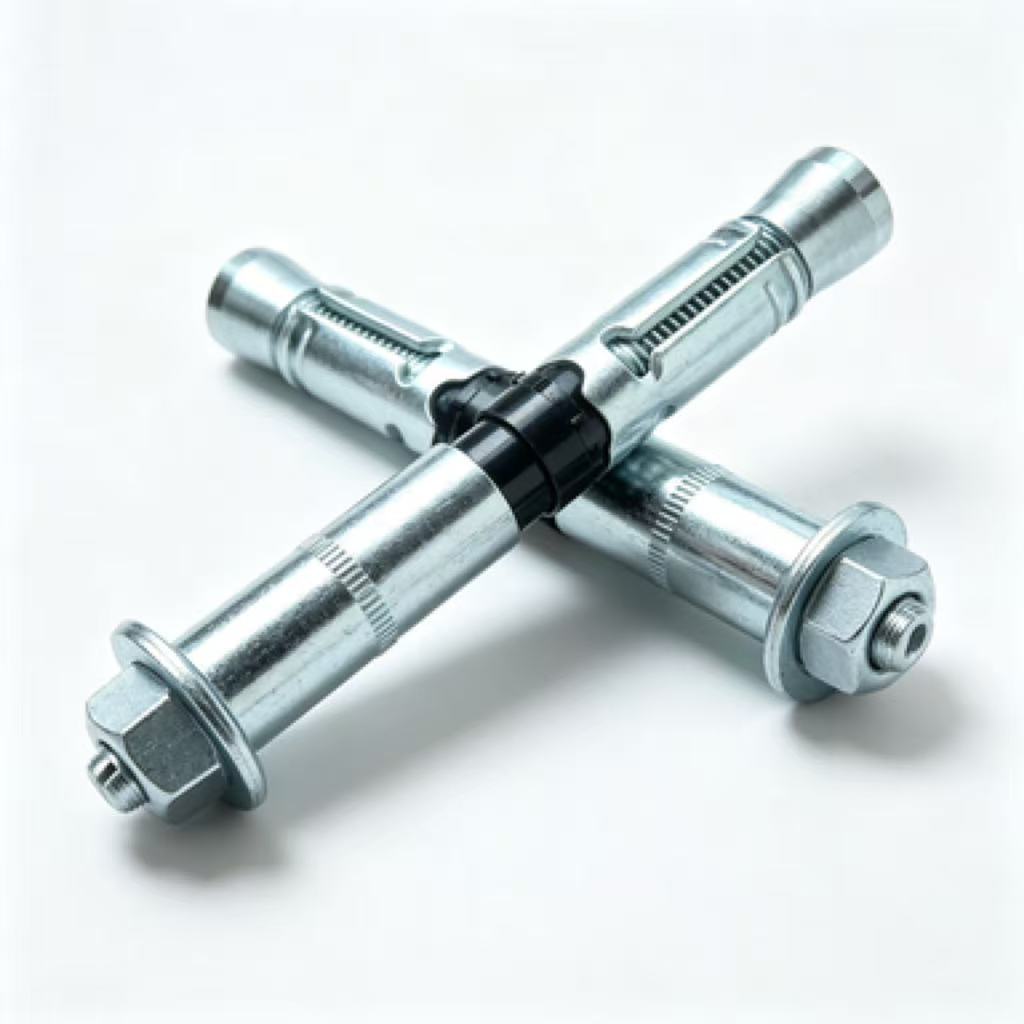
One worked case shows where the risk lives. Our shortest M12 is 80 mm; with a 10 mm fixture it leaves 57.5 mm below the surface, or 4.8 d. Raise the fixture to 30 mm and 37.5 mm remains, which is 3.1 d. That is below the embedment any mechanical anchor in this range is likely to be qualified at, so the document for the specific model has to be checked before an 80 mm M12 goes onto a 30 mm plate.
The wedge anchor range runs to 280 mm, so a longer body is available when the fixture eats the short lengths.
In most mechanical anchors hef falls between about 4 d and 8 d. A remaining length under 4 d leaves too little for any of those values; between 4 d and 6 d the model’s own document has to be checked before the length is written into an order. M14 carries three lengths in our list, 100, 125 and 150 mm, and M18 a single 150 mm, so those two diameters have the least room to absorb a thick fixture.
The hef value for each diameter has to be read from the assessment document of the specific model being quoted; no catalogue line on this site carries it.
Run the subtraction on the three shortest lengths in your enquiry, and fixture thickness stops being an afterthought.
Hole Depth Is Not Embedment, and Tolerance Is the Gap Between Them
The drilled depth is hnom, not hef, and the difference between them is a tolerance that belongs to the document rather than to the driller.
hnom equals hef plus the allowed overshoot in hole depth. The overshoot is set in the assessment document and is not the same figure across product families.
A hole that stops short announces itself. The anchor bottoms out, the stud stands proud, and the nut travels down the thread until it seats on the stud end instead of on the fixture. The connection feels tight and nothing is clamped.
A hole drilled beyond hnom moves the whole anchorage downward. On a thick member that spends concrete below the clip; on a slab it can break through the far face, and then no length recovers the fixing.
Mark the bit at hnom and confirm after drilling that the mark sits level with the hole mouth. Blow the hole clean before insertion, because dust changes how much of the clip actually bears on the concrete.
Our pages publish neither hole depth nor drill diameter for these anchors. Both come from the installation instruction for the exact model, and a diameter copied from a neighbouring product is the commonest reason a hole will not hold.
Put hnom and the bit diameter on the work instruction next to the torque, and the crew stops improvising at the wall.
What Caps the Depth Before the Anchor Does
Four conditions can veto a depth the anchor would otherwise accept, and each of them fails on the drawing rather than the wall.
Thickness comes first. Below roughly twice hef, the breakout cone runs out of concrete and through-thickness failure takes over, most assessment documents handle that case separately, and a longer anchor only enlarges the plug.
Edge distance and spacing come second, once 1.5 hef and 3 hef are laid over a member that may be 150 mm wide.
Rebar comes third. A bit that meets a bar 40 mm into a 60 mm hole stops there, and the hole is short whatever the drawing says.
Crack state comes fourth, and it changes the model rather than the depth. Anchors qualified for cracked concrete carry a different assessment from anchors qualified for uncracked concrete only, so a depth taken from the wrong document is the wrong depth.
Minimum member thickness is normally printed beside the hole depth. When two of these four conditions fail together, change the model instead of the length.
What the Request Has to Carry
A request carrying diameter and length returns diameter and length, and nothing else gets answered.
| Line on the request |
What it makes the supplier answer |
| Anchor model and diameter |
which assessment document applies |
| hef or hnom, labelled |
the number that has to be matched |
| Fixture thickness and number of plates |
how much of L is consumed above the surface |
| Member thickness and edge distance |
whether the depth is available at all |
| Concrete strength and crack state |
which qualification applies |
| Drilling method and hole-depth tolerance |
what the instruction has to permit |
| Documents required: assessment, test report, instruction |
what comes back with the quotation |
Only two of those seven lines are commercial. The rest decide whether the reply can carry a depth value or only a length.
Every heavy concrete anchor on this site is catalogued by size and length, which is exactly why the other five lines have to be asked for.
Send them with the drawing, and the answer arrives as a document reference and a depth inside it, rather than a number someone remembered from a previous project.
FAQ
Can I work out embedment depth from the anchor length alone?
No. Length subtraction gives the maximum the anchor can put into the concrete, not the depth it is qualified to use. For M12 at 80 mm with a 30 mm fixture that maximum is 37.5 mm, and hef still has to come from the assessment document. Treat the subtraction as a screen that rejects short lengths early, never as a substitute for the document.
Is a deeper hole always safer?
No. Depth past hnom moves the anchorage down, spends concrete below the expansion element and, on a slab, risks breaking through the far face. Drill to the depth in the instruction, mark the bit, and keep the overshoot inside the tolerance the document allows.
Why do two suppliers quote different depths for the same M12?
Because depth belongs to the model, not the diameter. Two M12 anchors with different sleeve geometry, thread engagement or qualification carry different hef values, and both can be correct. Compare model codes and the assessment documents behind them, not the number alone.
Does a longer anchor always give more capacity?
Not beyond the point where the member limits the failure surface. Once edge distance, spacing or slab thickness controls the cone, extra length enlarges the breakout volume without raising the load the concrete can take. Under roughly twice hef of thickness, the failure switches to through-thickness and length stops helping.
Do your anchor bolts come with an assessment document?
The product pages publish size range, length, grade and finish, and no assessment reference. Whether a document exists for the exact model has to be confirmed per project before an embedment depth is written into a drawing. Ask by model code, and ask before the drawing is issued rather than after the order.
Anchor bolt embedment depth ends up being one number on one drawing, and it is worth having a document behind it. Send the model code with the seven lines, and the reply will carry a document reference and the depth inside it, the only version of this number that survives an inspection.












