Sourcing ISO standard fasteners is a core task for international procurement teams and engineering departments, but misinterpretations are common. Many buyers assume that a factory with ISO 9001 certification automatically supplies ISO-compliant fasteners. Others use incomplete standard references in purchase orders, leading to dimension mismatches, performance failures and acceptance disputes. This guide clarifies what ISO product standards really mean for fasteners, explains how to read standard numbers, and provides actionable steps to verify specifications and write accurate procurement documents.
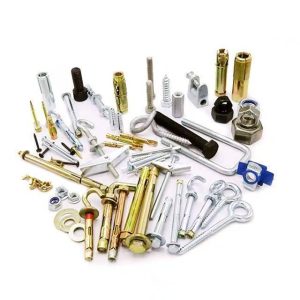
1. ISO Product Standards vs. Quality Management Systems: Clear the Difference
A common and costly mistake is treating ISO management system certification as proof of ISO product standard compliance. The two address completely different aspects of supply.
ISO product standards for fasteners define technical requirements for the products themselves. These include dimensions, thread tolerances, material grades, mechanical properties, testing methods and marking rules. A fastener either meets the standard or it does not, based on measurable physical attributes.
ISO management system standards such as ISO 9001 define how a factory organizes its quality processes, document control and corrective actions. A certified factory can still manufacture non-standard custom fasteners. Certification alone does not guarantee any specific product meets a particular ISO product standard.
Key takeaway: always verify product-level compliance separately from factory system certificates. System certification supports consistent production, but does not replace product specification checks.

2. Common ISO Standards for Fasteners and Their Product Categories
When evaluating ISO standard fasteners, it helps to map standard numbers to product types. The most widely referenced ISO fastener product standards include:
- Hexagon head bolts and screws
- ISO 4014: Hexagon head bolts, partial thread
- ISO 4017: Hexagon head bolts, full thread
- ISO 8676: Hexagon flange bolts
- Hexagon nuts
- ISO 4032: Hexagon regular nuts, style 1
- ISO 4033: Hexagon regular nuts, style 2
- ISO 7040: Hexagon lock nuts with nylon insert
- Washers
- ISO 7089: Plain washers, normal series, product grade A
- ISO 7090: Plain washers, chamfered, product grade A
- ISO 7092: Plain washers for tapping screws
- Tapping screws and machine screws
- ISO 1478: Thread rolling screws, type A
- ISO 7045: Cross recessed pan head screws
This list covers the most frequently used items in industrial and construction procurement. Always confirm the exact standard number rather than requesting “ISO bolts” without further definition.
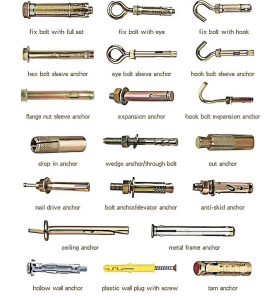
3. How to Identify and Interpret an ISO Fastener Standard Number
A complete ISO fastener standard reference follows a clear structure. Understanding this structure helps you quickly judge scope, version and applicability.
The standard format is:
ISO [standard number]:[publication year]
For example, ISO 4017:2014 breaks down as follows:
- ISO: the issuing organization, International Organization for Standardization
- 4017: the unique standard number, which corresponds to a specific product type and technical content
- 2014: the year of publication, indicating the version of the standard
The publication year matters because standards are periodically revised. Updates may change dimension tables, adjust mechanical property requirements or add and remove size ranges. Using an outdated year reference can lead to mismatched expectations between buyer and supplier.
You can usually confirm the product type and intended use from the full standard title. Full titles often include product form, thread type, property class range and product grade (A or B).
4. Core Items to Verify Against ISO Standard Fastener Specifications
Once you have the correct standard number, verify compliance across four core dimensions. This check applies whether you are reviewing a datasheet, inspecting samples or auditing batch delivery documents.
Dimensional compliance
- Confirm nominal size, thread pitch and thread tolerance class match the standard.
- Check critical geometry: head height, width across flats, shank length and bearing surface features.
- Pay attention to product grade (A for precision, B for general use), as tolerance bands differ.
Material and mechanical properties
- Verify material grade and property class, such as 8.8, 10.9 or A2-70 stainless steel.
- Cross-check tensile strength, proof load, hardness and yield strength against standard requirements.
- Confirm material chemistry falls within the ranges defined by the standard.
Surface finish and corrosion performance
- Match specified surface treatment (zinc plating, hot-dip galvanizing, passivation) to required corrosion resistance.
- If salt spray performance is required, align test duration and evaluation criteria with the referenced standard or supplementary agreement.
Testing and acceptance rules
- Confirm which tests are mandatory under the standard and which are optional by agreement.
- Check inspection frequency, sampling rules and acceptance criteria.
- Verify marking and traceability requirements are met.
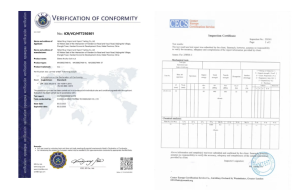
5. How to Correctly Reference ISO Standards in Procurement Documents
Vague references are the leading cause of fastener delivery disputes. A properly written specification removes ambiguity and gives suppliers clear acceptance criteria.
Weak reference (to avoid)
ISO standard hex bolts
Fasteners according to ISO
Strong reference (recommended)
Hexagon head bolts, full thread, ISO 4017:2014, property class 8.8, zinc plated, thread tolerance 6g
Best practices for procurement documents:
- Always include the standard number and publication year.
- State property class or material grade explicitly.
- Define surface finish and corrosion requirements.
- Specify thread tolerance and product grade if relevant.
- Add any supplementary requirements that go beyond the base standard.
Put the full reference on drawings, purchase orders and inspection protocols. This ensures production, quality and receiving teams all work from the same specification.
6. How to Validate Standard Version and Scope of Application
Standards are updated over time, and not every size or material falls within a standard’s scope. Use the following checks before finalizing a specification.
Confirm the version is current
- Check the official ISO catalogue or trusted industry databases for the latest published version.
- If you intentionally use an older version, state the year clearly and confirm the supplier can produce to that specific revision.
- Be aware that withdrawn standards may still be referenced in legacy project drawings.
Verify the scope covers your requirements
- Check the size range: many standards only apply within a certain diameter range.
- Confirm material and property class coverage: some standards are limited to carbon steel grades and do not include stainless steel.
- Review intended use and application notes to ensure the standard fits your assembly conditions.
If your required size, material or feature falls outside the standard scope, treat the product as custom-specified and document all deviations in writing.
7. Key Questions to Confirm With Your Fastener Supplier
Before placing orders, raise these standard-related questions with suppliers to eliminate hidden risks:
- Do you produce this fastener to the exact ISO standard number and version we specified?
- Can you provide batch inspection reports showing compliance with dimensional and mechanical requirements?
- Which processes or dimensions, if any, deviate from the standard?
- Do you issue a declaration of conformity for ISO standard fasteners?
- Will you notify us in advance if the standard is revised and affects our existing orders?
- Can you provide third-party test reports if required, and which laboratory issued them?
Document all supplier responses. Written confirmation protects you if non-conformities are found at incoming inspection.
FAQ — Common Questions About ISO Standard Fasteners
Does ISO 9001 certification mean fasteners meet ISO product standards?
No. ISO 9001 certifies a factory’s quality management system, not the technical compliance of individual products. A factory can hold ISO 9001 and still make custom non-standard fasteners. Always request product-specific compliance evidence.
Can ISO standard fasteners be used interchangeably with DIN standard fasteners?
Not automatically. Many DIN standards are aligned with ISO standards, but differences can exist in size ranges, tolerance grades and property class options. Always compare the full specification rather than assuming equivalence.
Where can I check the latest version of an ISO fastener standard?
The official ISO website publishes current status and revision history. You can also reference industry handbooks or request confirmation from your fastener supplier with the publication year included.
Conclusion
Working with ISO standard fasteners becomes much safer once you distinguish product standards from management system certifications, interpret standard numbers correctly, verify specifications across four core dimensions and write precise references in procurement documents. Taking the time to validate standard versions and supplier claims reduces rework, prevents assembly failures and lowers total procurement risk. If you are looking for standard and custom industrial fastener options, review our product range for detailed specifications and supply capability.












