Wedge anchors are a common type of mechanical expansion anchor for post-installed fastening into concrete. Many engineers, procurement specialists and field installers struggle to confirm whether a wedge anchor matches their substrate, load conditions and site limits before specification. This practical guide describes the unique structure and working mechanism of wedge anchors, lists essential pre-installation checks, compares wedge anchors with other widely used mechanical anchors, and outlines critical details to verify during sourcing.
What Is a Wedge Anchor? Basic Structure & Working Principle
Unlike other expansion anchors that spread force along a longer sleeve section, wedge anchors use a tapered wedge cone to create mechanical interlock near the bottom of the drilled hole. This bottom-driven expansion behaviour is its defining feature and clearly separates it from sleeve anchors and drop-in anchors.
Core Components of Wedge Anchors
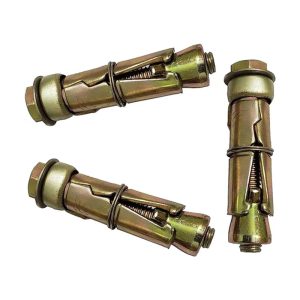
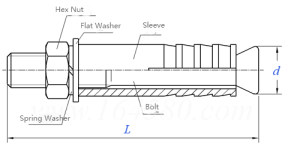
A standard wedge anchor assembly contains five primary parts: threaded stud, wedge cone, expansion clip, flat washer and hex nut.
- The threaded stud transfers applied tension and shear loads and accommodates the nut and washer.
- The wedge cone sits at the bottom end of the stud and travels upward as the nut is tightened.
- The expansion clip is split into segments. When the cone slides through it, the clip expands radially and presses against the wall of the drilled concrete hole.
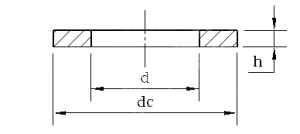
- The washer spreads clamping force evenly across the surface of the fixture.
- The hex nut supplies the tightening force that pulls the stud and cone to activate expansion.
The expansion clip only opens at the embedded end. This concentrated expansion zone near the hole bottom is the most distinctive structural feature of a wedge anchor.
How Wedge Anchors Work (Mechanical Expansion Logic)
Wedge anchors rely on mechanical friction and positive mechanical interlock, with no chemical adhesive required. When the installer tightens the hex nut, the stud pulls the attached wedge cone toward the expansion clip. The tapered cone pushes the clip segments outward, pressing firmly against the surrounding concrete. Once fully activated, the expanded clip locks the anchor securely within the drilled hole.
The load-resisting zone remains close to the base of the hole. This differs from sleeve anchors, which distribute friction over a longer embedded length, and drop-in anchors, which adopt an internal expansion design for pre-placed threaded inserts.
Suitable Base Materials & Environmental Limitations for Wedge Anchors
Wedge anchors are designed primarily for solid, dense concrete. Substrate quality directly determines whether the anchor can develop reliable holding performance.
Wedge anchors are generally not suitable for hollow blocks, aerated concrete, lightweight masonry or other porous substrates. These materials lack sufficient compressive strength to resist radial expansion force, so the expansion clip cannot form stable mechanical grip.
Site environment mainly guides material grade selection instead of changing the anchor’s expansion principle:
- For indoor dry service: carbon steel or electro-galvanized wedge anchors may be considered.
- For outdoor, humid or coastal exposure: stainless steel grades such as 304 or 316 are commonly specified for corrosion protection.
Damaged or low-quality concrete creates extra risk. Honeycombed, highly porous or heavily cracked concrete may not provide consistent confinement for the expanded clip. Any installation on questionable substrate should be reviewed against the anchor’s official assessment documentation.
Common Application Scenarios of Wedge Anchors
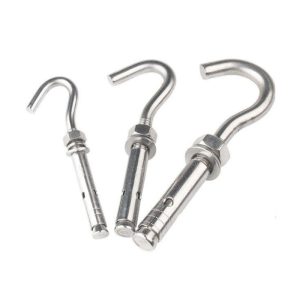
Wedge anchors are widely selected for static-load fastening jobs in solid concrete. Typical applications include:
- Steel support frames and equipment base plates
- Guardrails and safety barriers
- Pipe hangers and mechanical supports
- Curtain wall sub-frames
- Pallet rack bases and secondary steel fixtures
They are not the first choice for applications with repeated heavy cyclic vibration, or for installation into the lightweight and hollow substrates noted above.
Pre-Installation Checks & Technical Document Verification
Reliable wedge anchor performance depends on inspections completed before installation. Field experience alone cannot replace validated product data.
Base Material & Hole Condition Verification
Confirm the substrate is solid concrete before drilling. After drilling, the bore must be cleaned of dust, concrete fines and standing water. Residue trapped between the expansion clip and hole wall prevents full expansion and reduces effective contact area. Hole depth and hole alignment also need to comply with requirements stated on the product technical sheet.
Key Technical Documentation to Review
Always refer to the manufacturer’s published assessment reports and installation instructions. Relevant documents may include ETA or ICC-ES evaluation reports where available. These documents define approved use cases, boundary conditions and performance limits for the anchor. Specifiers and installers should never rely on generic rule-of-thumb values for critical anchoring work.
How to Confirm Wedge Anchor Size & Connection Requirements
Selecting the correct wedge anchor size requires matching multiple dimensions to the fixture and layout.
- Nominal diameter sets thread size and the general load capacity range.
- Effective embedment depth strongly influences tensile performance.
- Thread length must provide enough exposed thread to pass through the fixture, washer and nut.
- Fixture thickness is measured to calculate the required exposed thread length.
Edge distance and spacing between adjacent anchors are important layout controls. Insufficient edge distance increases the risk of concrete splitting under load. Minimum edge and spacing values are not universal; they vary with anchor size, concrete strength and load direction.
Load direction also affects design. Tensile loads pull the anchor out of concrete, while shear loads act across the anchor axis. Both load types should be checked against limits listed in the product evaluation file.
Wedge Anchor vs Other Mechanical Anchors: Selection Differences
Many buyers and engineers confuse wedge anchors with drop-in anchors and sleeve anchors. The comparison below focuses on fundamental functional differences to support faster, more confident selection.
| Anchor Type |
Expansion Mechanism |
Installation Feature |
Typical Notes |
| Wedge Anchor |
Bottom wedge cone pulls to expand clip; expansion concentrated near hole bottom |
Nut tightening from the outer face activates expansion; threaded stud remains exposed |
Flexible embedment range; not designed for easy removal after full activation |
| Drop-In Anchor |
Internal tapered plug expands the insert from inside the bore |
Insert placed into hole first; separate bolt is screwed in to trigger expansion |
Internal thread; preferred for flush finished installations |
| Sleeve Anchor |
Tapered plug expands a long sleeve along most of the embedded length |
Nut tightening draws the plug into the sleeve; distributed friction zone |
Longer friction contact area; different load distribution behaviour |
Use this simple decision guide:
- Choose a wedge anchor when you need an exposed threaded stud, concentrated bottom expansion and straightforward outside activation in solid concrete.
- Choose a drop-in anchor when a flush internal thread is required.
- Choose a sleeve anchor when a longer distributed friction zone better fits your design.
Key Information to Confirm Before Purchasing Wedge Anchors
B2B buyers should clarify these points with suppliers before finalizing orders:
- Material grade and surface treatment for corrosion control
- Full assembly scope: whether expansion clip, washer and hex nut are included
- Availability of official evaluation and test documents to match project specifications
- Dimensional tolerances and thread standard
- Surface finish consistency and packaging requirements for export shipments
For marine or coastal projects, confirm stainless steel grade and verify whether the anchor’s technical file covers the intended corrosive environment.
Frequently Asked Questions about Wedge Anchors
Can wedge anchors be reused after removal?
Once a wedge anchor has been properly expanded in concrete, the expansion clip undergoes permanent deformation. It cannot be reliably reset and reused in the same or another hole.
Can wedge anchors work in lightweight concrete?
Standard wedge anchors are not engineered for lightweight concrete. Specialized anchor systems evaluated for lightweight substrate should be selected instead.
What is the difference between a wedge anchor and an expansion bolt?
Wedge anchors belong to one category of mechanical expansion bolt. The term “expansion bolt” is broader and may refer to sleeve anchors, drop-in anchors or other expansion fasteners.
Do wedge anchors require a torque wrench during installation?
Many product specifications require controlled tightening torque. Always follow the manufacturer’s installation sheet; torque values are not interchangeable between different anchor brands and sizes.
Conclusion
Wedge anchors are a dependable mechanical expansion fastening solution built around a bottom-located wedge and clip mechanism. Their concentrated expansion near the hole bottom creates distinct performance characteristics that separate them from sleeve anchors and drop-in anchors.
When specifying wedge anchors, start by confirming the substrate is solid concrete. Next, verify embedment depth, fixture thickness, edge distance and anchor spacing. Always validate performance limits through official technical documents rather than generic assumptions. Before placing an order, confirm material grade, corrosion protection and available certification.
If you want to explore more anchoring solutions, review our anchor classification resource, or visit the dedicated wedge anchor product page for further product details.












