Carbon steel fasteners are the most widely used connecting components in construction, heavy machinery, automotive assembly, structural steelwork and general industrial applications, valued for their balanced strength, manufacturability and cost efficiency. However, carbon steel is not a single uniform material — differences in carbon content, heat treatment and surface finish lead to wide variations in load capacity, corrosion resistance and service life. Mismatched grade or coating selection often results in premature failure, corrosion damage and unexpected project costs.
For procurement professionals, design engineers and fastener distributors, reliable selection depends on aligning fastener grade, material properties and corrosion protection with real-world service conditions. This guide explains the material fundamentals, standardized performance grades, surface treatment options and procurement verification practices needed to make accurate, low-risk carbon steel fastener selection decisions.
1. What Are Carbon Steel Fasteners?
Carbon steel fasteners are threaded and non-threaded fastening products manufactured primarily from carbon steel alloys. They are designed to create secure, removable or permanent mechanical joints between two or more components.
The carbon steel fastener family covers a broad range of product types, including bolts, nuts, anchors, screws, washers and studs. Each product category is engineered for specific installation methods and load conditions:
- Bolts and nuts form the most common detachable joint system, used in machinery assembly and structural connections.
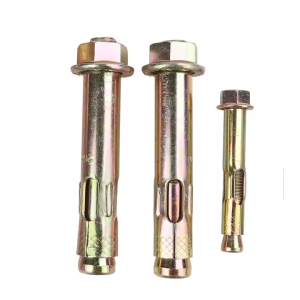
- Anchors are designed for fastening components to concrete, masonry or steel base materials.
- Screws and washers support lighter load assemblies and uniform load distribution.
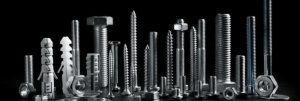
Thanks to their versatile performance and scalable production, carbon steel fasteners are used in everything from indoor equipment enclosures to outdoor bridges, transmission towers and pipeline supports.
2. Material Composition and Core Properties of Carbon Steel Fasteners
The performance of any carbon steel fastener is fundamentally determined by its chemical composition. Carbon steel consists primarily of iron and carbon, with small additions of manganese, silicon, sulfur and phosphorus. Among these elements, carbon content is the single most influential factor shaping mechanical behavior.
How Carbon Content Shapes Fastener Performance
As carbon content increases, the steel gains higher tensile strength and hardness, but loses ductility, impact toughness and cold formability. This trade-off defines the three main carbon steel categories used in fastener manufacturing:
- Low-carbon steel (mild steel): Typically contains 0.05–0.25% carbon. It offers excellent ductility and cold heading capability but relatively low strength, and is widely used for general-purpose, low-load fasteners.
- Medium-carbon steel: Contains approximately 0.25–0.60% carbon. When quenched and tempered (heat-treated), it achieves a strong balance of strength, toughness and fatigue resistance, making it the primary material for high-strength industrial fasteners.
- High-carbon steel: Contains more than 0.60% carbon. It can reach very high hardness but is brittle and difficult to form, and is rarely used for standard threaded fasteners due to poor impact resistance.
General Characteristics of Carbon Steel Fasteners
- Wide strength range, from mild general-duty grades to medium-high strength structural grades
- Excellent machinability and cold formability for mass production
- Stable mechanical performance under normal ambient temperatures
- Lower material and manufacturing cost compared with alloy steel or stainless steel fasteners
- Inherent low corrosion resistance in humid, acidic or saline environments, requiring protective surface treatment
3. Common Grades and Technical Identification of Carbon Steel Fasteners
Fastener grades are standardized performance classifications that define minimum mechanical properties. Three standard systems are most commonly referenced in global trade: ISO 898-1 (metric), SAE J429 (imperial/US) and ASTM A307 (general-purpose carbon steel bolts).
Most standard carbon steel fasteners fall into low to medium-high strength grades. Higher strength classes typically require alloy steel materials and are noted separately below for reference.
3.1 Main Grade Standards and Performance Parameters
Each grade corresponds to specific tensile strength, yield strength and hardness requirements, and is typically produced from a matching carbon steel grade with appropriate heat treatment.
| Standard | Grade | Minimum Tensile Strength (MPa) | Minimum Yield Strength (MPa) | Typical Base Material | Heat Treatment | Typical Application |
| ISO 898-1 | 4.8 | 400 | 320 | Low-carbon steel | None (as-formed) | General assembly, low-static-load joints |
| ISO 898-1 | 8.8 | 800 | 640 | Medium-carbon steel | Quench and temper | Structural connections, medium-to-high load machinery |
| ISO 898-1 | 10.9* | 1000 | 900 | Alloy steel / boron steel | Quench and temper | High-load critical joints, heavy engineering |
| SAE J429 | Grade 2 | ~414 | ~248 | Low-carbon steel | None | General-purpose interior fasteners |
| SAE J429 | Grade 5 | ~827 | ~635 | Medium-carbon steel | Quench and temper | Automotive and industrial equipment |
| SAE J429 | Grade 8* | ~1034 | ~895 | Alloy steel | Quench and temper | High-strength heavy-duty applications |
| ASTM A307 | Grade A | ~414 | ~207 | Low-carbon steel | None | Non-critical general structural connections |
*Note: Grades 10.9 and Grade 8 are typically manufactured from alloy or boron steel, not standard carbon steel. They are listed here for reference only. Exact property values may vary by standard edition and product diameter range; values above are for reference and require verification against the latest official standards.
Medium and high-strength carbon steel grades such as 8.8 and Grade 5 rely on quenching and tempering to refine the steel microstructure, delivering both high strength and sufficient toughness to resist impact and fatigue loads.
3.2 How to Identify Fastener Grades by Head Markings
Genuine carbon steel fasteners carry permanent grade markings on the bolt head or nut face, allowing quick visual verification.
- Metric fasteners (ISO system): Marked directly with the performance class number, such as 4.8, 8.8 or 10.9.
- Inch fasteners (SAE system): Identified by radial lines or grade symbols. For example, Grade 5 typically features 3 radial lines, and Grade 8 features 6 radial lines. Grade 2 fasteners often carry no head marking.
Fasteners without clear grade identification cannot be verified for load capacity and should be avoided for structural or safety-critical applications.
4. Surface Treatments and Corrosion Protection for Carbon Steel Fasteners
Unprotected carbon steel will rust rapidly when exposed to moisture, oxygen or corrosive media. For this reason, nearly all industrial carbon steel fasteners receive a surface treatment to extend service life, control friction during assembly and improve appearance.
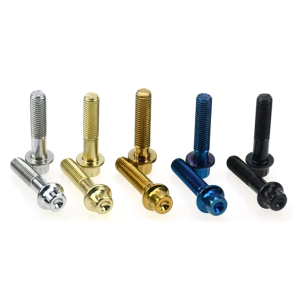
The choice of surface treatment directly determines how well a carbon steel fastener withstands its operating environment, and should be selected in parallel with performance grade.
4.1 Common Surface Treatment Processes and Their Characteristics
Different surface treatment processes vary significantly in corrosion resistance, coating thickness, cost and assembly behavior.
| Surface Treatment | Process Description | Typical Neutral Salt Spray Resistance | Typical Coating Thickness | Primary Use Case |
| Zinc Plating (Electro-galvanizing) | Electrochemical deposition of a thin zinc layer | 48–120 hours | 5–15 μm | Indoor equipment, general industrial assemblies |
| Hot-Dip Galvanizing (HDG) | Dipping fasteners in molten zinc bath | 200–500+ hours | 45–85 μm | Outdoor structures, towers, fencing, pipeline supports |
| Black Oxide (Blackening) | Chemical conversion coating producing a black oxide layer | <10 hours (with oil film) | 1–2 μm | Indoor machinery, decorative and low-corrosion environments |
| Phosphating | Chemical phosphate conversion coating | <10 hours (used as base coat) | 5–20 μm | Pre-treatment for painting or lubrication, automotive fasteners |
| Zinc-Aluminum Flake Coating | Water-based flake zinc-aluminum coating, cured at low temperature | 500–1500+ hours | 8–15 μm | High-corrosion environments, automotive chassis, renewable energy projects |
Black oxide and phosphating alone provide minimal corrosion protection; they are almost always used with supplementary oil or wax sealants.
4.2 Key Factors for Selecting Surface Treatment
Choosing the right surface finish depends on a combination of operational and commercial factors:
- Corrosion severity: Higher humidity, salt spray or chemical exposure requires thicker, more durable coatings.
- Assembly torque control: Coating type affects the friction coefficient and therefore the relationship between torque and preload.
- Cost budget: Zinc plating is the most economical option, while zinc-aluminum flake coatings carry a higher price premium.
- Environmental compliance: Hexavalent chromium-free processes are required for many global markets.
- Hydrogen embrittlement risk: High-strength carbon steel fasteners (e.g., 8.8 and above) are susceptible to hydrogen embrittlement after acid-based plating processes, and must undergo proper baking for hydrogen relief.
5. How Service Environments Affect Carbon Steel Fastener Selection
No single carbon steel fastener configuration is suitable for all environments. Grade and surface treatment should always be selected together based on actual operating conditions.
5.1 Corrosive Environment Classification and Matching Solutions
Atmospheric corrosivity is commonly classified per ISO 12944 into C1 (very low) through C5 (very high). The following guidance applies to carbon steel fastener selection:
- C1–C2 (indoor, dry, low pollution): Zinc-plated or black oxide fasteners with 4.8 / 8.8 grade are sufficient for most applications.
- C3 (outdoor rural/light industrial, low salinity): Hot-dip galvanized 8.8 grade fasteners are the standard choice for long service life.
- C4–C5 (coastal, heavy industrial, high humidity): Zinc-aluminum flake coated high-strength fasteners are recommended. For long-term immersion or highly aggressive chemical environments, carbon steel fasteners may not provide adequate service life even with premium coatings, and alternative material options should be evaluated.
5.2 Temperature and Load Conditions for Application
Temperature effects
Standard carbon steel fasteners perform reliably within a moderate temperature range.
- Elevated temperatures: Long-term exposure above approximately 200–250°C can cause gradual strength loss and tempering effects in heat-treated grades. Higher temperature applications may require alloy steel alternatives.
- Low temperatures: Carbon steel becomes more brittle at sub-zero temperatures. For service below -20°C, impact-tested grades are recommended to reduce fracture risk.
Load conditions
- Static loads: Lower strength grades such as 4.8 / Grade 2 can be used when loads are steady and well-calculated.
- Dynamic, cyclic or vibration loads: Quenched and tempered grades (8.8 / Grade 5 and above) offer better fatigue resistance and are required for critical joints subject to repeated loading.
6. Procurement Documentation and Material Certificate Verification
Quality and performance consistency cannot be judged by appearance alone. Proper documentation verification is an essential step in carbon steel fastener procurement.
Core Technical Requirements for Purchase Orders
To avoid delivery mismatches, purchase specifications should clearly define:
- Applicable product standard (e.g., ISO 4017, DIN 933, ANSI B18.2.1)
- Performance grade or material specification
- Surface treatment standard and thickness requirement
- Size, thread specification and tolerance class
- Any additional testing or certification requirements
Material Certificate Verification
A valid Mill Test Certificate (MTC / MTR) is the primary quality document for carbon steel fasteners. Procurement teams should verify the following key information:
- Material grade and chemical composition: Confirm that the steel grade matches the required performance class.
- Mechanical test results: Verify tensile strength, yield strength and hardness meet the minimum grade requirements.
- Heat treatment record: Confirm quenching and tempering parameters for high-strength grades.
- Heat / lot number: Match the batch number on the certificate with the product packaging or marking.
- Surface treatment report: Confirm coating type, thickness and corrosion test results if specified.
Quick Verification Checklist for Incoming Inspection
- Confirm head markings match the ordered performance grade
- Verify coating appearance uniformity and absence of visible defects
- Cross-check MTC heat/lot number with product packaging labels
- Spot-check critical dimensions (thread pitch, nominal diameter, length)
- Request coating thickness test reports for high-corrosion application orders
7. Common Problems and Pitfalls in Carbon Steel Fastener Procurement
The following issues are frequently encountered in carbon steel fastener sourcing and can lead to performance failures or project delays:
- Grade substitution: Lower-grade fasteners sold as higher-strength grades, often with counterfeit head markings. Always cross-check markings against material certificates.
- Insufficient coating thickness: Substandard zinc plating or HDG that fails to meet minimum thickness requirements, resulting in premature corrosion.
- Missing or falsified test certificates: Generic or altered MTCs that do not correspond to the delivered batch.
- Hydrogen embrittlement in high-strength fasteners: Skipped post-plating baking process, leading to delayed fracture under load.
- Thread fit mismatch: Mixed tolerance classes or non-standard thread production that causes assembly difficulties.
To mitigate these risks, define clear technical requirements in purchasing contracts, require batch traceable documentation, and conduct third-party testing for critical orders when necessary.
8. Final Thoughts: How to Choose the Right Carbon Steel Fasteners
Selecting carbon steel fasteners is a structured process that balances mechanical demand, environmental exposure and total cost of ownership. Follow this three-step framework:
- Define the load requirement: Calculate static and dynamic loads to determine the minimum required performance grade.
- Match corrosion protection to the environment: Select surface treatment based on atmospheric corrosivity, temperature and media contact.
- Verify quality through documentation: Confirm grade, material properties and coating compliance via official test certificates and incoming inspection.
Carbon steel fasteners remain the most cost-effective choice for most industrial and structural applications when properly specified. For complex loading conditions, extreme environments or customized equipment project requirements, consult a professional supplier to receive application-specific selection recommendations.












