A concrete anchor bolt coating is not a finish chosen at the end of the order. It is part of how long the fixing lasts, and it is the only part of the bolt that is expected to fail first. The steel is the same in every variant; what separates a bolt that survives a coastal façade from one that bleeds rust in the first rainy season is the coating system, its thickness, and whether the thread still fits after it has been applied.
This article compares the three systems that appear on most concrete anchor bolt orders — electroplated zinc, hot-dip galvanizing, and zinc-flake coatings of the Ruspert and Dacromet type — in terms of what each does, where each fails, and what has to be written on the order for the coating to arrive as intended.
What a Coating Has to Do on an Anchor Bolt
Zinc coatings work in two ways, and both matter on an anchor.
The first is a barrier: the zinc layer keeps water and chloride away from the steel, so corrosion has nothing to act on. The second is sacrificial: zinc is less noble than steel, so where the coating is damaged the zinc around the break corrodes first and protects the steel behind it. That is why a galvanized bolt can survive a scratch that would start rust on a painted one.
The third job is mechanical, and it is the one that causes most coating complaints. A coating adds thickness. On a thread, thickness is a problem.
Coating Is Part of the Corrosion Allowance
Treat the coating as a design parameter, not a cosmetic choice. If the exposure is aggressive enough to require a heavy coating, the thread and the nut have to be specified with that thickness in mind from the start. Retrofitting a coating onto a bolt and thread designed for a thin one is how “the nuts won’t go on” becomes a shipment dispute.
Electroplated Zinc: The Default, and Its Limits
Electroplated zinc is the finish most concrete anchor bolts are supplied in. Blue-white and yellow are the two common appearances, and both are thin films measured in micrometres rather than in tenths of a millimetre.
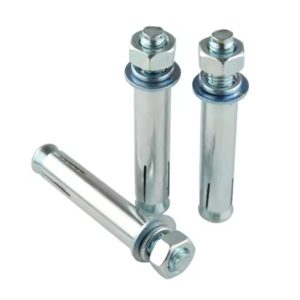
Its advantages are real: it is consistent, it does not disturb the thread, it is inexpensive, and it looks the way buyers expect a standard fastener to look.
Its limits are equally real. A thin film has little zinc to give, so once it is breached — by a spanner, a cut end, a scratched thread, a damaged box — the protection at that point depends on the sacrificial action of a small amount of surrounding zinc. In a dry interior that is enough. On a façade, in a coastal town, near a road salt route or in an industrial atmosphere, it is usually not.
Electroplated zinc is also the finish most often judged by appearance alone. Uniform colour is a sign of process control, not a measure of thickness, and thin coatings can look perfect.
Hot-Dip Galvanizing: Thickness and the Thread Problem
A hot dip galvanized anchor bolt is coated by reaction between molten zinc and the steel, not by deposition. The result is a zinc-iron layer that is metallurgically bonded, substantially thicker than electroplating, and able to take handling that would strip a plated bolt.
Thickness is not a fixed value. It grows with the steel section and it is defined by the galvanizing standard the order is placed against. Three names come up routinely and they are not interchangeable: ISO 1461 covers galvanized steel generally, ASTM A153 covers hardware, and ASTM F2329 is the fastener-specific one written for hot-dip coated bolts, screws, nuts and washers. A buyer who specifies A153 for a bolt order and a buyer who specifies F2329 may be asking for different inspection criteria without realising it.
The thread is where thickness matters most. Galvanizing adds material to the thread flanks, so a nut that fitted the uncoated bolt will not fit afterwards unless the thread was cut oversize before coating, the nut was tapped oversize, or the thread was chased after galvanizing. Each of those is a legitimate route, and each has to be stated on the order.
Two further points are worth knowing before you specify it:
- Galvanizing is a high-temperature process applied to the finished bolt, so the bolt has to be able to take that temperature. Whether a particular high-strength grade is suitable for it is a question for the supplier, not an assumption.
- Hot-dip galvanizing is usually the right answer for exposed coastal and industrial work, and it is often more coating than an embedded, dry-interior fixing needs.
Zinc-Flake Coatings: Ruspert, Dacromet and Their Relatives
Choosing a concrete anchor bolt coating that keeps the thread fit while reaching protection closer to galvanizing is what zinc-flake systems are for. A dispersion of zinc or zinc-alloy flakes in a binder is applied — usually by dip-spin or spray — and cured into a thin, dense layer, often with a top coat over it. Ruspert and Dacromet are the two names most often seen on fastener orders; both describe systems of this type rather than a single chemistry.
What makes them useful on anchor bolts is the combination: corrosion protection closer to galvanizing than to plating, delivered in a film thin enough that the thread still fits without oversize cutting. That is why these systems are common where a plated bolt rusts too early but a galvanized thread is a nuisance.
Two cautions:
- A brand name is not a specification. “Ruspert” describes a family of systems, and the protection depends on the specific grade, the number of coats, the curing and the test basis. Ask for the system and its documentation, not the trade name.
- Zinc-flake films are thin, so handling damage matters. They are tougher than plating against abrasion, but a bolt dragged across a truck bed still loses protection at the contact points.
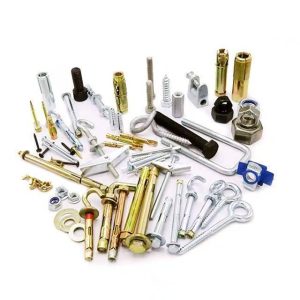
On a concrete anchor bolt order the practical question is simple: if the product table lists a zinc-flake finish, confirm which system it is and whether the bolts you are ordering are actually available in it. On this range, the specification table names Dacromet and HDG alongside the zinc and blackened finishes, so a Ruspert request should be confirmed against the specific item rather than assumed from the range.
Where the Coating Usually Fails
Many coating failures on site are not chemistry failures. They are handling and detailing failures:
- Cut or damaged ends. A bolt cut to length after coating has bare steel at the cut. Either cut before coating or accept the cut end as a known weak point.
- Spanner damage on the thread. The installation itself removes coating exactly where the load path runs.
- Thread not chased after galvanizing. Zinc left in the thread bore stops the nut part-way down and gets blamed on the coating system rather than on the process.
- Dissimilar metal contact. Galvanized or zinc-flake bolts in direct contact with stainless components, in a wet environment, create a corrosion cell that neither coating was designed for.
- Coating specified but not inspected. A finish described as “galvanized” on the packing list, with no thickness check on receipt, is a finish nobody has verified.
Matching the Coating to the Exposure
The right concrete anchor bolt coating depends on exposure, not on a ranking.
| Exposure | What usually holds up | What to question |
| Dry interior, embedded in concrete | Electroplated zinc | Handling damage only |
| Sheltered exterior, inland | Electroplated zinc or zinc-flake | Whether the film is thick enough for the intended service life |
| Coastal, industrial, or regularly wet | HDG or a zinc-flake system | The thickness class or system grade, and the thread allowance |
| Coastal, with a visible finish requirement | Zinc-flake with a top coat | Colour and gloss consistency across batches |
| Bolts cut to length on site | HDG or zinc-flake, cut before coating | Whether the cut is made before or after coating |
What to Put in the Order
Five items turn “coated” into a specification:
- The system, by name and grade — not just the colour.
- The thickness class or the standard the coating must meet, where the system has one.
- The thread allowance, stated as oversize cutting, oversize nut, or post-coating chase.
- The cut-length instruction, before or after coating.
- The inspection basis — what will be measured on receipt, and by which method.
FAQ
Which coating is best for concrete anchor bolts?
It depends on exposure, not on a ranking. Electroplated zinc is adequate for dry interior and embedded work; hot-dip galvanizing and zinc-flake systems are for coastal, industrial and wet service. Specifying the heaviest coating by default adds cost and a thread-fit problem you then have to solve.
Is a hot dip galvanized anchor bolt better than a zinc plated one?
It is thicker and more damage-tolerant, which is why it is used outdoors. It also changes the thread, so a galvanized bolt needs an oversize thread or an oversize nut. “Better” only holds if the thread allowance was specified.
What is Ruspert coating?
A zinc-flake coating system sold under that name: zinc flakes in a binder, applied as a thin film and usually finished with a top coat. On concrete anchor bolt orders the protection depends on the grade and the test basis, not on the name alone.
Can I use a galvanized bolt with a standard nut?
Not usually. Galvanizing adds thickness to the thread, so the nut has to be tapped oversize or the bolt thread cut oversize before coating. A standard nut on a galvanized bolt commonly ends with a partly engaged thread.
Does the coating affect how the anchor holds in concrete?
The coating does not change the expansion mechanism, and the film thickness is small next to the tolerance on the drilled hole, so it does not change the hole size you drill. The thing that does need confirming is the thread fit: with HDG, ask the supplier whether the nut or the thread is supplied oversize, and whether any other dimension changes for the coated version.
Summary
Concrete anchor bolt coating is a corrosion allowance with a mechanical consequence: the thicker the protection, the more the thread has to be planned around it. Electroplated zinc covers dry and embedded work, hot-dip galvanizing covers exposed coastal and industrial service at the cost of a thread allowance, and zinc-flake systems of the Ruspert and Dacromet type sit between the two in film thickness with protection closer to galvanizing.
Whatever is chosen, the order has to name the system, the thickness basis, the thread allowance and the inspection method. A coating described only by its colour is not a specification.












