Construction fasteners are used to connect, secure, and support building components across a wide range of applications. Common examples include bolts, nuts, washers, screws, anchors, and threaded rods. Each type serves a different fastening function, and the appropriate choice depends on the materials being joined, the connection design, and the conditions in which the fastener will be installed and used.
Selecting construction fasteners involves more than checking product dimensions. Buyers, contractors, and engineers also need to consider base material compatibility, mechanical properties, corrosion exposure, installation requirements, and technical documentation. For applications involving concrete or masonry, mechanical anchors require additional attention because their suitability depends on the base material and specific installation conditions.
This guide explains common types of construction fasteners, how different materials and connection requirements affect selection, and what to check before purchasing. It also introduces basic mechanical anchor selection factors to help readers evaluate products more systematically.
1. What Are Construction Fasteners?
Construction fasteners are mechanical components used to join, secure, or support building materials and other construction-related components. They are used in connections involving concrete, masonry, wood, steel, and other materials.
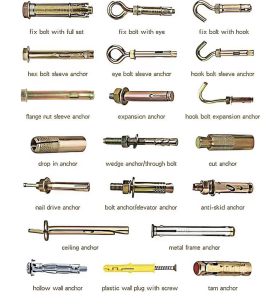
Depending on the connection design, fasteners may create removable or more permanent joints. Threaded fasteners, such as bolts, nuts, and screws, are commonly used where components may need to be disassembled or maintained.
1.1 Definition and Basic Functions of Construction Fasteners
Construction fasteners are available in different shapes, materials, dimensions, and connection configurations. Their main purpose is to maintain the required relationship between connected components.
Common functions include:
- Component fastening: Connecting two or more parts to form an assembly.
- Positioning and alignment: Maintaining the relative position of connected parts.
- Load transfer: Helping transfer forces through a properly designed connection.
- Assembly and maintenance: Allowing components to be installed, removed, or replaced when the connection permits.
Different fastening products achieve these functions in different ways. Bolts and nuts create threaded connections, while mechanical anchors secure suitable components to compatible base materials such as concrete.
The fastening method should match the materials, connection design, and intended function of the assembly.
1.2 Why Fastener Selection Matters in Construction
Although fasteners are often relatively small components, their suitability can affect the performance and reliability of a complete connection.
Several factors influence construction fastener selection:
Base material
Concrete, brick, masonry blocks, wood, and steel have different physical and mechanical characteristics. A fastening product suitable for one material may not be appropriate for another.
Mechanical loading
Connections may experience tensile forces, shear forces, or combinations of different loads. The selected fastener must meet the requirements established for the connection.
Environmental exposure
Outdoor construction applications may involve moisture, temperature changes, chemicals, and corrosive conditions. Material and surface treatment choices should reflect the expected environment.
Installation conditions
Available installation space, tool access, drilling requirements, and the condition of the base material can influence which fastening method is practical.
Specification requirements
Product dimensions, material grades, mechanical properties, and applicable standards need to match the relevant drawings and technical specifications.
For these reasons, construction fasteners should be selected according to the actual connection requirements rather than appearance or nominal dimensions alone.
2. Common Types of Construction Fasteners
Construction fasteners include several product categories with different structures and functions. Understanding their basic differences helps buyers identify suitable products for different connection requirements.
2.1 Construction Bolts
Bolts are threaded fasteners commonly used to connect components with compatible nuts or threaded holes. They are widely used in metal assemblies, brackets, equipment supports, and other construction-related connections.
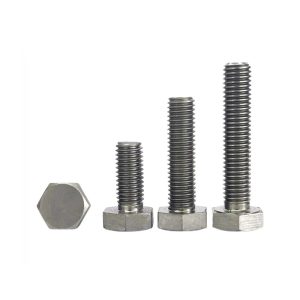
Common bolt types include:
- Hex bolts: Feature six-sided heads that can be tightened using common tools.
- Flange bolts: Have an integrated flange beneath the head to provide a larger bearing surface.
- Carriage bolts: Typically feature a rounded head and a section beneath the head designed for particular fastening arrangements.
- Special-purpose bolts: Use application-specific geometries to meet particular assembly requirements.
When selecting construction bolts, buyers should check:
- Nominal diameter and length.
- Thread type and pitch.
- Head dimensions and configuration.
- Material and mechanical property requirements.
- Surface treatment.
- Compatibility with the mating nut or threaded hole.
A bolt with the correct nominal diameter may still be unsuitable if its thread pitch, length, or other dimensions do not match the connection design.
2.2 Construction Nuts
Nuts are internally threaded components used with compatible bolts or threaded rods to create threaded connections.
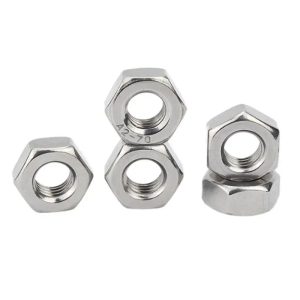
Common types include:
- Hex nuts: General-purpose nuts with six-sided external profiles.
- Flange nuts: Include an integrated flange that provides a larger bearing surface.
- Lock nuts: Incorporate features intended to resist rotation under specified conditions.
Nut selection should consider thread compatibility, mechanical properties, material, surface treatment, and installation requirements.
A nut must be compatible with its mating threaded component. Matching nominal diameter alone is not sufficient if the thread pitch, tolerance, or applicable mechanical requirements differ.
Lock nuts also have different designs and performance characteristics. Their suitability should be evaluated according to the connection requirements rather than assuming that every locking design provides the same function.
2.3 Construction Washers
Washers are generally placed between a fastener and a connected component or surface. They can support bearing conditions and help distribute contact pressure according to the joint design.
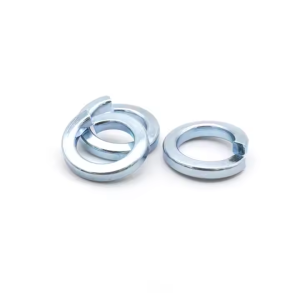
Common types include:
- Flat washers: Provide a bearing surface and help distribute contact pressure.
- Spring washers: Have elastic or spring-like geometries intended for particular connection designs.
- Special washers: Designed for specific positioning, sealing, load distribution, or assembly requirements.
Washer selection should consider the bolt or screw dimensions, bearing surface, material combination, and intended function.
A spring washer should not automatically be assumed to prevent loosening in every vibrating connection. The effectiveness of a fastening arrangement depends on the complete joint design and its operating conditions.
2.4 Construction Anchors
Construction anchors are fastening products used to secure components to suitable base materials, particularly concrete and certain types of masonry.
They are commonly considered for applications such as fixing brackets, mounting equipment, attaching support components, and securing fixtures to building surfaces.
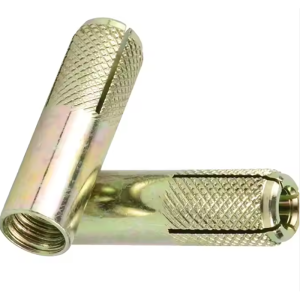
Common mechanical anchor types include:
- Wedge anchors: Expansion-type anchors that use a wedge mechanism to create an anchoring connection in a suitable base material.
- Sleeve anchors: Use an expansion sleeve that expands during installation.
- Drop-in anchors: Internally threaded expansion anchors designed to receive compatible threaded fasteners after installation.
These anchor types have different structures and installation requirements. Their suitability depends on the base material, product specifications, connection design, and installation conditions.
Buyers should not assume that all mechanical anchors can be used interchangeably or that a product suitable for one concrete condition will also be suitable for every masonry material.
2.5 Screws and Threaded Rods
Screws and threaded rods are also used in construction-related fastening arrangements.
Construction screws
Screws secure components through threaded engagement. Depending on their design, they may engage with pre-threaded holes or form mating threads during installation.
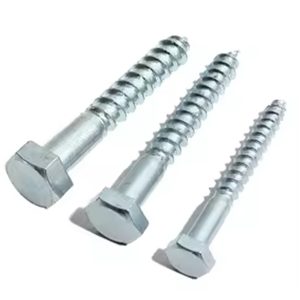
Common examples include:
- Machine screws.
- Self-tapping screws.
- Application-specific construction screws.
Selection factors include screw diameter, length, thread design, head configuration, material, and installation method.
Threaded rods
Threaded rods provide external threads along part or all of their length and can be used in various fastening and support arrangements.
Typical applications may include:
- Suspended support assemblies.
- Threaded connections between components.
- Equipment and fixture support arrangements.
- Assemblies using compatible nuts, washers, and other fittings.
The required rod diameter, length, material, thread specifications, and connection configuration should be confirmed against the relevant design requirements.
The following table summarizes the basic functions of common construction fasteners.
| Fastener Type | Basic Function | Typical Connection Context |
| Bolts | Create threaded connections | Metal components and assemblies |
| Nuts | Secure compatible threaded fasteners | Bolted connections |
| Washers | Support bearing and contact conditions | Bolted assemblies |
| Anchors | Secure components to suitable base materials | Concrete and masonry connections |
| Screws | Fasten components through threaded engagement | Building components and assemblies |
| Threaded Rods | Provide threaded connection or support arrangements | Suspended and supported assemblies |
3. How Base Materials and Connection Types Affect Fastener Selection
The base material is one of the first factors to consider when choosing construction fasteners. Different materials have different characteristics, and the fastening method must be suitable for the material receiving the fastener.
The connection type also matters. A removable bolted connection, a screw fastening arrangement, and an anchor connection do not have the same requirements.
3.1 Fasteners for Concrete
Concrete is commonly used in building structures, foundations, floors, and other construction components. Fasteners may be required to attach brackets, fixtures, equipment supports, and other components to concrete surfaces.
Mechanical anchors are one possible fastening solution for suitable concrete applications.
Before selecting an anchor, consider:
- The type and condition of the concrete.
- Whether the concrete is cracked or uncracked, where relevant to the product specification.
- The required anchor diameter and length.
- Effective embedment depth.
- Edge distance and spacing.
- Installation conditions.
- The loads and connection requirements established by the design.
Not every anchor is suitable for every concrete condition. Product technical documentation should be checked to establish the permitted base materials and application limits.
3.2 Fasteners for Masonry and Brickwork
Masonry and brickwork include different materials and construction arrangements, such as solid bricks, hollow bricks, and masonry blocks.
These materials may differ in strength, internal structure, and resistance to local loading. As a result, fastener compatibility needs to be evaluated carefully.
When selecting fasteners for masonry, consider:
- The specific type of masonry material.
- Whether the material is solid or hollow.
- The condition and thickness of the base material.
- The intended fastening application.
- The anchor or fastening product’s documented compatibility.
- Installation requirements specified by the manufacturer.
A mechanical anchor designed for a particular concrete application should not automatically be treated as suitable for all brickwork or masonry materials.
Where the connection has structural or safety implications, selection should follow the applicable engineering design requirements.
3.3 Fasteners for Wood
Wood construction involves fastening requirements that differ from those of concrete and metal assemblies.
Common fastening products include screws, bolts, nuts, washers, and other products designed for wood connections.
Important selection factors include:
- Wood type and condition.
- Component thickness.
- Fastener diameter and length.
- Thread geometry.
- Required penetration and engagement.
- Installation method.
- Environmental exposure.
For example, a screw used to secure a wooden panel may have different thread and head requirements from a bolt used to connect larger timber components.
The selected fastener should be compatible with the wood material and the intended connection design. Excessive installation force or unsuitable thread engagement may damage the surrounding material.
3.4 Fasteners for Steel and Metal Components
Steel and other metal components are commonly joined using bolts, nuts, washers, screws, and threaded connections.
These fastening arrangements may be used in brackets, frames, equipment supports, metal assemblies, and other construction-related applications.
Important factors include:
- Material and mechanical property requirements.
- Nominal diameter and thread specifications.
- Hole dimensions.
- Component thickness.
- Bearing surface requirements.
- Surface treatment.
- Compatibility between connected materials.
- Installation and tightening requirements.
For bolted metal connections, both the bolt and mating nut should be checked as compatible components.
The fastening system must meet the requirements of the complete connection rather than relying on the specifications of an individual fastener alone.
3.5 Removable and Permanent Connections
Construction fastening methods can be selected according to whether the connection is intended to be removable.
Removable connections
Threaded fasteners such as bolts, nuts, and screws are commonly used where components may need to be disassembled, inspected, maintained, or replaced.
Connections intended to remain in place
Some fastening arrangements are designed to remain in place after installation. Mechanical anchors, for example, may secure fixtures or support components to a suitable base material. Whether an installed connection can be removed or reused depends on the product design and installation method.
The choice depends on:
- Whether future disassembly is required.
- The materials being joined.
- Available installation access.
- Connection design.
- Maintenance requirements.
- Applicable engineering specifications.
Identifying the intended connection type early helps narrow down the appropriate fastening products.
4. Key Specification Factors for Construction Fasteners
Construction fastener specifications define the physical, mechanical, and functional requirements a product must meet. Checking these specifications helps ensure that the selected fastener is compatible with the intended connection.
Four important areas are material, mechanical properties, dimensions, and surface treatment.
4.1 Material Selection
Material selection influences the strength, durability, corrosion behavior, and other performance characteristics of construction fasteners.
Common material categories include:
Uamea Carbon
Carbon steel is widely used in general fastening applications because of its versatility and mechanical properties. Its actual performance depends on its chemical composition, heat treatment, and manufacturing process.
Protective surface treatments may be required when carbon steel fasteners are exposed to moisture or corrosive environments.
Alloy Steel
Alloy steel contains additional alloying elements that can influence strength, hardenability, toughness, and other mechanical properties.
It may be used where specific mechanical performance requirements need to be achieved through appropriate material selection and processing.
Uamea uamea
Stainless steel contains chromium and other alloying elements that contribute to corrosion resistance.
Different stainless steel grades have different mechanical properties and corrosion behavior. The appropriate grade should be selected according to the environment, mechanical requirements, temperature, and material compatibility.
Other Materials
Depending on the application, aluminum alloys, copper alloys, and other specialized materials may also be used.
These materials may be considered where weight, electrical conductivity, corrosion behavior, or other functional characteristics are important.
| Mea | General Characteristics | Selection Considerations |
| Uamea Carbon | Versatile mechanical properties | Strength, heat treatment, corrosion protection |
| Alloy Steel | Can provide specified strength and tailored properties | Composition, heat treatment, loading |
| Uamea uamea | Corrosion-resistant material family | Grade, strength, temperature, environment |
| Aluminum Alloy | Low density | Strength, fatigue, galvanic compatibility |
| Copper Alloy | Electrical and other specialized properties | Conductivity, strength, corrosion behavior |
Material selection should be based on the requirements of the complete fastening connection rather than the material name alone.
4.2 Mechanical Properties and Strength Requirements
Mechanical properties describe how a fastener responds to applied forces and deformation.
Important properties include:
- Tensile strength: The maximum tensile stress a material or fastener can withstand under specified test conditions.
- Yield strength: The stress at which a material begins to deform permanently, according to the applicable material definition and test method.
- Proof strength: A specified stress level used to evaluate resistance to permanent deformation under a defined test procedure.
- Proof load: A specified load applied during testing to evaluate whether a fastener can withstand that load without unacceptable permanent deformation.
- Hardness: A measure of resistance to localized indentation or deformation.
- Fatigue performance: The ability to withstand repeated or fluctuating loading over time.
Yield strength and proof strength are related concepts, but they are not interchangeable in every fastener specification. Their definitions and applicability depend on the material and the relevant test standard.
Fastener property classes provide a standardized way to identify certain mechanical performance requirements. However, the applicable classification depends on the fastener type and material.
For example, bolts and nuts may be covered by different mechanical property standards. Buyers should verify that the selected classification applies to the specific product being purchased.
Mechanical property requirements should also be considered alongside:
- The intended loading conditions.
- Joint design.
- Material compatibility.
- Operating environment.
- Installation requirements.
- Applicable product specifications.
A higher strength class is not automatically a better choice. The selected fastener must meet the actual requirements of the connection without introducing other compatibility or installation problems.
4.3 Dimensions and Thread Specifications
Dimensional accuracy is essential because fasteners must fit their mating components and provide the intended connection.
Important dimensional parameters include:
Nominal Diameter
The nominal diameter identifies the basic size of a threaded fastener. It must match the corresponding nut, threaded hole, or specified connection arrangement.
Thread Pitch
Thread pitch is the distance between adjacent thread forms. Incorrect thread pitch can prevent proper engagement or damage mating threads.
Fastener Length
Bolt, screw, or threaded rod length must meet the connection requirements and provide the intended engagement.
Head Dimensions
Head height, width across flats, flange diameter, and drive configuration may affect installation space and tool access.
Thread Tolerances
Thread tolerances determine permissible variations in thread dimensions and influence the fit between mating components.
Other important considerations include:
- Metric coarse threads.
- Metric fine threads.
- Internal and external thread tolerances.
- Thread engagement length.
- Compatibility with the specified nut or threaded hole.
For example, two bolts with the same nominal diameter may have different thread pitches or lengths. They should not be treated as interchangeable without checking the relevant technical specifications.
Dimensional verification should follow the applicable product drawing and inspection requirements.
4.4 Surface Treatment and Corrosion Protection
Surface treatments may improve corrosion resistance, control friction, or provide other functional characteristics.
Common treatments include:
Zinc Plating
Zinc coatings are commonly used to provide corrosion protection to steel fasteners. The actual protection depends on coating thickness, supplementary treatments, and environmental exposure.
Zinc-Nickel Coating
Zinc-nickel coatings can provide enhanced corrosion protection in selected applications. Their suitability depends on the specified coating system and verification requirements.
Phosphate Coating
Phosphate treatments form a conversion coating on the metal surface. Depending on the process and supplementary treatment, they may provide a suitable surface for lubrication, painting, or other functional purposes.
Other Protective Coatings
Specialized coatings may be selected to control friction, improve corrosion resistance, or meet particular assembly requirements.
When selecting a surface treatment, consider:
- Corrosion exposure and expected service conditions.
- Coating thickness and dimensional tolerances.
- Friction characteristics during tightening.
- Compatibility with mating components.
- Operating temperature.
- Environmental and chemical exposure.
The coating should be suitable for the intended environment and compatible with the fastening system.
Surface treatment should not be selected independently of the fastener’s mechanical properties and connection requirements.
5. Mechanical Anchors: Types and Basic Selection Factors
Mechanical anchors are used in various construction applications to secure components to suitable base materials. They are particularly relevant where a connection needs to be established between an attached component and an existing concrete or masonry surface.
Different mechanical anchor types use different expansion mechanisms and installation arrangements. Their selection requires attention to the base material, anchor dimensions, installation conditions, and connection requirements.
5.1 Common Types of Mechanical Anchors
Three common types of mechanical anchors are wedge anchors, sleeve anchors, and drop-in anchors.
Wedge Anchors
Wedge anchors use an expansion mechanism in which a wedge component expands against the surrounding base material during installation.
They are used in suitable applications where the product design and base material conditions permit this type of anchoring connection.
Important checks include:
- Anchor diameter and length.
- Base material compatibility.
- Required embedment depth.
- Edge distance and spacing.
- Installation procedure.
- Applicable product specifications.
Sleeve Anchors
Sleeve anchors use an expansion sleeve that expands during installation to create an anchoring connection.
Depending on the product design, they may be considered for different types of suitable base materials and fastening applications.
Before selecting a sleeve anchor, check:
- The manufacturer’s specified base material range.
- Sleeve dimensions.
- Anchor length and diameter.
- Installation requirements.
- Required connection conditions.
Drop-In Anchors
Drop-in anchors are internally threaded expansion anchors designed to receive compatible bolts or threaded rods after installation.
They are used in suitable base materials where an internally threaded anchoring point is required.
Important considerations include:
- Compatible base material.
- Anchor size and thread specification.
- Hole preparation requirements.
- Setting procedure.
- Compatible bolt or threaded rod.
- Manufacturer’s installation instructions.
The three types are not interchangeable in every application. Product selection should be based on the actual connection requirements and documented product suitability.
| Anchor Type | Basic Configuration | Key Selection Checks |
| Wedge Anchor | Expansion-type mechanical anchor | Base material, diameter, embedment, installation requirements |
| Sleeve Anchor | Sleeve-based expansion anchor | Base material, sleeve dimensions, installation conditions |
| Drop-In Anchor | Internally threaded expansion anchor | Compatible base material, hole preparation, setting requirements |
5.2 Base Material and Anchor Compatibility
Base material compatibility is one of the most important factors in mechanical anchor selection.
Different concrete and masonry conditions can influence how an anchor performs. Relevant factors may include:
- Concrete or masonry type.
- Base material condition.
- Cracked or uncracked concrete classification, where applicable.
- Base material thickness.
- Local material condition around the installation point.
- Manufacturer-defined application limitations.
An anchor designed for a specific concrete condition should not automatically be considered suitable for hollow brick, solid brick, or every type of masonry block.
Buyers should check the manufacturer’s technical documentation to identify:
- Permitted base materials.
- Applicable installation conditions.
- Required dimensions and embedment.
- Relevant design limitations.
- Any additional application restrictions.
For connections with structural or safety implications, anchor selection must follow the applicable engineering design requirements.
5.3 Anchor Dimensions and Installation Conditions
Mechanical anchor dimensions directly affect product compatibility and installation requirements.
Important parameters include:
- Anchor diameter: The nominal size of the anchor.
- Anchor length: The overall product length.
- Effective embedment depth: The specified depth of engagement within the base material.
- Hole diameter: The required diameter of the drilled hole.
- Installation depth: The depth required by the product installation instructions.
- Edge distance: The distance between the anchor and the edge of the base material.
- Spacing: The distance between adjacent anchors.
- Base material thickness: The thickness of the material receiving the anchor.
These parameters should not be selected independently.
For example, the required embedment depth and edge distance may depend on the anchor design, base material, and connection requirements. A dimension specified for one anchor model should not be transferred to another product without verification.
Before ordering or installing an anchor, confirm the applicable product drawing and manufacturer’s installation documentation.
5.4 Load Requirements and Application Conditions
Mechanical anchors may be subject to different types of loading.
Common load categories include:
- Tensile load: A force acting to pull the anchor away from the base material.
- Shear load: A force acting parallel to the base material surface.
- Combined loading: A connection condition involving both tensile and shear forces.
Actual anchor performance may also be influenced by:
- Base material properties.
- Anchor spacing.
- Edge distance.
- Embedment depth.
- Installation quality.
- Connection geometry.
- The condition of the surrounding material.
The suitability of an anchor cannot be determined from its nominal diameter alone.
For structural connections, the required load capacity and design conditions should be established through appropriate engineering calculations, applicable standards, and relevant product technical documentation.
General product descriptions should not replace professional anchor design.
5.5 Installation and Technical Documentation
Correct installation is essential for mechanical anchor connections.
Before using a product, check the manufacturer’s instructions for:
- Required drilling method.
- Hole diameter and depth.
- Hole cleaning requirements, where specified.
- Installation tools.
- Setting procedure.
- Tightening requirements, where applicable.
- Inspection or verification procedures.
Technical documentation may also include product drawings, installation instructions, product evaluation reports, and other documents relevant to the intended application.
Where certifications or product assessments are required, buyers should verify their scope, applicable base materials, installation conditions, and validity.
A product document should be reviewed in relation to the exact anchor model and intended application rather than treated as general approval for every fastening condition.
6. Technical Standards, Drawings and Quality Documents
Technical standards and product documents help define and verify construction fastener requirements. However, different standards cover different products and performance characteristics. A general fastener standard does not automatically address every requirement of a particular construction project.
6.1 Applicable Fastener Standards
Fastener standards may cover:
- Product dimensions.
- Thread specifications.
- Mechanical properties.
- Material requirements.
- Surface treatment.
- Test methods.
- Functional characteristics.
Different product categories may require different standards. For example, standards for bolts and nuts may have separate requirements, while mechanical anchors may be covered by product-specific technical documents or evaluation requirements.
When referring to a standard, buyers should confirm:
- The correct standard number and part.
- The applicable edition and amendments.
- The product types covered.
- The properties or tests addressed.
- Whether additional project-specific requirements apply.
A product meeting a general fastener standard is not automatically suitable for every structural or construction application.
The actual product specification and project requirements should determine which standards and technical documents need to be checked.
6.2 Engineering Drawings and Technical Specifications
Engineering drawings and technical specifications are important references for identifying the exact product required.
A product name alone may not provide enough information to distinguish between different configurations.
Important drawing and specification details include:
- Product type and configuration.
- Nominal diameter and length.
- Thread type and pitch.
- Head dimensions.
- Material and mechanical property requirements.
- Surface treatment.
- Dimensional tolerances.
- Installation requirements.
- Inspection and acceptance criteria.
Buyers should also verify the drawing revision.
A product manufactured according to an outdated drawing may not meet current project requirements, even if its general dimensions appear similar.
Where special requirements exist, the technical specification should clearly identify the applicable test methods, acceptance criteria, and required documentation.
6.3 Inspection and Quality Documents
Quality documents provide information about whether a product or production batch has been evaluated against specified requirements.
Common documents include:
Material Test Certificate
Provides information about the material, such as its chemical composition and relevant mechanical properties, depending on the certificate type and scope.
Dimensional Inspection Report
Records measured dimensions and compares them with the specified drawing or dimensional requirements.
Mechanical Testing Report
Documents test results for specified mechanical properties, such as tensile strength, hardness, or proof load.
Surface Treatment Inspection Report
May provide information about coating thickness, appearance, or specified corrosion-related test results.
Certificate of Conformity
A supplier or manufacturer may issue this document to declare conformity with identified specifications or contractual requirements. Its value depends on the scope, supporting evidence, and issuing party.
Batch Traceability Records
Help connect product identification with relevant material, production, inspection, and delivery information.
Buyers should understand the differences between these documents. For example, a material certificate does not automatically prove that a finished fastener meets every dimensional, mechanical, coating, and functional requirement.
Document verification should consider:
- Does the document identify the correct product?
- Does it correspond to the relevant production batch?
- Are the referenced standards and specifications appropriate?
- Are the reported test results complete?
- Is the document issued by an appropriate organization?
- Does it cover the actual acceptance requirements?
7. How to Select the Right Construction Fasteners
Selecting suitable construction fasteners requires a systematic evaluation of the application, base material, connection design, product specifications, and installation conditions.
The following steps provide a practical framework for organizing the selection process. They are general product selection guidelines and do not replace project-specific engineering design.
7.1 Identify the Application and Base Material
Start by understanding where and how the fastener will be used.
Important questions include:
- Which components need to be connected?
- What materials are being joined?
- Is the base material concrete, masonry, wood, steel, or another material?
- Is the connection removable or intended to remain in place?
- What mechanical loads will act on the connection?
- Are there special installation or maintenance requirements?
The answers help narrow down the appropriate fastening method.
For example, connecting two metal brackets may require a different fastening arrangement from securing a fixture to a concrete wall.
The base material and connection design should determine the product type rather than selecting a fastener based only on availability.
7.2 Determine the Fastener Type
Once the application and base material are understood, identify the appropriate product category.
Common options include:
- Bolts and nuts for compatible threaded connections.
- Washers for specified bearing and contact requirements.
- Screws for suitable threaded fastening arrangements.
- Mechanical anchors for compatible concrete or masonry applications.
- Threaded rods for specified threaded connection and support arrangements.
For anchor applications, further evaluation is necessary to determine whether the selected anchor type is suitable for the base material and intended connection.
The product’s technical documentation should be used to verify its application range.
7.3 Verify Material and Mechanical Requirements
Material and mechanical properties should match the requirements of the complete connection.
Consider:
- Required tensile and yield or proof properties.
- Applicable fastener property class.
- Material and heat treatment.
- Temperature exposure.
- Corrosion conditions.
- Fatigue and dynamic loading requirements, where relevant.
- Compatibility with connected materials.
Material and strength requirements should be verified against the engineering drawing and applicable technical specifications.
Avoid choosing a higher strength grade simply because it appears to provide a greater safety margin. Joint design, material compatibility, toughness, and installation conditions also need to be considered.
7.4 Check Dimensions and Installation Requirements
Dimensional compatibility is essential for proper installation.
Before selecting or ordering a fastener, confirm:
- Nominal diameter.
- Thread type and pitch.
- Fastener length.
- Head dimensions and configuration.
- Thread engagement requirements.
- Compatibility with the mating nut or threaded hole.
- Relevant dimensional tolerances.
For mechanical anchors, additional checks may include:
- Anchor diameter and length.
- Hole diameter.
- Embedment depth.
- Edge distance.
- Anchor spacing.
- Base material thickness.
- Installation procedure.
These requirements should be confirmed using the applicable product documentation and engineering specifications.
7.5 Evaluate Surface Treatment and Environmental Conditions
Surface treatment should be selected according to the expected service environment and functional requirements.
For example:
- General moisture exposure may require a specified protective coating.
- Outdoor applications exposed to corrosive conditions may require additional corrosion protection.
- High-temperature areas may require materials and coatings suitable for elevated temperatures.
- Connections involving dissimilar metals may require consideration of galvanic corrosion.
- Precision assemblies may require specific friction characteristics during tightening.
Buyers should also check whether the coating affects thread dimensions, friction, and assembly performance.
The selected material and coating system should be suitable for the actual environmental conditions rather than relying on a general description such as corrosion-resistant.
7.6 Review Technical Documents and Inspection Requirements
The final selection step is to verify that the product can be evaluated against the required technical specifications.
Before approving a product, confirm:
- Applicable product and material standards.
- Current engineering drawing and revision.
- Material certificates.
- Dimensional inspection records.
- Mechanical testing reports.
- Surface treatment documentation.
- Required functional testing.
- Batch identification and traceability.
- Customer-specific acceptance criteria.
Not every application requires every document or test. The necessary evidence should be determined by the project specification and the risk associated with the connection.
Construction Fastener Selection Checklist
| Selection Item | Information to Confirm |
| Application | Connection location and function |
| Base Material | Concrete, masonry, wood, steel, or other material |
| Fastener Type | Bolt, nut, screw, washer, anchor, or threaded rod |
| Mea | Specified material and grade |
| Mechanical Properties | Required strength and performance |
| Dimensions | Diameter, length, pitch, and tolerances |
| Surface Treatment | Coating type and requirements |
| Environment | Temperature, moisture, vibration, and corrosion |
| Installation | Tools, drilling, setting, and installation conditions |
| Standards | Applicable product and test standards |
| Quality Documents | Certificates, reports, and inspection records |
| Traceability | Batch identification and production records |
This checklist provides a starting point for evaluating construction fasteners. Structural connections and critical anchor applications may require additional engineering analysis and application-specific validation.
8. What Should Buyers Check Before Ordering Construction Fasteners?
For purchasing professionals, confirming product specifications before placing an order helps reduce misunderstandings, specification mismatches, and quality disputes.
The following areas focus on the information that should be agreed upon during procurement.
8.1 Product Specifications and Engineering Drawings
Buyers should obtain and review the relevant product drawings and technical specifications before requesting quotations or approving an order.
Important information includes:
- Product type and part number.
- Nominal diameter and length.
- Thread configuration.
- Material and mechanical property class.
- Surface treatment.
- Dimensional tolerances.
- Applicable technical standards.
- Special manufacturing or inspection requirements.
For mechanical anchors, the product information should also identify the anchor type, compatible base material, dimensions, and relevant installation requirements.
If a buyer provides only a general product name, such as hex bolt or sleeve anchor, the information may be insufficient to identify the exact required product.
A detailed drawing or specification sheet can help clarify these requirements.
8.2 Samples and Product Verification
Samples may be required before approving a product for production or procurement.
Depending on the application, sample evaluation may include:
- Dimensional verification.
- Visual inspection.
- Thread compatibility checks.
- Mechanical property testing.
- Surface treatment evaluation.
- Assembly or functional testing.
For mechanical anchors, verification may also involve checking product configuration and compatibility with the specified base material and installation conditions.
Buyers should establish clear acceptance criteria before requesting samples. This ensures that all parties understand what must be verified.
It is also important to distinguish sample approval from approval of subsequent production batches. Appropriate production controls and inspection records may still be required.
8.3 Quality Documents and Inspection Requirements
Before ordering, buyers should identify which quality documents are mandatory.
Depending on the project, these may include:
| Document | What Buyers Should Verify |
| Material Test Certificate | Material identification and reported properties |
| Dimensional Inspection Report | Compliance with specified dimensions |
| Mechanical Testing Report | Results against required mechanical properties |
| Surface Treatment Report | Coating information and specified test results |
| Certificate of Conformity | Declared compliance and its scope |
| Traceability Records | Relationship between products and production batches |
Buyers should also confirm whether inspection must be performed by the manufacturer, an independent inspection organization, or another designated party.
Document requirements should be agreed upon before production rather than requested only after delivery.
8.4 Packaging, Identification and Delivery Requirements
Packaging and identification are also important parts of construction fastener procurement.
Different fastener sizes, grades, materials, or surface treatments may look similar. Proper identification helps prevent incorrect products from being mixed during storage, transportation, or assembly.
Before ordering, confirm:
- Packaging type and quantity per package.
- Product labels and identification information.
- Batch and lot numbers.
- Separation of different specifications.
- Protection against moisture and physical damage.
- Required inspection documents accompanying the shipment.
- Delivery quantities and agreed delivery schedules.
For products with strict traceability requirements, packaging labels should be consistent with the relevant batch documentation.
Clear packaging and identification requirements help maintain product control throughout the purchasing and delivery process.
9. Frequently Asked Questions About Construction Fasteners
9.1 What Are the Most Common Types of Construction Fasteners?
Common construction fasteners include bolts, nuts, washers, anchors, screws, and threaded rods.
Bolts and nuts are frequently used for threaded mechanical connections, while screws may be used for building components and assemblies. Mechanical anchors are used to secure components to suitable base materials, and threaded rods provide threaded connection or support arrangements.
The appropriate type depends on the connection design, materials, installation method, and operating conditions.
9.2 What Is the Difference Between Construction Anchors and Bolts?
Construction anchors and bolts serve different fastening functions.
Bolts are threaded fasteners used with compatible nuts or threaded holes to create connections between components.
Anchors are designed to secure components to a suitable base material, such as concrete or specified masonry. Mechanical anchors use expansion mechanisms to establish the anchoring connection.
Some anchor products have internal threads and are designed to receive compatible bolts or threaded rods after installation.
The correct product depends on the base material and connection requirements.
9.3 How Do You Choose Fasteners for Concrete?
Choosing fasteners for concrete requires checking the connection design, base material condition, and product suitability.
For mechanical anchors, important factors include:
- Concrete condition and compatibility with the anchor.
- Anchor type and dimensions.
- Embedment depth.
- Hole diameter and installation requirements.
- Edge distance and anchor spacing.
- Applied loads and engineering design requirements.
The manufacturer’s technical documentation should be checked before selecting or installing an anchor. Structural applications should follow the applicable design requirements.
9.4 What Materials Are Commonly Used for Construction Fasteners?
Common construction fastener materials include carbon steel, alloy steel, and stainless steel.
Carbon steel is used in many general fastening applications, while alloy steel may be selected for specified mechanical performance requirements.
Stainless steel may be used where corrosion resistance is important, although the appropriate grade depends on the environment and mechanical requirements.
Aluminum and copper alloys may also be used in specialized applications.
9.5 Why Are Fastener Specifications Important?
Fastener specifications help ensure that a product matches the intended connection requirements.
Important specifications include material, mechanical properties, dimensions, thread configuration, surface treatment, and installation requirements.
Incorrect specifications may result in product incompatibility, installation difficulties, or failure to meet the intended connection requirements.
9.6 What Should Be Checked Before Ordering Construction Fasteners?
Before ordering construction fasteners, buyers should confirm:
- Product type and configuration.
- Diameter, length, and thread specifications.
- Material and mechanical property requirements.
- Surface treatment.
- Applicable standards and engineering drawings.
- Sample and inspection requirements.
- Quality documentation.
- Packaging and batch identification.
- Delivery quantity and schedule.
For mechanical anchors, base material compatibility and installation requirements should also be verified.
The required information should be agreed upon before production or procurement begins.
10. Conclusion
Construction fasteners play an important role in connecting and securing building components. Common types include bolts, nuts, washers, screws, anchors, and threaded rods, each serving different fastening functions.
Selecting suitable construction fasteners requires more than checking product dimensions. Buyers and engineers must also consider the base material, connection design, mechanical properties, material compatibility, surface treatment, environmental conditions, and installation requirements.
Mechanical anchors require additional attention because their suitability depends on the base material, anchor dimensions, embedment depth, edge distance, spacing, and installation conditions. Their selection should be supported by relevant product documentation and appropriate engineering design.
Before placing an order, buyers should confirm the exact product configuration, technical specifications, quality documents, inspection requirements, and batch identification information.
A systematic approach to construction fastener selection helps ensure that products are evaluated against the actual requirements of the intended connection rather than relying on general product descriptions or assumptions.












