High-strength bolts are used in machinery, industrial equipment, steel structures, and other applications where fasteners must meet defined mechanical performance requirements. Selecting the right product involves more than choosing a diameter or strength grade. Buyers and engineers must also consider applicable standards, material requirements, dimensions, connection conditions, compatible components, and quality documentation.
For industrial buyers, an incomplete specification can lead to compatibility problems, inspection discrepancies, and delays during assembly. Understanding the relationship between bolt grades, product standards, and purchasing requirements helps reduce these risks.
This guide explains how to identify high-strength bolt grades, interpret technical specifications, select compatible components, and establish appropriate quality verification requirements before placing an order.
1. What Are High-Strength Bolts?
1.1 Definition and Basic Characteristics
High-strength bolts are fasteners designed and manufactured to meet specified mechanical performance requirements under an applicable product standard or engineering specification.
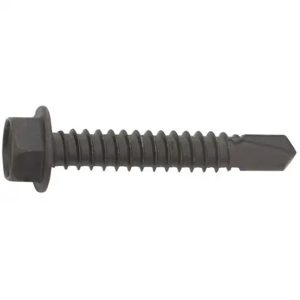
Depending on the product category, these requirements may address tensile strength, yield-related properties, hardness, material condition, heat treatment, dimensional tolerances, and other characteristics.
The term high-strength bolt does not identify one universal product design or classification system. Its precise meaning depends on the applicable standard, product type, and intended application.
When evaluating a high-strength bolt, buyers should consider five main factors:
- Mechanical properties: Whether the finished bolt meets the specified strength grade or property class.
- Material requirements: Whether the material and its condition satisfy the applicable specification.
- Dimensions and threads: Whether the bolt fits the intended connection and compatible components.
- Manufacturing requirements: Whether applicable production, processing, and inspection requirements have been met.
- Application conditions: Whether the fastener is suitable for the intended connection, service environment, and installation procedure.
Appearance alone cannot establish whether a bolt meets a particular strength requirement. Buyers should verify the product designation, applicable standard, required markings, and supporting documentation.
1.2 Common Applications
High-strength bolts are used in mechanical assemblies, industrial equipment, steel structures, and other connections that require specified fastener performance.
However, the requirements can differ significantly between applications.
A bolt used in general machinery may be selected according to equipment drawings, product standards, and the manufacturer’s technical specifications. A bolt used in a specially designed structural connection may also need to satisfy project-specific requirements for installation, pretension, inspection, or connection performance.
A bolt’s mechanical properties alone do not establish its suitability for every application. The complete connection and its governing technical requirements must also be considered.
Before selecting a product, buyers should identify the intended application and determine which drawings, standards, and engineering documents govern the connection.
2. High-Strength Bolt Grades and Material Requirements
2.1 Understanding Strength Grades and Property Classes
Bolt strength grades and property classes identify specified mechanical performance requirements within a particular classification system.
Different standards may use different designations, cover different product types, and establish different requirements. Consequently, a grade should always be interpreted in the context of its governing standard.
Three concepts are particularly important:
- Strength grade or property class: Identifies a defined set of mechanical performance requirements under the applicable classification system.
- Material designation: Identifies the specified material or material-related requirements.
- Product standard: Establishes the requirements applicable to the product, which may include dimensions, mechanical properties, marking, and verification procedures.
These concepts are related but are not interchangeable.
A material designation alone does not establish that a finished bolt meets a required property class. Likewise, a grade designation cannot be interpreted reliably without identifying the relevant standard.
When reviewing a quotation or product specification, buyers should confirm the complete product designation rather than relying on a general description such as “high-strength bolt.”
2.2 Material Requirements, Heat Treatment, and Mechanical Properties
Material requirements and mechanical properties describe different aspects of a fastener.
Material requirements identify the specified material or its required characteristics. Mechanical property requirements define the performance that the finished product must demonstrate under the applicable standard.
Manufacturing processes, including heat treatment where required, can influence the final mechanical properties. However, the required process and its verification depend on the product specification.
When reviewing material and performance information, consider the following:
| Item | What to Verify | Why It Matters |
| Material designation | Whether the material requirements match the purchasing specification | Helps establish material conformity |
| Heat treatment | Whether applicable processing requirements have been met | May affect the finished product’s mechanical properties |
| Strength grade or property class | Whether the finished bolt meets the specified classification | Helps establish conformity with the applicable requirements |
| Inspection and test results | Whether required characteristics have been verified | Provides evidence of conformity within the scope of the inspection |
| Product identification | Whether the product can be linked to the relevant specification and records | Supports identification and traceability where required |
Not every product standard requires the same manufacturing processes, documents, or verification procedures.
A suitable purchasing specification should therefore identify the required product classification and any additional material or manufacturing conditions necessary for the intended application.
2.3 Why Grades Cannot Be Assumed Equivalent Across Standards
Similar grade names or numerical designations do not necessarily indicate identical technical requirements.
Different standards may establish different mechanical property limits, product scopes, dimensional provisions, testing methods, or other requirements. Even when two products have comparable values for a particular mechanical property, that comparison alone does not establish that they are interchangeable.
Before approving a proposed alternative, compare:
- The applicable standards and their required editions.
- The product types and dimensional ranges covered.
- The required mechanical properties.
- The material and manufacturing requirements.
- The thread configuration and dimensional tolerances.
- The required marking, testing, and documentation.
- Any application-specific design and approval requirements.
For example, a supplier may propose a bolt manufactured to a different standard from the one specified in the original drawing.
The proposed product should not be accepted solely because its grade designation appears similar. The relevant technical requirements must be compared, and the substitution should receive the necessary engineering or project approval.
The appropriate approach is to establish technical equivalence through documented evaluation rather than assume that different classification systems are interchangeable.
3. Standards and Specifications for High-Strength Bolts
3.1 Understanding the Relationship Between Standards and Grades
Product standards and strength grades serve complementary purposes.
A product standard may establish requirements for dimensions, mechanical properties, marking, manufacturing, testing, or other product characteristics. A strength grade or property class identifies a defined set of requirements within the relevant classification system.
Identifying only the grade may leave important purchasing requirements unclear. Similarly, naming a standard without identifying the necessary product characteristics may not fully define the required item.
A purchasing specification should provide enough information for the supplier to identify the intended product and determine the applicable technical requirements.
Depending on the product and application, the specification may include:
- Product type and configuration.
- Applicable standard and edition.
- Required strength grade or property class.
- Nominal diameter and length.
- Thread designation and dimensional requirements.
- Material and manufacturing requirements, where applicable.
- Surface treatment requirements, where applicable.
- Compatible component requirements.
- Inspection, documentation, and acceptance criteria.
These items form a practical checklist rather than a universal specification format. The actual requirements depend on the governing standard, engineering documents, and purchasing agreement.
3.2 How to Identify the Applicable Standard
The appropriate standard depends on the bolt type, intended application, target market, and project requirements.
Start by identifying the product specified in the engineering drawing, bill of materials, technical agreement, or purchase order. Then confirm that the proposed product falls within the scope of the applicable standard.
Check the following questions:
- Does the standard cover the required bolt type?
- Is the specified grade or property class recognized under that standard?
- Are the required dimensions and thread configurations covered?
- What material, manufacturing, and testing requirements apply?
- Does the purchasing specification require a particular edition or revision?
- Are additional project or customer requirements applicable?
A supplier’s general statement that a product complies with an international standard may not provide sufficient information for a technical purchasing decision. Buyers should identify the specific standard and verify the requirements relevant to their application.
For regulated or specially engineered applications, the relevant design documents and applicable industry requirements should also be reviewed.
Technical verification note: Specific standard numbers, official titles, editions, and scopes should be confirmed against authoritative technical documentation before being included in product-specific purchasing guidance.
3.3 How to Read a High-Strength Bolt Specification
A bolt specification identifies the characteristics required to select and verify the intended product.
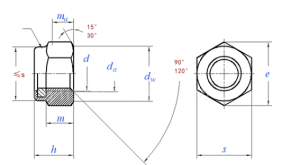
The exact format varies, but the following fields may be relevant:
| Specification Field | Information to Confirm |
| Product type | Bolt design and intended product category |
| Applicable standard | Standard designation and required edition |
| Strength grade | Required grade or property class under that standard |
| Nominal diameter | Required bolt diameter |
| Length | Required length and applicable measurement convention |
| Thread | Thread designation, pitch, and relevant tolerances |
| Mea | Material designation or additional material requirements, where applicable |
| Surface treatment | Required coating or surface condition, where applicable |
| Compatible components | Applicable nut, washer, and other component requirements |
| Quality documentation | Required inspection reports, material records, and traceability information |
| Acceptance criteria | Technical and contractual requirements used to determine conformity |
Not every field needs to be specified separately if it is already defined by the applicable standard or a referenced drawing.
However, critical requirements should not be left ambiguous.
For example, a purchasing description that identifies only the nominal diameter may be insufficient if the required grade, standard, length, or thread configuration is unclear.
Before releasing a purchase order, check that the product description, engineering drawing, technical specification, and supplier quotation are consistent.
4. Dimensions, Connection Conditions, and Compatible Components
4.1 Diameter, Length, and Thread Requirements
Dimensions determine whether a bolt can fit the intended connection and work with its mating components.
Important considerations include:
- Nominal diameter: The specified bolt diameter.
- Length: The required bolt length, interpreted according to the applicable measurement convention.
- Thread configuration: The thread designation, pitch, and applicable tolerances.
- Head dimensions: The relevant head geometry and dimensions required by the product specification.
- Grip length: The portion of the fastener associated with the thickness of the connected materials, where relevant.
- Assembly clearance: The space available for installation and tightening.
- Mating component dimensions: The dimensions of holes, nuts, washers, and other parts used in the connection.
The required dimensions depend on the product type and assembly design.
Selecting the correct nominal diameter does not guarantee that the bolt’s length, thread configuration, or head dimensions will suit the application.
Buyers should compare the specified dimensions with the engineering drawing and applicable product standard. If the requirements are unclear, confirm them with the responsible design or engineering team before ordering.
4.2 Connection Design and Installation Conditions
High-strength bolt selection should account for the complete connection rather than the fastener alone.
Depending on the application, the connection design may determine the required bolt type, strength grade, dimensions, installation method, and verification procedures.
Important considerations include:
- The geometry and thickness of the connected components.
- The intended load transfer mechanism.
- The service environment and operating conditions.
- The specified installation and tightening procedure.
- Installation access and assembly constraints.
- Project-specific inspection and verification requirements.
Certain structural connections require controlled pretension or have specified slip-resistance requirements. Other bolted assemblies follow different design and installation procedures.
These requirements should not be generalized to every high-strength bolt.
A bolt’s mechanical properties also do not, by themselves, establish the capacity of the complete connection. Connection performance depends on the design assumptions, component geometry, materials, installation conditions, and applicable engineering requirements.
For critical applications, the bolt specification and installation procedure should be consistent with the approved design documents and governing requirements.
4.3 Matching Nuts, Washers, and Other Components
High-strength bolts often form part of a fastening assembly. Selecting the bolt without checking its mating components can result in incompatibility or failure to satisfy the intended technical requirements.
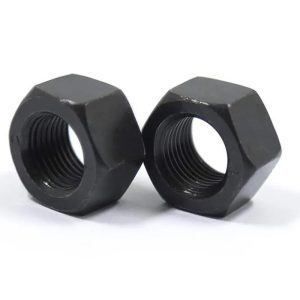
Depending on the application, the assembly may include a compatible nut, washer, and other specified components.
Before ordering, verify:
- Thread compatibility between the bolt and nut.
- Dimensional compatibility with the intended assembly.
- Applicable mechanical property requirements for the components.
- Washer type, dimensions, and intended function.
- Any standard-specific requirements for component combinations.
- Whether the components must be supplied or verified as a defined assembly.
A nut that fits a bolt’s thread is not automatically suitable for every application. Its mechanical requirements and applicable product standard must also be considered.
Likewise, washers should not be selected solely by matching their nominal hole diameter. Their dimensions, type, material, and intended function may affect their suitability.
When purchasing a complete fastening assembly, identify the requirements for each component and confirm compatibility before approving the order.
5. How to Select High-Strength Bolts
A structured selection process helps buyers translate engineering requirements into a clear purchasing specification.
5.1 Step 1: Define the Application and Technical Requirements
Start by establishing how the bolts will be used and which technical requirements govern the application.
Gather the relevant engineering drawings, bills of materials, technical specifications, and project documents.
Confirm:
- The intended application and connection type.
- The governing design or technical requirements.
- The applicable product standard.
- The required strength grade or property class.
- The dimensions and thread configuration.
- Any material, surface treatment, or environmental requirements.
- Installation, inspection, and documentation requirements.
For critical structural connections or other specially engineered assemblies, the responsible design authority should establish or approve the required technical specifications.
Avoid selecting a grade based solely on a supplier’s recommendation without checking whether it meets the actual design requirements.
5.2 Step 2: Verify the Standard and Strength Grade
Confirm that the product type, grade designation, and dimensional requirements are consistent with the applicable standard.
When reviewing a supplier’s quotation, compare the proposed product with the original specification rather than relying on a general description such as “high-strength bolt.”
If the supplier proposes an alternative standard or grade, request the technical documentation needed to evaluate the differences.
The review should cover relevant mechanical properties, material requirements, dimensions, thread configuration, marking, testing, and other applicable conditions.
Obtain the necessary technical approval before accepting a substitute that differs from the original specification.
5.3 Step 3: Confirm Dimensions and Component Compatibility
Verify that the proposed bolts and mating components fit the intended assembly.
Review the required diameter, length, thread configuration, tolerances, and other critical dimensions.
Check the applicable requirements for nuts and washers, including their standards, dimensions, and mechanical properties.
Where assembly conditions are important, verify grip length, clearance, and installation access against the engineering drawing.
Dimensional verification should be treated as a separate selection step rather than assumed to be covered by strength-grade verification.
5.4 Step 4: Establish Documentation and Inspection Requirements
Before placing an order, determine which documents and inspection records are required to verify product conformity.
Depending on the applicable standard and purchasing agreement, these may include:
- Product specifications and standard declarations.
- Material certificates or other material-related records, where required.
- Mechanical property test reports, where required.
- Dimensional inspection reports, where required.
- Product marking and batch identification information.
- Traceability records, where applicable.
- Additional inspection or acceptance documents specified by the customer.
Check that the documents correspond to the product being purchased. Relevant details may include the product designation, grade, dimensions, batch information, applicable standard, and inspection results.
A document’s title alone does not establish full compliance. Its contents must address the actual requirements of the order.
Resolve missing or inconsistent information before approving the purchase.
6. Technical Documents to Check Before Purchasing
6.1 Product Specifications and Standard Declarations
The product specification is the starting point for verifying whether the supplier’s proposed bolts match the purchasing requirements.
Review the specification for:
- Product type and configuration.
- Standard designation and edition, where specified.
- Required strength grade or property class.
- Dimensions and thread requirements.
- Material and surface treatment requirements, where applicable.
- Special manufacturing or inspection conditions.
- Required accompanying components.
- Documentation and acceptance requirements.
Compare this information with the purchase order and engineering drawing.
If the supplier’s quotation uses a different designation or omits a critical requirement, clarify the difference before proceeding.
A clear specification provides a common reference for production, inspection, delivery, and acceptance.
6.2 Material Certificates and Inspection Reports
Material certificates and inspection reports provide different types of information.
Material-related documents may describe the supplied material or its specified characteristics. Inspection and test reports may document the results of examinations performed on the finished fastener or a relevant production batch.
The required documents and verification procedures depend on the applicable standard, contract, and customer requirements.
When reviewing these records, check whether:
- The product designation matches the purchase order.
- The stated grade and standard match the specification.
- The reported tests correspond to the required inspection criteria.
- Product or batch identification is consistent across the records.
- The results satisfy the applicable acceptance requirements.
- Required approvals or independent verification records are available.
For example, if an inspection report identifies a different product size or batch from the delivery documents, the discrepancy should be investigated before acceptance.
Buyers should distinguish between evidence concerning the supplied material and evidence verifying the finished fastener’s required characteristics. One type of document does not necessarily replace the other.
6.3 Marking and Traceability
Product marking and batch identification can help buyers connect delivered bolts with their specifications and quality records.
The applicable requirements vary by product and standard. Some are established by the product standard, while others may be defined by the purchasing agreement or project quality plan.
Where traceability is required, verify that the available records establish the necessary relationship between the product, its identification, and the relevant inspection documentation.
Receiving checks may include:
- Comparing the product designation with the purchase order.
- Checking required markings against the applicable specification.
- Verifying packaging labels and batch identifiers.
- Reviewing inspection records associated with the delivery.
- Confirming required material or manufacturing traceability information.
Buyers should not assume that every fastener requires identical markings or traceability records. Confirm the applicable requirements before ordering.
7. Quality Inspection and Acceptance Requirements
7.1 Define Inspection Criteria Before Ordering
Quality inspection is more effective when the requirements are established before the purchase order is released.
Before ordering, identify the applicable requirements for:
- Dimensional and thread inspection.
- Mechanical property verification.
- Material-related checks.
- Surface condition and specified surface treatment.
- Product identification and traceability.
- Required test reports and other quality records.
- Sampling, inspection frequency, and acceptance criteria, where applicable.
- Additional customer or third-party inspection, where specified.
Not every product or order requires the same inspection scope. The required checks should follow the applicable product standard, technical specification, contract, and project quality requirements.
Buyers should also clarify who is responsible for performing inspections, reviewing results, and approving the delivered products.
7.2 Verify Dimensions, Mechanical Properties, and Surface Condition
The inspection process should address the characteristics that determine whether the supplied bolts conform to the agreed specification.
Dimensional inspection: Verify the dimensions and thread characteristics required by the applicable specification, including nominal diameter, length, thread configuration, relevant tolerances, and other specified features.
Mechanical property verification: Confirm that required mechanical properties have been verified using the applicable inspection or test procedures. The relevant tests and acceptance limits depend on the product standard and purchasing requirements.
Material verification: Where required, review the relevant material documentation and verification results.
Surface condition and treatment: Inspect the surface condition and verify specified coating or surface treatment requirements.
Identification and documentation: Confirm that product markings, batch information, and supporting records meet the applicable requirements.
These categories provide a practical inspection framework, not a universal test plan. The actual inspection scope, test methods, sampling procedures, and acceptance limits must be established from the governing technical documents.
7.3 Handle Nonconforming Products
Acceptance criteria should be defined using the applicable product standards, approved specifications, purchase order, and contractual requirements.
During receiving inspection, compare the delivered products and associated records with those requirements.
If a discrepancy is identified, document the issue and assess its significance before accepting the affected products.
A typical process may involve:
- Recording the nonconformity and identifying the affected products.
- Segregating the affected items where necessary to prevent unintended use.
- Reviewing the discrepancy against the applicable requirements.
- Requesting clarification, corrective action, or additional verification as appropriate.
- Obtaining the necessary approval before accepting a deviation or alternative product.
- Recording the final disposition according to the applicable quality procedure.
The appropriate response depends on the nature of the discrepancy, the contract, and the governing quality requirements.
A supplier’s explanation does not automatically establish that a product meets the specification. Where a discrepancy affects a critical technical requirement, acceptance should follow the appropriate engineering or quality approval process.
8. Common Mistakes When Buying High-Strength Bolts
8.1 Selecting by Grade or Price Alone
A quoted grade or price is not enough to establish that a bolt is suitable for the intended application.
Buyers should consider the complete specification, including the applicable standard, material requirements, dimensions, thread configuration, compatible components, and required documentation.
Price comparisons are meaningful only when the products being compared satisfy equivalent purchasing requirements.
If two quotations differ in their standards, technical specifications, inspection scope, or included components, those differences should be resolved before making a purchasing decision.
A lower price does not necessarily indicate inferior quality, and a higher price does not automatically establish compliance. Purchasing decisions should be based on verified technical requirements and the commercial terms of the order.
8.2 Overlooking Standards, Compatibility, or Documentation
Common purchasing mistakes include:
- Assuming that similar grade designations are interchangeable.
- Omitting the applicable standard or edition from the specification.
- Selecting the correct nominal diameter but overlooking length or thread requirements.
- Failing to verify compatibility between bolts, nuts, and washers.
- Accepting documents that do not correspond to the delivered product.
- Leaving inspection and acceptance requirements undefined.
- Approving a substitute without the necessary technical evaluation.
A consistent purchasing checklist helps reduce these risks by making the technical requirements clear before production or shipment.
9. Frequently Asked Questions About High-Strength Bolts
9.1 What Makes a Bolt a High-Strength Bolt?
A high-strength bolt is a fastener intended to meet specified mechanical performance requirements under an applicable product standard or engineering specification. Its classification should be verified through the relevant grade designation, standard, and supporting technical information rather than appearance alone.
9.2 Are High-Strength Bolt Grades Interchangeable Across Standards?
Not automatically. Different standards may establish different mechanical properties, product scopes, dimensional requirements, and verification procedures. Any proposed substitution should be evaluated against the complete technical requirements and approved by the appropriate authority when necessary.
9.3 What Documents Should Buyers Request?
Depending on the applicable standard and purchasing agreement, relevant documents may include product specifications, standard declarations, material-related records, inspection or test reports, and batch identification information. Buyers should confirm which documents are required for their particular order and verify that the records correspond to the supplied products.
9.4 How Can Buyers Verify High-Strength Bolt Quality?
Buyers can establish a verification process based on the applicable standard, purchase specification, and contractual acceptance criteria. Depending on the requirements, this may involve dimensional checks, review of mechanical property test results, material verification, surface inspection, and confirmation of product identification and traceability records.
Additional testing or independent inspection may be appropriate when required by the project or purchasing agreement.
10. Conclusion: Choosing High-Strength Bolts with Clear Technical Requirements
Selecting high-strength bolts requires a clear understanding of the application, strength grade, material requirements, applicable standards, dimensions, and connection conditions.
The most important step is to verify the complete technical specification rather than rely on a grade designation, material name, or nominal diameter alone. Products defined under different standards should not be assumed to be interchangeable without technical evaluation.
Before placing an order, confirm the applicable standard, check the bolt and mating component specifications, review the required supplier documentation, and establish clear inspection and acceptance criteria.
A structured purchasing process helps engineering, procurement, and quality teams communicate requirements effectively and identify discrepancies before they affect assembly or delivery.












