Sourcing fasteners for OEM assemblies, industrial equipment or branded product lines carries hidden risks. Many buyers receive attractive quotations only to find their “factory” partner is actually a trading company. These traders have limited control over material consistency, heat treatment, thread tolerance and batch traceability. Poor fastener quality can lead to assembly failure, field recalls and costly production downtime. This guide gives procurement managers, wholesalers and brand buyers a structured verification workflow. It helps you assess a fasteners manufacturer properly before committing to purchase orders.
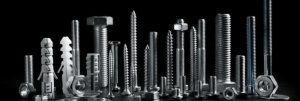
1. First Step: Distinguish Between Real Fasteners Manufacturer and Trading Supplier
A fasteners manufacturer owns or directly controls core production processes. A trading supplier buys finished fasteners from third-party workshops and resells them. This difference directly impacts quality accountability, lead time flexibility and change control for custom parts.
Use these checks to separate manufacturers from traders:
- Review business registration documents to confirm manufacturing scope, not merely trading and distribution.
- Request unedited workshop footage showing core processes such as cold forging, thread rolling or heat treatment. Generic stock photos do not prove in-house production.
- Ask whether the supplier can adjust tooling, revise drawings or hold dedicated moulds for your custom fasteners designs. Most traders cannot support independent tooling changes.
- Clarify outsourced processes upfront. It is normal for some fasteners manufacturers to outsource plating or special surface treatment. A responsible factory still retains full inspection and batch traceability for subcontracted steps.
Red flags that point to a trading supplier: they cannot provide process records, refuse site audits, only offer standard stocked items and quote inconsistent lead times for custom specifications.
2. Verify Product Scope and In-House Manufacturing Capacity
Once you confirm you are communicating with a genuine fasteners manufacturer, verify whether its production setup matches your project requirements. A factory skilled in small self-tapping screws may not be equipped for high-strength structural bolts, and vice versa.
Key capacity points to validate:
- Product range: standard bolts, nuts, studs, washers, or fully custom non-standard fasteners built from your CAD drawings.
- Supported forming processes: cold heading, hot forging, CNC turning, thread rolling and secondary machining.
- Size range and mechanical grade coverage, such as 8.8, 10.9 and 12.9 steel fasteners, or austenitic and martensitic stainless grades.
- Customization terms: minimum order quantity for new tooling, tool ownership rules and modification lead time.
- Past reference parts similar to your design. Prior part examples help confirm the manufacturer has solved comparable tolerance and material challenges.
This stage focuses on production capability rather than final quality testing. Even a capable fasteners manufacturer may fail if its quality control system is weak, so capacity verification is only the second checkpoint.
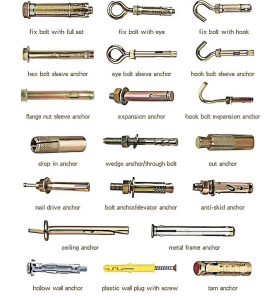
3. Double-Check Material Grades, Specifications and Technical Documentation
Fasteners performance depends heavily on locked specifications. Misaligned material grades, outdated drawing revisions or ambiguous standard references are frequent sources of non-conforming shipments.
Confirm these technical items in writing:
- Material grade and raw material source traceability. Request mill test certificates tied to heat numbers for every batch.
- Applicable industry standards: ISO, DIN, ASTM or other agreed specifications, plus property class and thread class.
- Surface treatment requirements: zinc plating, hot-dip galvanizing, black oxide, passivation and specified salt spray targets.
- Tolerance stack-up, critical dimensions and GD&T notes on your engineering drawings.
- Document control process: how drawing revisions are circulated, approved and marked obsolete to prevent old-spec production.
All agreed specifications should be captured in your RFQ or technical datasheet. Verbal agreements are not reliable for fasteners procurement.
4. Inspect Quality Control System and In-Line Testing Capability
A fasteners manufacturer’s quality control framework determines whether consistency holds across hundreds or thousands of batches. Low-tier producers only spot-check finished goods. Mature factories build checks into every production stage.
Core QC items to review:
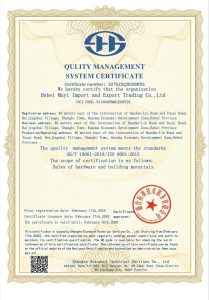
- Applicable management system certification, such as ISO 9001. For automotive or heavy industrial projects, confirm whether IATF 16949 is required.
- Incoming material inspection for chemical composition and hardness.
- In-process patrol inspection after cold forming, heat treatment and thread rolling.
- Final inspection: dimensional check, hardness test, tensile test, proof load test and surface defect screening.
- Internal laboratory equipment calibration records. Testing devices must carry valid calibration certificates.
- Non-conformance handling: segregation, corrective action reporting and traceability for rejected lots.
Ask to review sample batch inspection reports matching parts close to your requirement. Blank templates do not prove consistent execution.
5. Implement Strict Sample Confirmation Before Mass Production
Sample approval is the bridge between technical specification and mass production. Many quality disputes arise when manufacturers use simplified, non-production processes for quotation samples.
Follow this sample approval workflow:
- Submit the final drawing, material standard and surface treatment specification to the fasteners manufacturer.
- Require samples produced using the same tooling, material and process planned for mass production.
- Complete first article inspection (FAI) covering all critical dimensions and mechanical properties.
- Seal and sign approved samples. The sealed set becomes the acceptance benchmark for future bulk orders.
- Run a small trial production batch before releasing large purchase orders, especially for custom or high-strength fasteners.
- Define clear corrective action steps if samples fail testing.
Keep all sample test reports and sealed sample records in your procurement file.
6. Key Procurement Questions for Fasteners Manufacturer Audit
Whether you perform a desktop audit or an on-site factory visit, use these questions to uncover commercial and operational risks. This set complements technical checks and focuses on delivery, accountability and communication.
Recommended audit questions:
- What is your on-time delivery rate for fasteners orders over the past 12 months?
- Which processes are completed in-house, and which are outsourced? Who controls inspection for outsourced work?
- What is the lead time for tooling, sampling, trial runs and bulk production?
- What happens if a shipment fails incoming inspection at our facility? Cover rework, replacement and logistics responsibility.
- Do you assign a dedicated technical contact for drawing updates and quality issues?
- Are third-party audits allowed at reasonable notice?
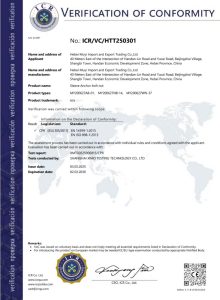
- What documents will accompany each shipment?
You can compile these points into your own OEM fasteners procurement checklist for repeated supplier reviews.
7. Final Evaluation and Step-by-Step Order Arrangement
After collecting factory evidence, technical documents, sample test results and commercial terms, score the fasteners manufacturer holistically instead of deciding based on unit price alone.
A low-risk order rollout sequence works as follows:
- Approve FAI samples and seal reference samples.
- Place a small trial order to validate lead time, packaging, paperwork and real-batch quality.
- Review trial performance and resolve any gaps.
- Release larger orders only after stable trial results.
- Embed acceptance criteria, required certificates and failure remedies into your formal PO.
Mandate that mill certificates, heat traceability records and inspection reports are delivered together with goods.
FAQ — Common Doubts When Auditing Fasteners Manufacturer
How to verify if the factory owns heat treatment and plating lines?
Direct ownership is not mandatory. The key is whether the fasteners manufacturer controls the process parameters, schedules independent inspection and maintains full batch traceability. Ask for sub-supplier control records and test reports from treated lots.
What documents must a qualified fasteners manufacturer provide for each shipment?
At minimum: packing list, commercial invoice, batch inspection report, mill test certificate with heat number linkage and surface treatment report when specified.
What red flags mean the supplier is a trading company instead of a real factory?
Warning signs include inability to provide process records, no dedicated engineering team for drawing changes, refusal of factory visits, fixed stock lists with limited or no support for custom drawings and tooling, and vague answers about tooling ownership.
Fa'ai'uga
Evaluating a fasteners manufacturer is a layered process: confirm factory identity first, validate manufacturing capacity, lock technical specifications, audit quality systems, approve production samples, clarify commercial responsibilities and ramp orders gradually. Price competitiveness matters, but traceability, process control and consistent mechanical performance protect your end products far more. If you are ready to check available fasteners options or start a sample request, browse our fasteners product range for standard and custom solutions.












