Aerospace fasteners are the unsung critical components of every aircraft and spacecraft, securing everything from thin fuselage panels to high-temperature turbine assemblies. Though small in scale, their performance directly determines structural integrity, flight safety and long-term operational reliability. For procurement specialists, quality engineers and technical teams in the aerospace supply chain, navigating the complex landscape of material requirements, traceability mandates, specification standards and qualification thresholds is a daily challenge — errors in compliance verification can lead to delivery delays, regulatory non-conformity and even safety risks.
This guide delivers a systematic overview of aerospace fasteners, covering core definitions, material selection logic, specification verification workflows, traceability documentation frameworks, global industry standards and pre-procurement qualification checkpoints. It is designed as a practical reference for supply chain professionals responsible for evaluating aerospace fastener products and suppliers.
1. Overview of Aerospace Fasteners
1.1 Definition and Core Product Categories
Aerospace fasteners are specialized joining components engineered and manufactured to meet the stringent performance, quality and compliance requirements of the aviation and space industries. They create permanent or semi-permanent mechanical joints across all aircraft and spacecraft systems, with zero tolerance for failure in safety-critical applications.
Core product categories include:
- Bolts and nuts: Used for high-load structural joints in primary airframes, wing spars and landing gear systems
- Screws: Applied for panel mounting, equipment fixation and secondary structural connections
- Rivets: The primary solution for thin-sheet airframe assembly and lightweight structural joining
- Pins and retaining rings: Used for component positioning, rotation limiting and load transfer in mechanical assemblies
- Washers: Provide load distribution, vibration damping and surface protection for fastened joints
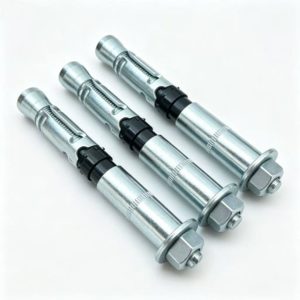
These components are deployed across nearly all aerospace systems, including fuselage structures, wings, propulsion systems, landing gear, avionics bays and flight control surfaces.You can explore our full range of industrial fasteners for general engineering and construction applications.
1.2 Key Differences from Commercial Industrial Fasteners
While aerospace fasteners share basic functional principles with standard commercial fasteners, they differ significantly in four core dimensions:
- Higher performance margins: Designed with substantial strength reserves to withstand extreme loads, temperature fluctuations and sustained vibration during flight.
- Stricter quality consistency: Every production batch undergoes rigorous inspection to ensure uniform performance and eliminate material or dimensional defects.
- Mandatory full-process traceability: Every batch can be traced back to the original raw material heat, with complete records for every production and testing step.
- Elevated regulatory compliance barriers: Must meet aerospace-specific industry standards and OEM specifications, rather than general industrial benchmarks.
These fundamental differences mean standard commercial fasteners cannot be substituted for aerospace-grade fasteners in any safety-critical application.
2. Material Requirements and Verification Logic for Aerospace Fasteners
2.1 Critical Performance Properties for Aerospace Fastener Materials
Materials used for aerospace fasteners must meet strict performance criteria to survive harsh operating environments. The five most critical properties are:
- Specific strength: High strength-to-weight ratio to reduce overall structural weight while maintaining load capacity
- Temperature resistance: Ability to retain mechanical properties across both cryogenic and extreme high-temperature conditions
- Corrosion resistance: Resistance to atmospheric corrosion, galvanic corrosion and chemical exposure across diverse operating environments
- Fatigue resistance: Ability to withstand repeated cyclic loading and vibration over extended service life
- Oxidation resistance: Material stability under high-temperature oxidizing conditions, especially critical for engine components
2.2 Common Materials and Their Application Scenarios
The aerospace industry uses a range of specialized metallic materials for fasteners, each selected based on operating environment and load requirements:
- Titanium alloys (e.g., Ti-6Al-4V): Offer an exceptional strength-to-weight ratio and excellent corrosion resistance. They are widely used in primary airframe structures, wing assemblies and landing gear components where weight reduction is a priority.
- Nickel-based superalloys (e.g., Inconel 718): Retain high strength and oxidation resistance at elevated temperatures. They are the primary choice for fasteners used in jet engine hot sections, exhaust systems and other high-temperature environments.
- High-strength stainless steels (e.g., A286): Provide good mechanical strength, corrosion resistance and moderate high-temperature performance at a lower cost than superalloys. They are commonly used in secondary structures, engine cold sections and interior equipment mounts.
- Aluminum alloys: Lightweight with good formability, used for low-load interior and secondary structural applications where weight savings are critical and loads are moderate.
Material selection is always driven by the specific operating conditions of the application, including temperature range, load magnitude, corrosion environment and service life requirements.
2.3 Material Compliance Verification Checklist
When verifying material compliance for aerospace fasteners, procurement and quality teams should follow this step-by-step checking logic:
- Match the material grade on the product against the specified alloy designation exactly
- Verify that key mechanical properties (tensile strength, yield strength, hardness) meet required minimum values
- Cross-check batch numbers on products against accompanying material test documentation
- Confirm heat treatment processes align with specification requirements
- Ensure no prohibited material substitutions or unapproved grade equivalents were used
3. Product Specifications and Dimensional Verification Workflow
3.1 Core Specification Attributes of Aerospace Fasteners
A complete aerospace fastener specification includes multiple technical attributes that must be verified collectively. The core attributes are:
- Thread form and size: Aerospace-specific thread profiles such as UNJ (American standard) and MJ (European/ISO standard) with tighter tolerance controls than commercial threads
- Head style and drive type: External hex, internal wrenching, countersunk, pan head and other styles matched to installation and aerodynamic requirements
- Dimensional tolerances: Precision-controlled dimensions for length, shank diameter, thread pitch and head geometry
- Surface treatment and coating: Cadmium, passivation, anodizing, dry film lubricant and other coatings for corrosion protection and friction control
- Strength grade: Defined load capacity and mechanical property class per applicable standards
- Length and grip range: Precise dimensions matched to the thickness of the joined materials
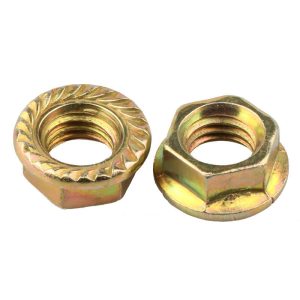
Our catalog includes a wide selection of hex nuts and flange nuts manufactured to DIN standards.
3.2 Step-by-Step Specification Verification Process
To ensure fasteners meet specified requirements, quality teams should follow this standardized verification workflow:
- Align with official drawings: Compare received fasteners against the official engineering drawing or specification sheet to confirm all key attributes match.
- Sample critical dimensions: Measure key dimensions including thread pitch, shank diameter, head height and grip length using calibrated inspection tools.
- Confirm type and form: Verify head style, drive type and thread form match the specified configuration.
- Validate surface treatment: Confirm coating type, thickness and appearance comply with requirements, with no defects such as chipping or uneven coverage.
- Check strength grade marking: Cross-reference permanent markings on the fastener with the specification to confirm correct strength class.
3.3 Common Specification Non-Conformity Risks
Common specification-related issues that can lead to non-conformance include:
- Thread form mismatch: Using standard UN threads instead of required aerospace-grade UNJ/MJ threads
- Out-of-tolerance dimensions: Excessive variation in grip length or head diameter that affects fit or load distribution
- Incorrect surface coating: Wrong coating type or insufficient coating thickness leading to premature corrosion or friction issues
- Incorrect strength grade: Substituting a lower strength grade that cannot withstand design loads
4. Traceability and Quality Documentation in Aerospace Supply Chains
4.1 The Value of Full-Process Traceability for Aerospace Safety
Full-process traceability is a mandatory requirement for aerospace fasteners and a cornerstone of aviation safety. Its core values include:
- Root cause analysis: In the event of a failure, traceability allows engineers to quickly identify whether the issue originates from material, manufacturing process or heat treatment.
- Targeted batch recall: If a defect is identified in one batch, only affected batches need to be recalled, minimizing operational disruption and cost.
- Liability and compliance tracking: Complete records demonstrate compliance with regulatory requirements and support accountability across the supply chain.
Traceability covers the entire production lifecycle: raw material melting, forging, heat treatment, machining, surface processing, final inspection, packaging and delivery.
4.2 Mandatory Quality Records and Technical Documents
Aerospace fastener shipments must be accompanied by a complete set of quality and technical documentation. The mandatory documents typically include:
- Mill Test Report (MTR): Official document from the material manufacturer verifying material grade, chemical composition and mechanical properties
- Batch traceability card: Document linking the finished fastener batch to the original material heat number and all production process steps
- Heat treatment report: Record of heat treatment parameters, time and temperature cycles, and resulting hardness values
- Non-Destructive Testing (NDT) report: Results of inspections such as magnetic particle testing or fluorescent penetrant testing for surface and subsurface defects
- Certificate of Conformance (CoC): Supplier-issued document confirming the product meets all specified requirements
4.3 Validation Methods for Traceability Documentation
To validate the authenticity and effectiveness of traceability documentation, quality teams should:
- Verify that batch numbers on product packaging match the numbers listed on all accompanying documents
- Confirm that material grade and heat number on the MTR match the information on the batch traceability record
- Check that all documents carry authorized signatures and valid date stamps
- Ensure there are no gaps in the traceability chain between raw material and finished product
- Cross-reference process parameters against standard requirements to confirm compliance
5. Industry Standards and Regulatory Requirements Identification
5.1 Major Global Aerospace Fastener Standard Systems
Aerospace fasteners are governed by multiple standard systems worldwide, each with specific scope and application:
- US aerospace standards: Includes NAS (National Aerospace Standard) for general aerospace components, AS (Aerospace Standard) for fastener products, and AMS (Aerospace Material Specification) for materials and process standards. These are widely used in US military and commercial aerospace programs.
- European aerospace standards (EN): Developed by the European Committee for Standardization, widely adopted by European aircraft manufacturers and EASA-regulated programs.
- ISO aerospace standards: International standards for global harmonization, referenced in many international commercial aerospace projects.
- National aerospace standards: Individual countries may also have their own national standards for domestic aerospace programs.
5.2 How to Identify Applicable Standards for Specific Projects
Identifying the correct standard for a specific project requires a structured approach:
- Customer requirement priority: Always follow the standard explicitly specified by the customer or OEM first, as this takes precedence over general industry standards.
- Application scenario matching: Match the standard to the application environment — for example, engine fasteners require material and performance standards specific to propulsion systems.
- OEM specification alignment: Many aircraft manufacturers have their own proprietary specifications that supplement or modify general industry standards.
- Regulatory compliance check: Ensure the selected standard meets the regulatory requirements of the region where the aircraft will be operated.
5.3 Key Differences Between Common Standard Specifications
While many standards overlap in basic requirements, there are important distinctions:
- NAS standards often include more stringent testing and validation requirements, particularly for military and defense applications
- AMS standards focus specifically on material properties, processing methods and performance criteria rather than dimensional specifications
- EN and ISO standards use metric dimensional systems and different thread profiles (MJ thread) compared to US standards (UNJ thread)
Standards from different systems are not automatically interchangeable, even if they appear to describe similar products. Mismatched standards can lead to assembly fit issues, compliance rejection or potential safety hazards in service.
6. Pre-Procurement Qualification and Verification Checklist
6.1 Supplier Quality System and Special Process Qualifications
Before procuring aerospace fasteners, it is critical to verify that the supplier holds appropriate quality and process qualifications:
- Quality management system certification: AS9100 (or equivalent) is the globally recognized quality management standard for aerospace suppliers, demonstrating adherence to aerospace-specific quality requirements.
- Special process qualifications: Suppliers must hold valid certifications for critical processes including heat treatment, non-destructive testing, surface coating and plating.
- Manufacturing capability confirmation: Verify that the supplier has the equipment and expertise to produce fasteners to the required precision and quality levels.
6.2 Mandatory Verification Documents Before Procurement
Prior to placing an order, procurement teams should request and review the following supplier documents:
- Valid quality system certification with scope explicitly covering aerospace fastener manufacturing
- Special process qualification certificates for all applicable manufacturing processes
- Sample batch quality records and test reports demonstrating consistent compliance
- List of recognized industry standards the supplier is qualified to manufacture to
- Any relevant OEM or customer approvals, if required by the project
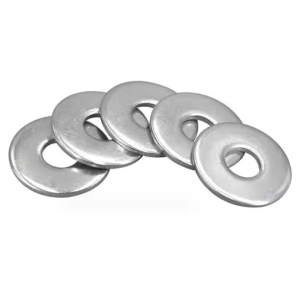
Our anchor fastener products come with complete material and quality documentation for full traceability.
6.3 Practical Tips for Mitigating Supply Chain Risks
To reduce risks in the aerospace fastener supply chain, consider the following practices:
- Conduct on-site supplier audits or request third-party audit reports to verify on-site capabilities
- Order sample batches for full inspection and testing before committing to large volume orders
- Maintain dual sourcing strategies for critical components to avoid supply disruption
- Establish clear documentation requirements in purchase contracts to avoid disputes over compliance
- Regularly re-verify supplier qualifications to ensure ongoing compliance
7. Key Takeaways for Aerospace Supply Chain Professionals
Aerospace fasteners are highly specialized components with strict requirements spanning materials, specifications, traceability and compliance. For supply chain professionals, the core takeaways are:
- Aerospace fasteners cannot be substituted with standard commercial fasteners due to significantly higher performance and compliance requirements.
- Material selection must be matched to specific operating conditions, with strict verification of alloy grade and mechanical properties.
- Full-process traceability and complete quality documentation are non-negotiable requirements for all aerospace-grade fasteners.
- Correct standard identification requires alignment with customer specifications, application scenarios and regional regulatory requirements.
- Pre-procurement qualification of suppliers — including quality system certification and special process approvals — is essential for risk mitigation.
By following a structured verification process across material, specification, traceability and qualification dimensions, supply chain teams can effectively manage quality risks and ensure reliable sourcing of aerospace fasteners.












