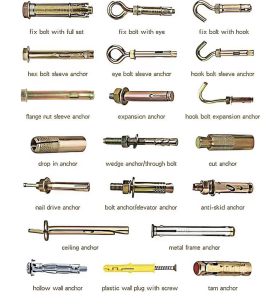
Hex bolts are among the most widely used fasteners across global manufacturing, construction, and engineering sectors. As a major global production base for industrial fasteners, China hosts a large number of hex bolt manufacturers offering diverse product ranges and price points. However, international buyers often face common pain points when sourcing from China: mismatched specifications, unstable product quality, ambiguous standard interpretations, and hidden supply risks.
This guide follows the actual decision-making workflow of industrial procurement. It walks you through every critical step, from organizing your sourcing requirements and verifying product specifications to evaluating manufacturer capabilities and finalizing bulk order terms. Whether you are an importer, wholesaler, or industrial procurement specialist, this article will help you identify qualified hex bolts manufacturer China partners and reduce risks throughout the sourcing process.
1. Organize Your Sourcing Requirements Before Reaching Out to Chinese Manufacturers
Clear, well-structured sourcing requirements are the foundation of efficient supplier communication. Chinese hex bolt manufacturers receive dozens of inquiries daily. Vague or incomplete requests often lead to inaccurate quotations, repeated revisions, and even specification mismatches after production. Taking time to organize your needs upfront will significantly shorten the quotation cycle and lower the risk of order errors.
1.1 Define Application Scenarios and Performance Expectations
Hex bolts with the same dimensions can vary greatly in material, strength, and corrosion resistance, depending on where they are used. Before contacting suppliers, clarify the end application and core performance priorities:
- General indoor equipment assembly: Standard carbon steel bolts with basic anti-rust treatment are usually sufficient for low-load, dry environments.
- Structural engineering and outdoor construction: High-strength bolts with heavy-duty corrosion protection are required to withstand sustained load and weather exposure.
- Chemical, coastal, or offshore environments: Corrosion-resistant materials or special coatings are necessary to handle humidity, salt spray, or chemical corrosion.
- High-temperature or high-pressure applications: Heat-resistant alloy steel bolts with certified mechanical properties are required for safety-critical scenarios.
Defining these conditions early helps suppliers recommend the most suitable material and grade options, rather than providing a generic low-cost solution that may fail in use.
1.2 Confirm Basic Quantity, Budget Range and Delivery Timeline
Three basic parameters directly determine which manufacturers are a good match for your order:
- Order quantity: Small trial batches and large-volume bulk production may suit different types of suppliers. Clearly state whether you are requesting a sample order, a trial batch, or a long-term mass production order.
- Budget range: Sharing your target price range helps suppliers quickly match appropriate material grades, production processes and surface treatment solutions, avoiding wasted negotiation on solutions outside your budget.
- Delivery timeline: Specify your required delivery date and clarify whether you refer to ex-factory time or arrival time at the destination. This allows manufacturers to confirm whether their production schedule can meet your deadline.
For every initial inquiry, you should prepare the following basic information:
- Product standard and size specification
- Required material and property class
- Surface treatment requirement
- Order quantity
- Expected delivery date
- Destination country/port
2. Core Hex Bolt Specifications to Confirm with Chinese Suppliers
Specification accuracy is one of the most critical requirements for fastener sourcing. A mismatch in even one parameter can render an entire shipment unusable. When working with a hex bolts manufacturer China, you must explicitly confirm four core specification dimensions: dimensional standards, material grades, mechanical property classes, and surface treatment.
2.1 Dimensional Standards and Thread Specifications
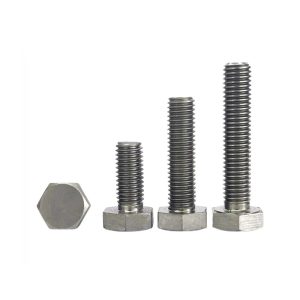
Hex bolt dimensions are defined by formal standards, and different standard systems have subtle but important differences. Key dimensional parameters to confirm include:
- Nominal bolt diameter
- Shank length and thread length
- Full thread or partial thread structure
- Hex head width across flats and head height
- Thread pitch and tolerance class
Chinese manufacturers most commonly work with metric standard systems, including ISO, DIN and national GB/T standards. Many suppliers also support ANSI/ASME inch-series bolts, but this should always be confirmed upfront, as tooling and production setup differ.
Common standard references include:
- DIN 931 / ISO 4014: Hex head bolts with partial thread
- DIN 933 / ISO 4017: Hex head bolts with full thread
For inch-size bolts, always specify the thread count per inch and corresponding ANSI standard number. Never assume a manufacturer defaults to your local standard.
2.2 Material Grades and Mechanical Property Classes
Hex bolt performance is determined by both base material and mechanical property class. The most commonly used materials in Chinese manufacturing are:
- Carbon steel: The most widely used and cost-effective option, suitable for most general-purpose applications.
- Alloy steel: Used for high-strength, high-load scenarios, with better mechanical performance after heat treatment.
- Stainless steel: Offers excellent corrosion resistance. Grades A2-70 and A4-80 are the most common for industrial use.
Mechanical property classes use a standard two-number marking system (e.g., 4.8, 8.8, 10.9, 12.9):
- The number before the decimal point indicates 1/100 of the minimum tensile strength in MPa.
- The number after the decimal point indicates 10 times the ratio of yield strength to tensile strength.
Higher classes deliver greater tensile strength and load capacity, but also come with higher costs and stricter production requirements. Always confirm the grade marking requirements and ensure they are stamped on the bolt head as required.
2.3 Surface Treatment and Corrosion Resistance Requirements
Surface treatment affects both corrosion resistance and appearance, and is a frequent source of quality disputes. The most common options offered by Chinese hex bolt manufacturers include:
- Electro-galvanized (zinc plating): Low cost, basic rust protection for indoor dry environments.
- Hot-dip galvanized (HDG): Thick zinc coating with strong corrosion resistance, widely used for outdoor and structural applications.
- Black oxide (blackening): Provides a decorative black finish with mild anti-rust properties, often used for indoor machinery.
- Dacromet/geomet coating: High corrosion resistance, no hydrogen embrittlement risk, ideal for high-strength bolts in harsh environments.
- Nickel plating: Offers good corrosion resistance and a polished appearance for decorative or special-environment use.
When selecting a surface treatment, consider the operating environment and required service life. You can request corrosion resistance test data from suppliers to verify that the treatment meets your performance needs.
3. Verify Standard Documents and Technical Drawings
Standards and technical drawings serve as the common technical language between buyers and suppliers. While many Chinese hex bolt standards align closely with international standards, minor differences in tolerances, dimension definitions and inspection rules can lead to unexpected mismatches. Always verify documents formally before production begins.
3.1 Common Hex Bolt Standards Adopted by Chinese Manufacturers
Chinese hex bolt manufacturers primarily produce according to the national GB/T standard system, and most mainstream suppliers are also fully capable of manufacturing to ISO and DIN standards. Some specialized suppliers also support ANSI/ASME inch standards.
Typical standard correspondences include:
- GB/T 5782 corresponds to ISO 4014 (hex head bolts, partial thread)
- GB/T 5783 corresponds to ISO 4017 (hex head bolts, full thread)
Although these standards are broadly equivalent, there may be minor differences in tolerance ranges, head dimensions and length measurement rules. Never assume full equivalence. Always state the full standard number including the publication year version, and confirm that the manufacturer produces according to that exact version.
3.2 Step-by-Step Drawing Cross-Check Process
For custom orders, non-standard tolerances or special structural requirements, formal technical drawings are mandatory. Use the following cross-check workflow to avoid specification errors:
- Confirm core dimensions: Verify nominal diameter, total length, thread length and hex head dimensions match your requirements.
- Check thread specifications: Confirm thread pitch, tolerance class (e.g., 6g for external threads) and thread length position.
- Review secondary details: Check shank tolerance, chamfer dimensions, head height and edge requirements.
- Confirm marking and finish: Specify grade marking requirements, surface treatment type and any special appearance rules.
- Formalize confirmation: Ensure both parties sign and seal the final drawing version before production.
A common source of dispute is whether bolt length includes the head. Different standards use different measurement rules, so this must be explicitly stated on the drawing or in written confirmation.
3.3 Required Technical Documents for Custom Orders
For non-standard hex bolt orders, you should require the supplier to provide formal technical documents as production and acceptance basis:
- Sealed official technical drawings with version number
- Material specification sheet with chemical composition and mechanical property requirements
- Production process description for special processes
- Written acceptance criteria for finished product inspection
All technical changes must be documented in writing with a revised version number. Avoid relying on verbal agreements, as these create high risk of misinterpretation in cross-border cooperation.
4. Verify the Capabilities and Qualifications of Chinese Hex Bolt Manufacturers
Selecting a reliable hex bolts manufacturer China partner is more important than chasing the lowest price. Low-quality bolts can lead to project delays, safety hazards and much higher replacement costs. You should systematically verify manufacturers in three areas: production infrastructure, quality management systems, and export compliance capability.
4.1 Production and Quality Control Infrastructure to Confirm
A manufacturer’s equipment directly determines its product quality capacity and stability. For hex bolt production, pay special attention to:
- Cold heading machines: Form the bolt head and shank. Equipment scale and precision affect production efficiency and dimensional consistency.
- Thread rolling equipment: Produces precise thread profiles. Reliable thread quality is critical for bolt assembly performance.
- In-house heat treatment furnaces: Essential for high-strength class bolts. Manufacturers without their own heat treatment lines cannot guarantee stable and uniform mechanical properties.
- Inspection and testing equipment: Including hardness testers, universal tensile testing machines, spectrum analyzers and thread go/no-go gauges. These are necessary for incoming material inspection and finished product quality control.
You do not need to visit the factory in person to confirm basic equipment. You can ask for workshop photos, equipment lists or video inspections to verify production and testing capacity.
4.2 Quality System Certifications and Material Test Reports
Formal quality management certification and traceable quality documents are basic requirements for reliable industrial fastener suppliers:
- Quality management system certification: ISO 9001 is the widely accepted baseline for the fastener industry. Some manufacturers may also hold industry-specific certifications for special sectors.
- Mill Test Certificates (MTC): Reputable suppliers provide MTC for each batch of bolts, including material chemical composition, mechanical property test results, heat batch number and production date.
- Third-party test reports: For high-demand orders, you can request reports issued by independent third-party institutions. Always verify the report authenticity with the issuing body when necessary.
Be cautious of suppliers that cannot provide formal test documentation or only offer generic certificate copies without batch traceability. Exercise caution when evaluating quotations that are significantly below the market average, as these often come with unstated trade-offs in material grade, heat treatment quality or inspection rigor.
4.3 Export Experience and Market Compliance Capability
Manufacturers with export experience understand international trade procedures and market compliance requirements better, which reduces communication friction and clearance risks.
- Confirm whether the supplier has experience exporting to your target market.
- Verify that they can provide complete export documentation including commercial invoices, packing lists and customs declaration documents.
- Check whether they can meet your local market compliance requirements, such as regional product safety standards or marking rules.
Suppliers familiar with your market are also more likely to understand common local specification preferences and potential compliance pitfalls.
5. Sample Approval Process Before Placing Bulk Orders
Sample verification is an indispensable risk-control step before placing a bulk order. Even if specifications and qualifications all check out on paper, you should always validate actual production quality through physical samples.
5.1 Sample Request and Pre-test Preparation
When requesting samples from a hex bolts manufacturer China, clearly state the following requirements:
- Exact sample quantity needed
- Full specification, standard and class requirements
- Whether samples must be accompanied by corresponding MTC reports
- Any special marking or packaging requirements
Regarding sample costs, common industry practice is:
- Standard product samples are often provided at low cost or free of charge, with the buyer covering courier shipping charges.
- Custom or non-standard samples may require tooling or setup fees, which are often deductible from future bulk orders.
Always confirm sample lead time before arranging payment, to avoid delays affecting your overall project schedule.
5.2 Key Inspection Items for Hex Bolt Samples
Upon receiving samples, perform the following inspections to confirm compliance:
- Appearance and surface finish: Check for uniform coating, no burrs, no cracks, clear grade markings and no obvious surface defects.
- Dimensional verification: Measure key dimensions including diameter, length, hex head size and thread pitch with calipers or micrometers.
- Thread fit test: Verify thread accuracy with go/no-go gauges. The go gauge should screw on smoothly, while the no-go gauge should not fully engage.
- Hardness testing: Use a hardness tester to verify that the bolt meets the required property class.
- Material composition verification: For critical applications, send samples to a third-party lab for material composition analysis.
Document all inspection results in writing. If samples fail any item, communicate with the supplier for adjustment and request a new batch of samples before proceeding.
5.3 Sample Sealing and Consistency Rules for Bulk Production
Once samples pass inspection, implement a formal sample sealing process:
- Both buyer and supplier retain one sealed signed sample each.
- The sealed sample serves as the official quality reference for bulk production acceptance.
- Agree in writing that bulk production must use the same material, production process and surface treatment as the approved sample.
- Define acceptable tolerance ranges for dimensions and performance to avoid post-production disputes.
- Require the supplier to notify you in advance and submit new samples for re-approval if any material or process change is required during production.
6. Confirm Quotation, Packaging, Delivery and Communication Terms
After technical specifications and samples are confirmed, formalize all commercial terms in writing. Clear, detailed agreements help avoid disputes later and ensure smooth cooperation with your chosen hex bolts manufacturer China.
6.1 Quotation Breakdown and Validity Period
A complete, transparent quotation should include all cost components:
- Unit price of the hex bolts
- Surface treatment charge (if calculated separately)
- Packaging cost
- Tooling or mold fee for custom items (if applicable)
- Testing or certification fees (if required)
- Delivery term (EXW, FOB, CIF, etc.)
- Payment terms and schedule
- Quotation validity period
Note that hex bolt prices are closely linked to raw steel prices, so quotations always have a limited validity period. Confirm the validity period clearly and avoid assuming the price will remain valid for months. Also watch for hidden costs such as special packaging fees or expedited production surcharges.
6.2 Packaging Requirements for International Freight and Storage
Proper packaging is essential to prevent damage and rust during long-distance international shipping. Specify the following requirements:
- Inner packaging: Individual or batch packaging with rust-proof bags and desiccants to prevent moisture damage during transit.
- Outer packaging: Heavy-duty cartons or wooden cases with sufficient stacking strength. For large orders, palletized packaging is standard.
- Shipping marks: Clear marking on each package including product specification, quantity, carton number, gross weight and net weight.
- Wooden packaging compliance: Wooden pallets or cases must meet ISPM 15 fumigation/heat treatment requirements to avoid customs clearance issues at the destination port.
Poor packaging can lead to rust, thread damage or package breakage, so it should not be treated as an afterthought.
6.3 Lead Time, Shipment Terms and After-sales Agreement
Three core delivery and service terms must be clearly defined:
- Lead time: Clarify whether the stated lead time refers to production cycle only, or includes delivery to the designated port/address. Distinguish sample lead time from bulk production lead time.
- Shipment terms: Confirm the exact Incoterms rule (e.g., EXW, FOB, CIF) and clearly define responsibilities for freight, insurance and customs clearance.
- After-sales and quality objection terms: Agree on a reasonable quality objection period after goods receipt. Define the handling process for non-conforming products, including replacement, rework or refund options.
6.4 Order Communication and Progress Update Mechanism
Smooth communication prevents misunderstandings and keeps the order on track:
- Confirm a dedicated contact person for your order to avoid information confusion from multiple communication channels.
- Agree on regular production progress updates at key milestones: raw material incoming, heat treatment completion, finished product inspection, and before shipment.
- Require the supplier to notify you proactively if any production delay or abnormality occurs, and propose alternative solutions.
- Keep all important confirmations in written form (email or formal documents) rather than relying on instant messaging records alone.
7. Pre-order Verification Checklist for Chinese Hex Bolt Suppliers
Before issuing a formal purchase order, use this checklist to confirm that all critical items have been verified and documented:
Product Specifications
- [ ] Full standard number and version confirmed in writing
- [ ] Bolt size, thread type and tolerance class clearly defined
- [ ] Material grade and mechanical property class specified
- [ ] Surface treatment and corrosion resistance requirement confirmed
- [ ] Technical drawings signed and sealed by both parties (for custom orders)
Supplier Qualifications
- [ ] Valid quality management system certification verified
- [ ] Core production and testing equipment capacity confirmed
- [ ] Mill Test Certificate issuing rules and batch traceability confirmed
- [ ] Target market compliance capability verified
Sample Approval
- [ ] Sample inspection completed with written pass record
- [ ] Sealed reference samples retained by both parties
- [ ] Bulk production consistency requirements formally agreed
Business Terms
- [ ] Full quotation breakdown and validity period confirmed
- [ ] Packaging and shipping requirements documented
- [ ] Delivery lead time and trade terms clearly specified
- [ ] Payment terms and after-sales agreement clarified
- [ ] Dedicated contact person and progress update mechanism confirmed
Final Thoughts
Sourcing hex bolts from China can deliver reliable quality and cost efficiency when done systematically, but it requires careful verification at every step. Choosing the right hex bolts manufacturer China is not only about finding the lowest price — it is about finding a partner that can consistently meet your specification requirements, quality standards and delivery schedules.
By following the workflow outlined in this guide — defining your requirements first, verifying specifications and standards, assessing manufacturer capabilities, approving samples, and formalizing all commercial terms — you can significantly reduce sourcing risks and build stable, long-term supply partnerships.
If you have specific hex bolt sourcing requirements for your project, working with an experienced professional supply team can help you streamline the verification process and access tailored product solutions.