Fasteners are foundational components across nearly every industrial sector, from construction and heavy machinery to electronics and automotive manufacturing. While they may seem like small, low-value parts, selecting the wrong fasteners supplier can lead to costly production delays, quality failures, compliance risks, and long-term supply chain disruptions. For importers, wholesalers, OEM buyers, and procurement managers, finding a reliable partner requires more than comparing price points—it demands a structured evaluation of product capabilities, quality systems, commercial terms, and operational reliability. This guide breaks down a step-by-step framework for vetting fasteners suppliers, along with actionable checklists and key questions to help you make informed, low-risk purchasing decisions.
1. Define Your Fastener Requirements Before Sourcing Suppliers
Many procurement teams begin supplier outreach without fully clarifying their own needs, which wastes time on mismatched candidates and increases the risk of selecting an unsuitable partner. Starting with clear internal requirements allows you to quickly filter suppliers and evaluate them against consistent, objective standards.
1.1 Clarify Application Scenarios and Performance Indicators
The end-use environment directly determines which fastener specifications are acceptable, and misalignment can cause premature failure or safety hazards. Before approaching any fasteners supplier, define the core performance requirements tied to your application:
- Required strength grade and load-bearing capacity
- Environmental conditions, including exposure to moisture, salt spray, extreme temperatures, or vibration
- Industry-specific regulatory and compliance mandates
- Expected service life and durability expectations
For example, fasteners used in coastal steel structures require high corrosion-resistant surface treatments, while those for high-load heavy machinery must meet strict tensile strength grades. Precision electronics applications, by contrast, prioritize tight dimensional tolerances and non-magnetic materials.
1.2 Confirm Purchase Scale, Timeline and Budget Boundaries
Your order volume and delivery schedule will determine which type of supplier is the best fit: large-scale manufacturers, specialized distributors, or custom fabricators. Document the following parameters before sourcing:
- Total annual procurement volume and typical order size per SKU
- Delivery frequency and whether you need scheduled recurring shipments
- Requirements for urgent or rush-order support
- Target price range and total cost-of-ownership budget
A buyer with annual volume in the millions of pieces will prioritize manufacturers with large-scale production capacity, while a wholesaler with smaller, mixed SKU orders may focus on distributors with broad ready-stock availability.
2. Verify Product Specifications and Available Fastener Types
Once you have clear internal requirements, the next step is to confirm whether a supplier’s product portfolio aligns with your needs. This review covers standard catalog items, custom manufacturing capabilities, and the full range of available materials and finishes.
2.1 Standard Fastener Categories and Specification Matching
Most industrial buyers source standard fasteners produced to recognized global standards. When evaluating a supplier, cross-check their catalog against your required specification parameters:
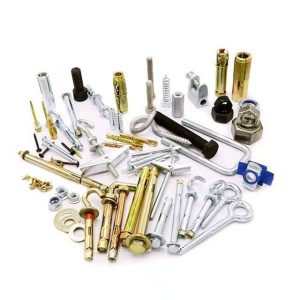
- Product type: bolts, nuts, screws, washers, rivets, anchors, and other fastener families
- Standard system: ISO, DIN, ASTM, GB, JIS, or other regional standards
- Core dimensional parameters: nominal diameter, length, thread pitch, and drive type
- Grade and strength class ratings
Always cross-reference your required standard numbers directly with the supplier’s catalog, as naming conventions and dimensional tolerances can vary across regions and standards.
2.2 Custom Fastener Capability Assessment
For non-standard fasteners with unique head shapes, thread profiles, dimensions, or features, verify the supplier’s custom engineering and manufacturing capabilities before moving forward. Key points to confirm include:
- Ability to produce parts from customer-provided technical drawings and specifications
- In-house tooling and mold development capacity, plus typical tooling lead times
- Engineering support for design optimization and manufacturability feedback
- Track record producing custom fasteners for your industry or application type
Clarify tooling costs, sampling timelines, and minimum order quantities for custom parts early in the conversation, as these terms vary widely between suppliers.
2.3 Material and Surface Treatment Option Availability
Material and finish selection directly impacts fastener performance, longevity, and cost. Reputable fasteners suppliers should offer a clear range of material and surface treatment options and be able to advise on suitability for your use case.
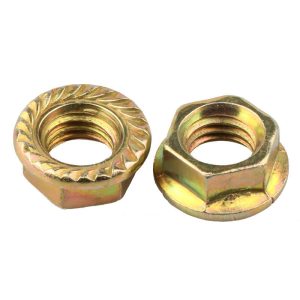
Common fastener materials include carbon steel, alloy steel, stainless steel grades (such as 304 and 316), brass, and aluminum. Common surface treatments include electro-zinc plating, hot-dip galvanizing, black oxide, passivation, and PTFE coating. For example, hot-dip galvanized fasteners are widely used for outdoor construction due to their superior corrosion resistance, while electro-zinc plating is more common for indoor general-purpose applications.
3. Evaluate Quality Certifications and Inspection Requirements
Quality consistency is one of the most critical factors when selecting a fasteners supplier, as defective fasteners can compromise entire assemblies and create safety liabilities. A credible supplier should have documented quality management systems and transparent inspection processes at every production stage.
3.1 Core Quality Certifications for Fastener Suppliers
Certifications are baseline evidence of a supplier’s commitment to standardized quality management. At minimum, industrial buyers should expect a valid quality management system certification. For specialized sectors, industry-specific certifications are often mandatory.
When reviewing certifications:
- Confirm that certificates are current and issued by accredited third-party bodies
- Verify that the certification scope covers the exact product types you are sourcing
- Distinguish between general quality system certifications and product-specific standard compliance
For automotive OEMs, sector-specific quality certifications are typically a baseline requirement, while construction buyers may prioritize compliance with relevant material and performance standards.
3.2 Production and Finished Goods Inspection Processes
Certifications alone do not guarantee consistent quality. Ask suppliers to describe their end-to-end inspection workflow, including:
- Incoming quality control for raw materials, including material composition verification
- In-process inspection at key production stages
- Finished goods inspection covering dimensions, thread fit, hardness, and appearance
- Functional performance testing as applicable, such as tensile strength, torque, or salt spray corrosion testing
Also confirm whether the supplier operates an in-house testing lab, and whether they can accommodate third-party independent testing upon request.
3.3 Batch Traceability and Quality Documentation
Full batch traceability is essential for investigating quality issues and meeting compliance requirements. A reliable fasteners supplier should be able to provide accompanying documentation for every shipment, typically including:
- Mill Test Certificates (MTC) verifying raw material composition and mechanical properties
- Factory inspection reports for the produced batch
- Clear batch number marking on both packaging and product labels
In addition, clarify the supplier’s formal procedure for handling non-conforming products, including root cause analysis, corrective action plans, and compensation or replacement policies.
4. Confirm Sampling, Ordering and Acceptance Terms
Before placing a formal bulk order, clarify all transactional rules related to samples, minimum order quantities, and incoming inspection. Agreeing on these terms upfront prevents costly disputes and misalignment later in the purchasing process.
4.1 Sample Policy and Validation Standards
Sampling is the lowest-risk way to verify a supplier’s capabilities before committing to volume production. When discussing samples, confirm:
- Whether samples are free, charged, or refundable against future bulk orders
- Typical lead time for both standard and custom samples
- Available sample quantity per part number
- Accepted methods for sample approval and sign-off
Always validate samples against your full specification sheet before approving mass production. Retain approved sealed samples for reference during future incoming inspections.
4.2 MOQ and Order Flexibility Rules
Minimum order quantity (MOQ) requirements vary dramatically between standard off-the-shelf items and made-to-order custom parts. Clarify:
- MOQ values for standard catalog items and custom items separately
- Policies for mixed-SKU orders and combined shipments
- Rules for adjusting order quantities after placement, including required notice periods
- Options for split deliveries and scheduled release of stock
If your order volumes vary or you need to maintain low inventory levels, prioritize suppliers that offer flexible MOQ terms or maintain ready stock for standard items.
4.3 Acceptance Criteria and Non-conforming Product Handling
Clear acceptance rules eliminate ambiguity and ensure both parties share the same quality expectations. Before placing an order, agree on:
- The sampling standard and inspection level used for incoming inspection
- Specific pass/fail criteria for dimensions, appearance, performance, and packaging
- The time window for submitting quality claims after goods receipt
- Remediation options for non-conforming batches, including replacement, rework, refund, and return logistics responsibilities
5. Assess Communication, Quotation and Delivery Terms
Beyond product and quality capabilities, a supplier’s commercial reliability—including communication, pricing transparency, and on-time delivery—directly impacts your supply chain efficiency and operational planning.
5.1 Communication Efficiency and Professionalism
Poor communication is one of the most common causes of procurement delays and errors, especially for cross-border sourcing. Evaluate communication quality early by observing:
- Typical response time for inquiries and technical questions
- Technical competence of the contact person and their ability to answer specification questions directly
- Stability of the account management team
- Language capabilities and clarity of written communication
During peak seasons or urgent order scenarios, slow or unresponsive communication can lead to missed production deadlines, making this a critical soft skill to evaluate early.
5.2 Quotation Transparency and Cost Composition
A professional, trustworthy fasteners supplier provides detailed, itemized quotations rather than a single lump-sum price. A complete quotation should clearly break down:
- Unit price per item and per order volume tier
- Applicable minimum order quantities
- Tooling, setup, or engineering fees for custom parts
- Packaging costs and inspection fees
- Applicable Incoterms and corresponding logistics responsibilities
Watch for hidden costs such as small-order surcharges, expedite fees, or additional charges for special packaging. Always compare quotations on a like-for-like basis using the same Incoterms and scope of supply.
5.3 Delivery Lead Time and After-sales Support
Reliable delivery is essential for maintaining your own production schedules. When evaluating delivery performance:
- Confirm standard lead times for in-stock items and made-to-order production
- Ask about typical on-time delivery rates and the root causes of past delays
- Clarify how far in advance the supplier will notify you of potential delays
- Understand available shipping methods and estimated transit times
Also confirm after-sales support terms, including response time for quality issues, technical support availability, and warranty or replacement policies.
6. Key Questions to Ask a Fasteners Supplier Before Purchasing
To streamline your initial screening, use this structured list of questions to gather critical information from every potential fasteners supplier. Organized by category, these questions help you compare suppliers on an apples-to-apples basis.
6.1 Production and Capability Verification Questions
- What is your monthly production capacity for standard fasteners, and for custom fasteners?
- Do you maintain ready stock for common standard sizes, or is everything made to order?
- What types of custom fasteners have you produced in the past, and what is your typical tooling lead time?
- Can you support small-batch trial orders before full-scale production?
- What is your raw material sourcing strategy, and can you supply alternative materials upon request?
6.2 Quality and Compliance Related Questions
- What quality management system certifications do you hold? Can you provide valid certificates?
- What in-house inspection equipment do you have, and what tests do you perform on finished products?
- Do you provide Mill Test Certificates (MTC) and factory inspection reports with every shipment?
- Can you arrange third-party testing if we request it, and who covers the cost?
- What is your process for handling non-conforming batches and implementing corrective actions?
6.3 Order and Logistics Related Questions
- What is your MOQ for standard items and custom items respectively?
- What is the typical lead time for sample orders and bulk production orders?
- What trade terms do you offer?
- What payment terms do you accept for new customers?
- What is your policy for order quantity adjustments and split deliveries?
- How do you handle delivery delays, and how far in advance will you notify us?
7. How to Build Your Fasteners Supplier Evaluation Checklist
To make objective side-by-side comparisons, compile your assessment criteria into a formal scoring checklist. This tool removes subjective bias and ensures you evaluate every candidate against the same standards.
7.1 Core Evaluation Dimensions and Weighting Recommendations
A comprehensive supplier evaluation covers five core dimensions. Adjust the weight of each dimension based on your business priorities:
- Quality & Compliance: certification status, inspection capability, traceability system
- Product Capability: catalog range, custom development ability, material and finish options
- Commercial Terms: pricing competitiveness, MOQ flexibility, payment terms
- Delivery Reliability: production lead time, on-time delivery track record, logistics options
- Service & Communication: response speed, technical support, after-sales handling
For automotive OEM buyers, quality and compliance may account for the largest share of the total score, while price makes up a smaller portion. For general wholesale distributors, price and delivery flexibility may carry more weight.
7.2 Step-by-Step Supplier Scoring and Comparison Method
Always run red flag checks first and eliminate disqualified candidates before applying the scoring system, to avoid wasting evaluation effort. Follow this process to evaluate and rank remaining candidates systematically:
- First define mandatory must-have criteria and immediately eliminate any supplier that fails to meet them.
- Assign a 1–5 score for each sub-criterion under every core dimension.
- Multiply each score by its corresponding weight to calculate a weighted total.
- Rank all suppliers by their final weighted scores.
- Shortlist the top 2–3 suppliers for sample validation and further commercial negotiation.
7.3 Red Flags That Rule Out Unqualified Suppliers
Certain warning signs indicate elevated risk and should disqualify a supplier from further consideration, regardless of pricing:
- Cannot provide valid quality certification documents or refuses to share inspection records
- Quoted prices are significantly below the average market level, indicating potential cost-cutting on materials or quality control
- Vague or evasive answers about production capacity, material sources, or quality control processes
- No clear policy for non-conforming products or refuses to take responsibility for quality issues
- Extremely slow or unprofessional communication during the initial inquiry stage
- Cannot provide traceable quality documentation for product batches
8. Final Thoughts on Selecting a Fasteners Supplier
Choosing the right fasteners supplier is a long-term investment in your supply chain stability and product quality. While price is always a consideration, the lowest-cost option often carries hidden risks in quality consistency, delivery reliability, and after-sales support.
By starting with clear internal requirements, systematically verifying product and quality capabilities, clarifying all commercial terms upfront, and using a structured evaluation checklist, you can identify partners that align with your business needs and reduce procurement risk. Remember, the best supplier is not necessarily the cheapest—it is the one that consistently delivers compliant, quality products on time and acts as a reliable collaborator for your business.












