Hex bolts are widely used in machinery, equipment, steel structures, construction projects, and general industrial assemblies. Their six-sided heads allow them to be tightened with common tools, while their threaded sections provide a means of securing components with compatible nuts or threaded holes.
However, choosing a hex bolt involves more than selecting a head shape and nominal diameter. Buyers need to consider the bolt type, thread configuration, dimensions, material, strength requirements, applicable standards, and compatibility with mating components.
This guide explains the basic structure of hex bolts, common types, important specifications, and practical selection factors. It also provides a checklist to help industrial buyers and distributors prepare clearer purchasing requirements.
1. What Are Hex Bolts?
A hex bolt is a threaded fastener with a six-sided head designed to be driven by a wrench or socket. It typically has a cylindrical shank and an external thread that engages with a compatible nut or a tapped hole.
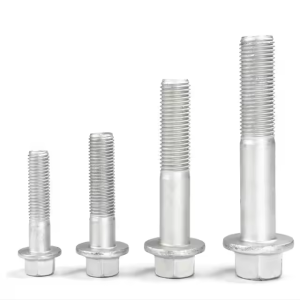
Hex bolts are commonly selected for applications where a secure mechanical connection is required and the fastener must be installed or removed using standard fastening tools.
1.1 Basic Structure of a Hex Bolt
A typical hex bolt consists of several main features:
- Hex head: The six-sided head provides surfaces for wrench or socket engagement during installation and removal.
- Bearing surface: The underside of the head contacts the connected component or an intermediate washer.
- Shank: The cylindrical portion between the head and the threaded section. Depending on the design, part of the shank may remain unthreaded.
- Thread: The helical profile on the bolt’s external surface engages with an internal thread in a nut or tapped component.
- Thread runout: The transition area between the threaded portion and the unthreaded shank. Its geometry depends on the applicable product design or standard.
Not every hex bolt has the same shank length or thread coverage. Some designs have a partially threaded shank, while others have threads extending close to the head. The correct configuration depends on the product specification and application.
1.2 How Do Hex Bolts Work?
Hex bolts create a clamping connection by engaging their external threads with a compatible internal thread.
In a common bolted assembly, the bolt passes through aligned holes in the components, and a nut is installed on the opposite side. Tightening the nut or bolt creates tension in the fastener and clamps the connected parts together.
In other assemblies, a hex bolt may engage directly with a tapped hole in one of the components. A separate nut is not required in this configuration.
The connection’s performance depends on more than the bolt itself. Thread compatibility, component thickness, hole dimensions, tightening requirements, material properties, and service conditions can all affect the assembly.
2. Common Types of Hex Bolts
Hex bolts are available in different configurations to meet different assembly and installation requirements. Buyers should distinguish between products by their actual design and specifications rather than relying only on general product names.
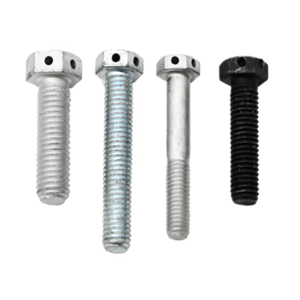
2.1 Partially Threaded Hex Bolts
Partially threaded hex bolts have an unthreaded shank section beneath the head and an external thread over only part of the bolt length.
The unthreaded portion can be useful when the assembly is designed to place the shear plane within the shank rather than across the threaded section. Whether this arrangement is appropriate depends on the joint design, dimensions, and loading conditions.
When selecting a partially threaded hex bolt, buyers should confirm:
- Nominal thread diameter
- Overall bolt length
- Length of the unthreaded shank
- Thread length
- Thread pitch and tolerance requirements
- Applicable product standard
2.2 Fully Threaded Hex Bolts
Fully threaded hex bolts have external threads extending along most or all of the specified shank length, depending on the product design.
They can be useful when the connection requires greater flexibility in positioning the nut or when the assembly engages with a threaded component over a longer portion of the fastener.
Buyers should not assume that a fully threaded product and a partially threaded product are interchangeable. Their dimensions, load-transfer characteristics, and applicable product design requirements may differ.
2.3 Hex Bolts by Material
Hex bolts can also be grouped according to the materials used in their manufacture.
Common material categories include:
- Carbon steel: Used in many general-purpose fastening applications. The required mechanical properties and corrosion protection should be specified according to the application.
- Alloy steel: May be selected when particular mechanical property requirements are needed. The applicable property class and product requirements must be confirmed.
- Stainless steel: Often considered where corrosion resistance is important. The appropriate stainless steel designation and mechanical property requirements depend on the operating environment and application.
- Other specified materials: Certain projects may require special materials or material conditions. These should be defined in the technical purchasing documents.
Material selection should consider corrosion exposure, operating temperature, mechanical loading, environmental conditions, and compatibility with connected components.
3. Important Hex Bolt Specifications
A hex bolt should be identified through a complete set of dimensional and technical specifications. A product name alone is not enough to ensure that the supplied fastener matches the intended assembly.
3.1 Nominal Diameter
Nominal diameter is one of the main identifiers of a bolt thread.
For metric fasteners, the designation commonly begins with the letter M followed by a nominal diameter in millimeters. For example, M10 indicates a nominal thread diameter of 10 mm.
For inch-series fasteners, the thread designation uses an inch-based system. The applicable diameter and thread series should be stated in the purchasing specification.
The nominal diameter should match the mating nut or tapped hole. Buyers should also distinguish nominal thread diameter from the actual measured dimensions of a finished thread.
3.2 Bolt Length
Bolt length is another essential specification.
For many conventional hex bolts, the nominal length is measured from the bearing surface beneath the head to the end of the bolt. However, measurement conventions can vary for different head styles and product designs.
Before ordering, confirm the applicable measurement method and specify the required length clearly.
The selected length should account for:
- Thickness of the connected components
- Washer thickness, if used
- Nut thickness, if used
- Required thread engagement
- Any additional length required by the assembly design
An excessively short bolt may not provide sufficient thread engagement. An unnecessarily long bolt may interfere with nearby components or create installation problems.
3.3 Thread Pitch and Thread Series
Thread pitch describes the distance between corresponding points on adjacent threads, measured parallel to the thread axis.
Metric threads generally identify pitch in millimeters. Inch-series threads commonly use threads per inch (TPI).
Common inch-based thread series include:
- UNC: Unified National Coarse
- UNF: Unified National Fine
The thread series must match the mating component. A bolt and nut with the same nominal diameter may still be incompatible if their thread pitches or thread systems differ.
Buyers should confirm the thread system, nominal diameter, pitch or TPI, and any specified tolerance class before placing an order.
3.4 Thread Length and Shank Dimensions
The thread length determines how much of the bolt can engage with a nut or internally threaded component.
The unthreaded shank may also be important when the assembly requires a specific fit or when the joint design controls where the load is transferred.
Relevant dimensions may include:
- Overall length
- Thread length
- Shank diameter
- Head width across flats
- Head height
- Thread diameter
- Thread pitch
- Other dimensions specified by the applicable product standard
Not every project requires every dimension to be listed separately. The applicable standard or technical drawing should define which dimensions are relevant.
3.5 Hex Head Dimensions
The hexagonal head allows a wrench or socket to apply tightening torque.
Important head dimensions can include:
- Width across flats
- Head height
- Bearing surface dimensions
- Head chamfer or other specified edge details
These dimensions should be checked against the applicable product standard or drawing, particularly when the bolt must fit within a limited installation space or work with a particular tool.
4. Materials and Strength Classes
Material and mechanical property requirements should be selected according to the actual application. Buyers should not assume that all hex bolts with similar dimensions have the same strength or corrosion resistance.
4.1 Choosing the Material
The material should be suitable for the environment and the connected components.
For example, carbon steel may be suitable for many general industrial applications when the required mechanical properties and protective finish are specified. Stainless steel may be considered for environments where corrosion resistance is an important requirement.
However, stainless steel should not automatically be treated as the best choice for every corrosive environment. Chemical exposure, temperature, moisture, contact with dissimilar metals, and maintenance conditions can influence material suitability.
When selecting a material, consider:
- Expected mechanical loads
- Indoor or outdoor installation
- Exposure to moisture, chemicals, or corrosive substances
- Operating temperature
- Contact with other materials
- Required surface treatment
- Applicable material and product standards
4.2 Understanding Strength Classes
Strength classes describe specified mechanical properties under the relevant fastener standard. They are not interchangeable with general material names.
For example, carbon steel and alloy steel fasteners may be supplied under different property classes. Stainless steel fasteners use their own designation systems.
The required class should be determined by the engineering design or purchasing specification.
Before ordering, confirm:
- The required property class or material designation
- The applicable standard
- The fastener product type covered by that standard
- Any required mechanical test or inspection documentation
- Whether the specified requirements apply to the complete bolt assembly
Do not select a strength class based only on appearance, price, or a supplier’s general product description.
4.3 Surface Treatment and Corrosion Protection
Hex bolts may be supplied with different surface finishes or protective treatments depending on the material and intended application.
The required finish should be specified separately from the base material and mechanical property class.
When evaluating a surface treatment, consider:
- Corrosion exposure
- Required appearance
- Compatibility with mating components
- Coating thickness, if controlled by the specification
- Effects on thread fit
- Any special requirements for the intended operating environment
Buyers should confirm the exact treatment designation and acceptance requirements rather than relying on broad descriptions such as “anti-rust” or “corrosion-resistant.”
5. Standards and Specification Documents
Hex bolts may be manufactured according to different national, international, or industry standards. A standard can define product dimensions, thread requirements, tolerances, mechanical properties, or other technical requirements.
However, one standard does not necessarily cover every aspect of a fastener.
5.1 Identify the Applicable Product Standard
The product standard should match the required bolt design and application.
When reviewing a standard designation, check:
- Whether it applies to hexagon head bolts or another fastener type
- Whether it specifies partially or fully threaded configurations
- The applicable dimensional requirements
- The relevant thread system
- Material and mechanical property requirements
- Any referenced test or inspection standards
A standard number should not be treated as a complete specification unless its scope and relevant requirements have been checked.
5.2 Check the Thread Standard Separately
The product standard and thread standard may address different aspects of the fastener.
A purchasing document should identify the required thread system and relevant tolerance requirements where necessary.
For example, metric and Unified inch-series threads use different designation systems. A buyer should not assume that products with similar nominal diameters are compatible across these systems.
5.3 Use Drawings and Technical Documents
For customized or application-specific hex bolts, technical drawings can help prevent misunderstandings.
A useful drawing or specification document may identify:
- Head dimensions
- Nominal diameter
- Overall length
- Thread length
- Thread designation
- Material
- Mechanical property class
- Surface treatment
- Applicable standards
- Inspection or acceptance requirements
If the drawing and standard appear to conflict, the purchasing and engineering teams should resolve the discrepancy before production or order confirmation.
6. Compatibility with Nuts and Other Components
A hex bolt must be compatible with the components used in the same assembly. Even when the bolt itself meets its specified dimensions, an incompatible nut, washer, or threaded hole can prevent correct installation.
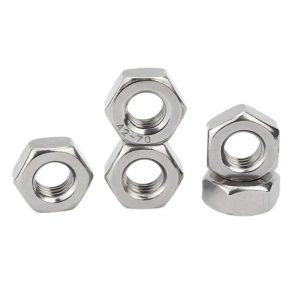
6.1 Matching Hex Bolts with Nuts
The nut should match the bolt’s thread system, nominal diameter, and pitch.
For example, a metric bolt should be paired with a compatible metric nut. An inch-series bolt should use a nut with the corresponding inch-series thread.
Other factors may also need to match:
- Thread tolerance requirements
- Material and mechanical property requirements
- Corrosion protection
- Operating temperature
- Intended assembly conditions
A nut that appears to fit should not be accepted as proof of thread compatibility. The specified thread requirements should be checked.
6.2 Selecting Suitable Washers
Washers are often used between the bolt head or nut and the connected surface.
Depending on the assembly, a washer may help distribute bearing pressure, protect the surface, or provide another specified function.
When selecting a washer, confirm:
- Inner diameter
- Outer diameter
- Thickness
- Material
- Surface treatment
- Applicable washer standard
- Compatibility with the bolt and assembly
Not every hex bolt connection requires a washer. Its use should follow the assembly design or applicable specification.
6.3 Checking the Complete Fastener Assembly
For a reliable connection, the bolt, nut, washer, and connected components should be considered as a system.
A complete compatibility review should cover thread engagement, dimensional fit, material suitability, mechanical property requirements, and environmental conditions.
Where the assembly has defined tightening requirements, these should also be followed. Do not assume that a particular torque value applies to all bolts of the same nominal diameter.
7. How to Choose the Right Hex Bolts
Choosing the right hex bolts is easier when the selection process follows a consistent sequence.
Step 1: Define the Application
Identify where and how the bolt will be used.
Consider:
- What components will be connected?
- Will the bolt pass through holes and engage with a nut?
- Will it engage directly with a tapped hole?
- What loads and service conditions are expected?
- Is the assembly exposed to moisture, chemicals, or elevated temperatures?
These details help establish the basic product and material requirements.
Step 2: Select the Bolt Configuration
Determine whether the application requires a partially threaded or fully threaded hex bolt.
Check the required head design, shank dimensions, thread coverage, and installation space. Use the engineering drawing or applicable product specification when these details are controlled.
Step 3: Confirm the Dimensions and Thread
Specify the nominal diameter, bolt length, thread pitch or TPI, and thread series.
Also confirm the thread length and relevant head and shank dimensions.
Do not rely on a product photograph or a general size description when exact dimensions are required.
Step 4: Specify the Material and Mechanical Properties
Select the material and property class according to the application and engineering requirements.
If corrosion protection is required, identify the surface treatment separately. Confirm that the selected material and finish are suitable for the operating environment.
Step 5: Verify Standards and Documentation
Identify the applicable product standard, thread requirements, and any additional technical specifications.
Request the relevant product information or inspection documents when required by the project.
If the order involves customized dimensions or special requirements, provide a drawing or a detailed specification sheet.
Step 6: Check Compatible Nuts and Washers
Confirm that all mating components use compatible thread systems and meet the required dimensional and material specifications.
Where possible, review the complete assembly rather than evaluating the bolt independently.
Step 7: Confirm the Order Details
Before placing an order, make sure the quotation and purchase order contain the same technical requirements.
Review the product description, quantity, dimensions, material, property class, finish, applicable standard, packaging requirements, and any agreed inspection documents.
Resolve unclear or conflicting information before production begins.
8. Hex Bolt Purchasing Checklist
A clear purchasing specification helps buyers communicate requirements and reduces the risk of receiving products that do not fit the intended assembly.
Use the following checklist when preparing an inquiry or purchase order.
| Specification item | Information to confirm |
| Product type | Hex bolt |
| Thread configuration | Partially threaded or fully threaded |
| Nominal diameter | Metric or inch-series designation |
| Bolt length | Required length and measurement convention |
| Thread specification | Thread series, pitch or TPI, and tolerance requirements |
| Thread length | Required threaded portion |
| Head dimensions | Relevant width across flats and head height |
| Shank dimensions | Required shank diameter and length |
| Material | Specified material or material designation |
| Strength requirement | Applicable property class or mechanical requirements |
| Surface treatment | Required finish or protective coating |
| Product standard | Applicable standard and relevant edition |
| Mating components | Compatible nut, washer, or tapped hole |
| Inspection documents | Required certificates, test reports, or inspection records |
| Quantity and packaging | Order quantity and packaging requirements |
Not every order requires every item in the table. The final specification should reflect the product design, application, and purchasing requirements.
9. Frequently Asked Questions About Hex Bolts
9.1 What Is the Difference Between a Hex Bolt and a Hex Screw?
The terms “hex bolt” and “hex screw” are sometimes used differently by manufacturers, suppliers, and regional markets.
The distinction may depend on the applicable product standard, design, and intended installation method. A hex-head fastener may engage with a nut or directly with a tapped hole.
For purchasing purposes, buyers should specify the product standard, dimensions, thread configuration, and assembly requirements rather than relying only on the product name.
9.2 Are Hex Bolts Available in Different Thread Lengths?
Yes. Hex bolts can have different thread configurations, including partially threaded and fully threaded designs.
The required thread length depends on the product specification and assembly requirements. Buyers should confirm the threaded portion and unthreaded shank dimensions before ordering.
9.3 How Do I Know Which Nut Fits a Hex Bolt?
The nut must match the bolt’s thread system, nominal diameter, and pitch or TPI.
The required thread tolerance, material, and mechanical property requirements should also be considered. A nut should not be selected based only on its external dimensions.
9.4 Are Stainless Steel Hex Bolts Always Better Than Carbon Steel Hex Bolts?
No. The appropriate material depends on the application.
Stainless steel may be suitable when corrosion resistance is important, while carbon steel may meet the requirements of many other applications when the necessary mechanical properties and protective finish are specified.
The operating environment, mechanical loading, temperature, and material compatibility should guide the selection.
9.5 What Information Should I Provide When Requesting a Hex Bolt Quotation?
At a minimum, provide the product type, nominal diameter, length, thread specification, material, required mechanical property class, surface treatment, and applicable standard if known.
A technical drawing is useful when the bolt has special dimensions or other non-standard requirements. You should also identify the required quantity, mating components, and any inspection documentation.
Conclusion
Selecting suitable hex bolts requires a clear understanding of the product configuration, dimensions, thread requirements, material, mechanical properties, and applicable standards.
For industrial buyers and fastener distributors, the most important step is to prepare a complete specification before requesting a quotation or placing an order. Confirming the bolt’s dimensions and thread compatibility with nuts and washers can also help reduce ordering errors and assembly problems.
By checking these requirements systematically, buyers can communicate their needs more clearly and evaluate hex bolt options according to the actual application.












