Threaded fasteners are essential components in mechanical assemblies, industrial equipment, and structural connections. They use mating threads to join, secure, or position components, allowing connections to be assembled, adjusted, and disassembled when required.
Common types include bolts, nuts, screws, and threaded rods. Although these products all rely on threaded connections, they differ in design, function, and installation methods. Selecting the right product requires more than matching its nominal diameter. Thread specifications, material properties, mechanical performance, and application requirements must also be considered.
This guide explains the main types of threaded fasteners, their components, the differences between internal and external threads, and the specifications that determine compatibility. It also covers practical considerations for engineers and purchasing professionals when selecting and ordering threaded fasteners.
What Are Threaded Fasteners?
Definition and Basic Working Principle
Threaded fasteners are mechanical components that use helical threads to create or maintain connections between two or more parts. The threads allow components to engage through rotation, producing axial movement and, in many applications, a clamping force that holds the assembly together.
A typical threaded connection involves an externally threaded component engaging with a mating internal thread.
For example, a bolt can pass through aligned holes in two components and engage with a nut. As the nut is tightened, the threaded engagement helps draw the components together. Similarly, a screw can engage directly with a threaded hole in a component without requiring a separate nut.
Threaded connections are widely used because they offer several practical advantages:
- Disassembly and maintenance: Many threaded connections can be removed without permanently damaging the joined components.
- Adjustability: Threaded components can be tightened or adjusted according to assembly requirements.
- Standardized specifications: Common thread systems make it possible to specify and source compatible components.
- Versatile applications: Different designs and materials support a wide range of mechanical and industrial uses.
The actual performance of a threaded connection depends on the fastener design, thread engagement, installation method, material properties, and operating conditions.
Main Components of a Threaded Fastener
The structure of a threaded fastener varies by product type, but several components and features are commonly used to describe its design.
- Head: The enlarged portion found on many bolts and screws. It provides a bearing surface and may include a drive feature for installation.
- Shank: The body beneath the head. It may contain a smooth, unthreaded section, a threaded section, or both.
- Thread: The helical ridge formed around the external surface of a fastener or inside a threaded hole. It enables engagement with a mating thread.
- Drive feature: The structure that allows a tool to apply rotational force. Common examples include hexagonal drives, internal hex drives, Phillips drives, and slotted drives.
- Nut body and internal thread: A nut typically consists of a shaped body with an internally threaded hole. Its internal thread engages with the external thread of a bolt or threaded rod.
Not every threaded fastener contains all these features. A threaded rod, for example, generally does not have a conventional bolt head, while a nut has an internal thread rather than an external threaded shank.
Understanding these structural differences helps identify the appropriate fastener for a particular connection.
Common Types of Threaded Fasteners
Threaded fasteners are available in different designs to accommodate various connection methods and installation requirements. Four widely used categories are bolts, nuts, screws, and threaded rods.
Bolts
Bolts are externally threaded fasteners that typically feature a head and a shank. They are commonly used with nuts to secure two or more components together.
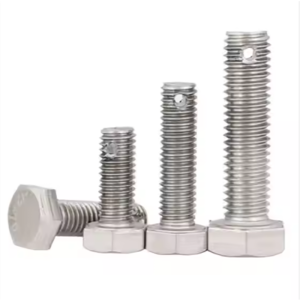
In a typical bolted connection, the bolt passes through clearance holes in the components being joined. A compatible nut engages with the bolt’s external thread and is tightened to create the required clamping force.
Common bolt designs include hex bolts, carriage bolts, and other specialized configurations. Their differences may involve head geometry, shank design, thread length, and installation requirements.
When selecting a bolt, consider:
- Nominal thread diameter and pitch
- Overall length and required thread length
- Head type and available installation space
- Material and mechanical property requirements
- Compatibility with the mating nut
- Applicable product standards and dimensional tolerances
The appropriate bolt depends on the connection design and operating conditions rather than appearance alone.
Nuts
Nuts are internally threaded fasteners designed to engage with externally threaded components, such as bolts and threaded rods.
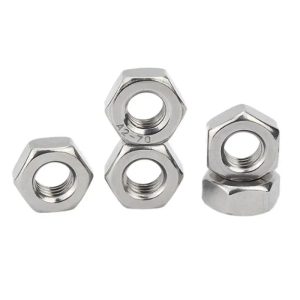
Their primary function is to provide a mating thread that helps secure a mechanical assembly. When tightened against the connected components, a nut can contribute to maintaining the required clamping force.
Common nut designs include hex nuts, lock nuts, flange nuts, and other specialized types. Each design addresses different structural or installation requirements.
Important considerations when selecting a nut include:
- Internal thread specification
- Compatibility with the mating bolt or threaded rod
- Nut dimensions and configuration
- Material and mechanical property requirements
- Operating environment and connection conditions
A nut should not be selected based on its outside dimensions alone. Its internal thread must match the mating external thread in the applicable thread system, nominal size, pitch, and tolerance requirements.
Screws
Screws are threaded fasteners commonly used to secure components by engaging with a mating threaded feature or, depending on their design, forming or cutting threads in the receiving material.
Unlike a typical bolt-and-nut connection, many screw applications involve direct engagement with a threaded hole in one of the components.
Common screw categories include machine screws, self-tapping screws, and other specialized designs. Their head shapes, drive features, thread geometry, and installation methods vary according to their intended applications.
When choosing a screw, consider:
- Screw type and intended installation method
- Head shape and drive configuration
- Thread diameter and pitch
- Length and required engagement depth
- Material and mechanical properties
- Compatibility with the receiving material or threaded hole
The distinction between bolts and screws is not always determined by appearance or whether a separate nut is used. Their intended function, design, applicable product standard, and connection method should all be considered.
Threaded Rods
Threaded rods are elongated fasteners with external threads along all or a specified portion of their length. Fully threaded rods are a common design, although other configurations may also be available.
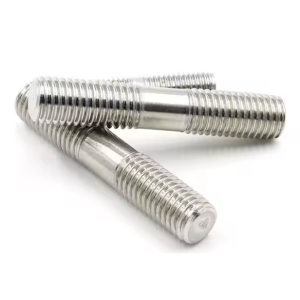
They are commonly used in applications where an extended threaded connection is required. For example, a threaded rod can be combined with nuts and other components to support, suspend, or secure equipment and structural assemblies.
Compared with conventional bolts, threaded rods generally provide greater flexibility in connection length and positioning. They may be suitable when a standard bolt does not provide the required threaded length or installation arrangement.
Important selection factors include:
- Rod diameter and thread specification
- Overall length and threaded length
- Material and mechanical property requirements
- End configuration
- Compatibility with mating nuts
- Installation and support requirements
Threaded rods should be specified according to their intended application, dimensions, and applicable standards rather than treated simply as longer bolts.
External Threads vs. Internal Threads
Understanding the difference between external and internal threads is essential when selecting compatible threaded fasteners.
What Are External Threads?
External threads are formed on the outside surface of a cylindrical or tapered component. They are commonly found on bolts, screws, and threaded rods.
The raised helical profile allows an externally threaded component to engage with a corresponding internal thread.
Several geometric features describe an external thread:
- Crest: The top portion of the thread.
- Root: The bottom portion between adjacent thread forms.
- Flank: The surface connecting the crest and root.
- Major diameter: The largest diameter of the external thread.
- Minor diameter: The smallest diameter of the external thread.
These features are relevant to thread dimensions, manufacturing, inspection, and compatibility.
What Are Internal Threads?
Internal threads are formed on the inside surface of a hole or opening.
They are commonly found in nuts and threaded holes machined into mechanical components. Internal threads allow externally threaded fasteners to engage with the receiving part.
For example, when a bolt is inserted into a nut, the bolt’s external thread engages with the nut’s internal thread. The same principle applies when a screw is installed into a pre-tapped hole.
Internal thread specifications also involve diameter, pitch, thread form, and tolerance requirements. Their major and minor diameters are defined in relation to the internal thread profile and should not be confused with the corresponding external thread measurements.
How Internal and External Threads Work Together
A compatible threaded connection requires the mating threads to match in their essential specifications.
The most important considerations include:
- Thread system: Confirm whether the threads belong to the same applicable standard system.
- Nominal diameter: Check the specified thread size.
- Pitch or threads per inch: Confirm that the distance between thread forms or the specified thread count matches.
- Thread form: Verify that the thread profiles are compatible.
- Tolerance requirements: Check that the dimensional limits and specified fit are suitable for the connection.
Matching nominal diameters alone is not sufficient.
For example, a metric thread and a Unified inch thread may have similar measured diameters, but their thread pitches and profiles can differ. Attempting to combine them without confirming compatibility can result in poor engagement, damaged threads, or an unsuitable connection.
For critical assemblies, compatibility should be confirmed using the applicable drawings, specifications, and inspection methods rather than relying only on visual comparison or manual fitting.
Understanding Thread Specifications: Diameter, Pitch and Thread Fit
Thread specifications provide the information needed to identify a threaded fastener and determine whether it can engage with a mating component.
Three important considerations are thread diameter, pitch, and tolerance.
Thread Diameter and Nominal Size
Thread diameter describes the dimensions of a threaded profile. Different diameter measurements are used to define external and internal threads.
The main diameter terms include:
- Major diameter: The largest diameter of a thread.
- Minor diameter: The smallest diameter of a thread.
- Pitch diameter: The diameter of an imaginary reference cylinder used to define the relationship between the thread flanks and spaces.
For external threads, the major diameter is measured across the thread crests, while the minor diameter is measured near the roots. For internal threads, the major diameter is associated with the roots of the internal thread profile, while the minor diameter is associated with the crests.
The nominal thread size is the designated size used to identify a thread. It should not automatically be treated as the exact measured diameter at every point on the thread.
For example, a metric designation beginning with M identifies a metric thread and its nominal diameter in millimeters. However, additional information may be necessary to establish the complete thread specification.
This is why a caliper measurement alone may not be enough to identify an unknown threaded fastener accurately.
Thread Pitch and Threads per Inch
Thread pitch is the axial distance between corresponding points on adjacent thread forms.
In metric thread systems, pitch is generally expressed in millimeters. For example, a thread specification may identify a nominal diameter followed by a pitch value.
Threads per inch (TPI), on the other hand, indicates the number of thread intervals within one inch of axial length and is commonly used in inch-based thread systems.
For a conventional single-start thread, pitch and TPI have an inverse mathematical relationship:
Pitch (inches) = 1 / TPI
For example, a 20-TPI single-start thread has a pitch of 0.05 inches.
However, pitch and lead should not be treated as interchangeable in every situation. Lead describes the axial distance a threaded component advances during one complete rotation. For a single-start thread, lead equals pitch. For multiple-start threads, lead is greater than pitch.
When identifying a fastener, confirm the applicable thread system and specification rather than comparing pitch values without considering the complete thread form.
Thread Standards, Forms and Tolerances
Thread standards establish the technical requirements used to define and manufacture compatible threaded components.
Different thread systems may specify different thread profiles, dimensions, tolerance classes, and designation methods.
ISO metric threads: General-purpose metric screw threads are covered by the ISO metric thread system. ISO 261 specifies the general plan for metric screw threads, including preferred combinations of nominal diameters and pitches. The ISO 965 series addresses tolerance requirements for metric screw threads.
Unified inch threads: Unified inch screw threads are covered by ASME B1.1, which specifies thread forms, series, classes, allowances, tolerances, and designations for the applicable Unified thread forms.
These systems should be treated separately when specifying or sourcing threaded fasteners.
Thread tolerances are important because manufacturing variations mean that actual thread dimensions must fall within specified limits to achieve the intended fit.
A thread designation may therefore include more than nominal diameter and pitch. Depending on the applicable system, it may also identify a tolerance class or other technical information.
For engineering and procurement purposes, the applicable standard and its required edition should be identified before dimensions or tolerance values are specified.
How to Check Thread Compatibility
Checking thread compatibility is an important step before ordering or assembling threaded fasteners.
A practical verification process includes:
Step 1: Identify the thread system.
Determine whether the component uses a metric thread, Unified inch thread, or another specified thread system.
Step 2: Confirm the nominal diameter.
Check the thread designation or technical drawing rather than relying exclusively on an approximate physical measurement.
Step 3: Verify the pitch or TPI.
Use the appropriate thread specification or measuring tool to confirm the thread spacing.
Step 4: Check the thread form and direction.
Confirm that the thread profile and handedness meet the mating component’s requirements.
Step 5: Review tolerance requirements.
Check the specified tolerance classes and dimensional limits where applicable.
Step 6: Verify the actual fit.
When required, use suitable thread gauges, inspection equipment, and assembly checks to confirm that the threads meet the specified requirements.
For critical applications, inspection should follow the relevant product specification and acceptance criteria. A component that can be manually threaded into another part is not automatically proven to meet all dimensional or performance requirements.
Bolts vs. Nuts vs. Screws vs. Threaded Rods
Although bolts, nuts, screws, and threaded rods all participate in threaded connections, their designs and functions are different.
Understanding these differences helps engineers and purchasing professionals select the right product and identify the necessary mating components.
Key Differences in Design and Function
| Product Type | Typical Design | Typical Connection Method | Main Selection Considerations |
| Bolts | Head and externally threaded shank | Commonly used with nuts to connect components | Diameter, length, thread specification, material, and mechanical properties |
| Nuts | Body with an internal thread | Engages with bolts or threaded rods | Internal thread compatibility, dimensions, material, and performance requirements |
| Screws | Typically a head and externally threaded body | Engages with a threaded hole or forms threads in a receiving material, depending on design | Head type, drive feature, thread design, and installation method |
| Threaded rods | Elongated rod with external threads along all or a specified portion of its length | Commonly used with nuts and other mating components | Diameter, length, thread specification, material, and installation requirements |
These descriptions represent typical product characteristics. Specific designs and classifications may vary according to the applicable product standard.
How to Choose the Right Fastener Type
The appropriate fastener type depends primarily on the structure of the connection and how the components need to be assembled.
Consider the following examples:
When two components need to be secured with a through-connection: A bolt and compatible nut may be suitable when the design allows the bolt to pass through aligned holes.
When a component has a threaded hole: A screw or another appropriately specified externally threaded fastener may be used to engage directly with the internal thread.
When a longer threaded connection is required: A threaded rod may be more appropriate when the assembly needs an extended threaded section or adjustable positioning with nuts.
Before selecting a product, consider the following questions:
- Does the connection require a separate nut?
- Is there an existing threaded hole?
- How much installation space is available?
- What length and thread engagement are required?
- What loads and operating conditions will the connection experience?
- Will the assembly need regular maintenance or disassembly?
These considerations provide a starting point for selecting the appropriate fastener. Final selection should be based on the actual engineering requirements.
How to Choose Threaded Fasteners: Materials, Grades and Application Requirements
Selecting threaded fasteners involves evaluating more than their basic dimensions. Material properties, mechanical performance, operating conditions, and connection requirements all influence whether a fastener is suitable for an application.
Choosing the Right Material
The material of a threaded fastener affects its mechanical properties, corrosion resistance, temperature suitability, and overall performance.
Common material categories include carbon steel, alloy steel, and stainless steel.
Carbon steel: Carbon steel fasteners are widely used in mechanical assemblies and general industrial applications. Their suitability depends on the specified material grade, manufacturing requirements, and any surface treatment.
Alloy steel: Alloy steel fasteners may be selected when particular mechanical properties are required. Their suitability depends on the alloy composition, heat treatment, product specification, and intended application.
Stainless steel: Stainless steel fasteners are often considered for applications where corrosion resistance is important. However, corrosion resistance varies by grade and environment. Stainless steel should not be assumed to be immune to corrosion in every operating condition.
When choosing a material, consider:
- Expected mechanical loads
- Exposure to moisture or corrosive substances
- Operating temperature
- Contact with other materials
- Required service conditions
- Cost and maintenance considerations
Surface treatments and coatings may also influence corrosion behavior and other performance characteristics. Their suitability should be evaluated alongside the base material and the requirements of the complete connection.
Understanding Fastener Grades and Mechanical Properties
Fastener grades identify specified mechanical performance characteristics under particular standards.
They should not be confused with material names or surface treatment designations.
For example, identifying a fastener simply as steel does not provide enough information to establish its mechanical properties or suitability for a load-bearing application.
When reviewing a fastener’s grade, consider:
- The applicable product standard
- The fastener type and nominal size
- The specified mechanical property class or grade
- Relevant strength and hardness requirements
- Manufacturing and heat-treatment requirements, where applicable
- Required inspection and documentation
Different fastener products may use different grading systems. A bolt’s property class should not automatically be applied to a nut or threaded rod without confirming the relevant product requirements.
For engineering applications, the selected grade must be consistent with the connection design and applicable technical specification.
Matching Fasteners to Load and Operating Conditions
The operating environment and expected loads influence the type and performance requirements of threaded fasteners.
Several factors deserve attention.
Static loads: Connections carrying relatively steady loads require fasteners selected according to the design load and applicable mechanical requirements.
Dynamic loads and vibration: Repeated loading and vibration can affect joint behavior and may increase the risk of loosening or fatigue. The connection design and installation method should address these conditions.
Corrosive environments: Exposure to moisture, chemicals, salts, or other corrosive substances can influence material and coating selection.
Temperature conditions: High or low operating temperatures may affect material properties and connection performance.
Installation requirements: Available tools, access space, tightening procedures, and maintenance needs can influence the fastener design.
A reliable connection depends on the complete assembly, not simply the nominal strength of an individual fastener. Engineering evaluation may be necessary for critical or heavily loaded applications.
Confirming Fastener Specifications Before Ordering
Before placing an order, engineers and purchasing professionals should verify that the selected product meets the technical and application requirements.
The following checklist provides a practical starting point:
- Product type: Confirm whether the requirement is for a bolt, nut, screw, or threaded rod.
- Applicable standard: Identify the required product and thread standards.
- Thread specification: Confirm the thread system, nominal diameter, pitch or TPI, and tolerance requirements.
- Dimensions: Check overall length, thread length, head dimensions, and other critical measurements.
- Material: Specify the required material grade or designation.
- Mechanical properties: Confirm the required property class or performance grade.
- Surface treatment: Identify any required coating or finishing process.
- Mating components: Verify that bolts, nuts, and other threaded components are compatible.
- Quality documentation: Identify any required certificates, inspection records, or test reports.
- Order details: Confirm quantity, packaging, delivery requirements, and any special instructions.
A complete specification reduces the risk of misunderstandings between the buyer, supplier, and engineering team.
What to Check in Threaded Fastener Drawings and Procurement Documents
Technical drawings and procurement documents translate engineering requirements into information that manufacturers and suppliers can use.
Incomplete specifications may lead to incorrect product selection, inconsistent quotations, or compatibility problems during assembly.
Essential Information in Technical Drawings
A threaded fastener drawing should clearly identify the product and its critical dimensions.
Depending on the application, relevant information may include:
- Product type and applicable standard
- Thread designation and thread system
- Nominal diameter and pitch
- Thread tolerance requirements
- Overall length and thread length
- Head dimensions and geometry, where applicable
- Material and mechanical property requirements
- Surface treatment or coating
- Special dimensional or functional requirements
For example, a drawing for a bolt should identify its thread specification, length, head configuration, and applicable material or performance requirements.
The information should be sufficiently clear to avoid assumptions about dimensions or manufacturing details.
Where a standard designation fully defines certain product characteristics, the drawing should reference the correct standard and any additional requirements that are not covered by it.
Quality Documents and Inspection Requirements
Quality documentation helps buyers verify whether supplied fasteners meet the agreed specifications.
Depending on the product and purchasing requirements, relevant documents may include:
- Product conformity documentation
- Material certificates
- Mechanical property test reports
- Dimensional inspection records
- Thread inspection or gauge records
- Surface treatment inspection results
Not every order requires every document. The required documentation should be agreed upon according to the product standard, application risk, contractual requirements, and buyer’s quality procedures.
For critical threaded connections, buyers should also clarify the inspection methods and acceptance criteria before production or delivery.
A supplier’s documentation should be reviewed against the actual purchase specification rather than treated as automatic proof that every requirement has been independently verified.
Questions to Clarify with a Fastener Supplier
Clear technical communication helps prevent specification errors and unnecessary changes during procurement.
Before confirming an order, consider asking:
- Which product standard applies to the requested fastener?
- Are the thread specifications and tolerance requirements clearly identified?
- Are the mating nuts, bolts, or threaded rods compatible?
- Does the proposed material meet the specified application requirements?
- Are the required dimensions and surface treatments confirmed?
- What inspection records or quality documents can be provided?
- Are there any technical details that require clarification before production?
Providing a complete drawing or specification sheet can make this process more efficient.
For industrial buyers, the goal is to ensure that the quoted and supplied fasteners match the actual engineering requirements, rather than relying on general product descriptions alone.
Frequently Asked Questions About Threaded Fasteners
What Is the Difference Between a Threaded Fastener and a Regular Fastener?
A threaded fastener uses a helical thread to create a connection with a mating thread or receiving material.
Other mechanical fastening components, such as pins, clips, and certain locking devices, may secure parts without using threaded engagement.
The main distinction is the connection mechanism. Threaded fasteners are particularly useful when an assembly needs controlled tightening, adjustment, or disassembly.
Can Any Nut Fit Any Bolt With the Same Diameter?
No. Matching nominal diameters does not guarantee compatibility.
A nut and bolt must have compatible thread systems, pitch or TPI, thread forms, and applicable tolerance requirements.
For example, metric and Unified inch threads should not be treated as interchangeable simply because their measured diameters are similar.
Always confirm the complete thread specification before assembly.
What Is the Difference Between Metric and Imperial Threads?
Metric and imperial thread systems use different specification conventions.
Metric threads generally identify nominal diameter and pitch in millimeters. Common Unified inch threads use inch-based nominal designations and threads per inch.
They may also differ in thread form, tolerance classes, and designation requirements.
The applicable standard should be identified before selecting or matching components.
Are Stainless Steel Threaded Fasteners Always the Best Choice?
No. Stainless steel may be suitable when corrosion resistance is an important consideration, but it is not automatically the best choice for every application.
The appropriate material depends on the operating environment, required mechanical properties, temperature, contact with other materials, and overall connection design.
Material selection should be based on the actual application rather than a general assumption that one material is always superior.
What Information Should I Provide When Ordering Threaded Fasteners?
When requesting a quotation or placing an order, provide as much relevant technical information as possible.
This typically includes:
- Fastener type and product standard
- Thread system, nominal diameter, and pitch
- Required length and other critical dimensions
- Material and mechanical property grade
- Surface treatment requirements
- Mating component specifications
- Technical drawings or product samples, where applicable
- Quality documentation and inspection requirements
- Order quantity and delivery details
Providing these details helps suppliers understand the requirements and reduces the possibility of ordering incompatible products.
Conclusion: How to Select Compatible Threaded Fasteners
Choosing the right threaded fasteners requires a clear understanding of product design, thread specifications, material properties, and application requirements.
Bolts, nuts, screws, and threaded rods serve different functions, even though they all rely on threaded connections. Their compatibility depends on more than nominal diameter: thread systems, pitch, thread form, and tolerance requirements must also be considered.
For engineers and purchasing professionals, a practical selection process starts with identifying the connection type, confirming the complete thread specification, evaluating material and mechanical requirements, and reviewing the relevant technical documents.
By checking these details before ordering, buyers can reduce specification misunderstandings and make more informed decisions when sourcing threaded fasteners.












