Automotive fasteners are essential components used to connect, secure, and assemble different parts of a vehicle. Common examples include bolts, nuts, screws, washers, rivets, and clips.
However, selecting automotive fasteners involves more than matching a bolt diameter or choosing a material. Different vehicle components operate under different conditions, including vibration, mechanical loads, temperature changes, moisture, and corrosive environments. These conditions influence the required mechanical properties, dimensions, surface treatments, and connection performance.
Understanding automotive fastener types, technical specifications, applicable standards, and quality requirements helps engineers and purchasing professionals evaluate fastening solutions more systematically. This guide explains common automotive fasteners, their application requirements, key specification factors, and the information buyers should verify before placing an order.
1. What Are Automotive Fasteners?
Automotive fasteners are mechanical components used to join or secure vehicle parts during manufacturing, assembly, maintenance, and repair. They connect structural components, mechanical systems, interior parts, electrical equipment, and other vehicle assemblies.
Depending on the connection design, automotive fasteners may create removable or permanent joints. Some allow components to be disassembled for maintenance, while others are intended to provide permanent connections.
1.1 Definition and Basic Functions of Automotive Fasteners
Automotive fasteners are available in different shapes, materials, sizes, and connection configurations. Their primary function is to maintain the required relationship between connected components.
Common functions include:
- Component fastening: Connecting two or more parts to form a mechanical assembly.
- Load transfer: Helping transmit forces between connected components through the designed joint.
- Positioning and alignment: Maintaining the relative position of parts during operation.
- Assembly support: Allowing components to be installed, removed, or replaced when necessary.
- Connection stability: Maintaining the required clamping condition under specified operating conditions.
Threaded fasteners, such as bolts, screws, and nuts, are widely used because they can provide controlled clamping force and allow disassembly when the joint design permits.
Other fastening components, including rivets and clips, are used when the connection design, material combination, installation method, or service requirements call for different solutions.
1.2 Why Fastener Selection Matters in Automotive Applications
Although fasteners are relatively small components, their performance can influence the reliability of an entire vehicle assembly.
Several operating conditions should be considered during selection.
Vibration and dynamic loading
Vehicle components may experience repeated vibration, acceleration, braking forces, and road-induced loads. These conditions can affect threaded connections and contribute to changes in preload or joint behavior.
Temperature variations
Engine compartments, exhaust systems, and other vehicle areas may experience substantial temperature changes. Temperature can influence material properties, thermal expansion, and fastening performance.
Corrosion exposure
Moisture, road salt, cleaning chemicals, and other environmental factors can contribute to corrosion. The required protection depends on the vehicle location and expected exposure.
Mechanical stress
Different connections may experience tensile, shear, bending, or combined loading. The fastener and joint must be designed for the applicable loading conditions.
For these reasons, automotive fasteners should be selected according to the actual application requirements rather than appearance or nominal dimensions alone.
2. Common Types of Automotive Fasteners
Automotive fasteners include several product categories, each with different structural characteristics and connection functions. The appropriate type depends on the component design, materials being joined, installation conditions, and required joint performance.
2.1 Automotive Bolts
Bolts are threaded fasteners commonly used to create connections with compatible nuts or threaded components. Depending on the joint design, they may also engage directly with tapped holes.
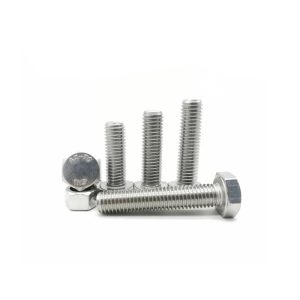
Common configurations include:
- Hex bolts: Feature six-sided heads that can be tightened using standard tools.
- Flange bolts: Incorporate an integrated flange beneath the head to provide a larger bearing surface.
- Special-purpose bolts: Use application-specific geometries designed for particular assembly requirements.
Bolt selection involves checking nominal diameter, thread pitch, length, head dimensions, material, mechanical properties, and surface treatment.
The bolt must also be compatible with its mating nut or threaded hole. A fastener with suitable mechanical properties may still be unsuitable if its dimensions, thread configuration, or bearing surface do not match the joint design.
2.2 Automotive Nuts
Nuts are internally threaded components used with compatible bolts or studs to create threaded connections.
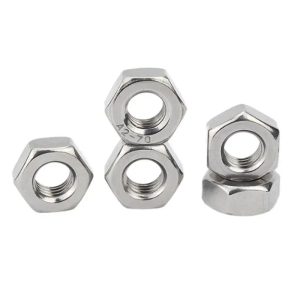
Common types include:
- Hex nuts: General-purpose nuts with six-sided external profiles.
- Flange nuts: Include an integrated flange that provides a larger bearing surface.
- Nylon insert lock nuts: Use a non-metallic insert to create resistance to rotation.
- All-metal lock nuts: Use metal deformation or other mechanical features to provide prevailing torque.
- Special-purpose nuts: Designed for specific assembly geometries or functional requirements.
Automotive nut selection should consider thread compatibility, mechanical property class, locking mechanism, temperature exposure, and installation requirements.
Nylon insert lock nuts and all-metal lock nuts are not interchangeable in every application. Their temperature limitations and locking characteristics differ, so actual service conditions must be evaluated before selection.
2.3 Automotive Screws
Screws are threaded fasteners used to secure components through different connection arrangements. Depending on their design, they may engage with pre-threaded holes or form mating threads during installation.
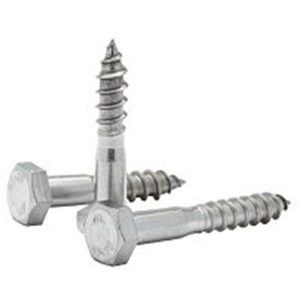
Common examples include:
- Machine screws: Designed for use with compatible threaded holes or nuts.
- Self-tapping screws: Form or cut mating threads in suitable materials during installation.
- Special-purpose screws: Designed with particular head shapes, drive configurations, or thread geometries.
Machine screws are commonly used where controlled threaded engagement is required. Self-tapping screws may be used in selected metal or plastic assemblies where the component design permits thread formation during installation.
Important selection factors include screw diameter, length, thread design, head geometry, drive type, material, and installation method.
2.4 Automotive Washers and Other Fastening Components
Washers and other fastening components support different types of connections.
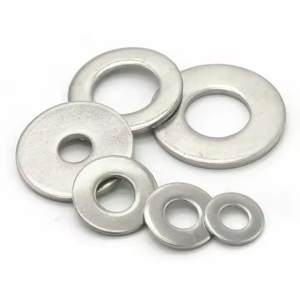
Common washer types include:
- Flat washers: Provide a bearing surface and help distribute contact pressure.
- Spring washers: Include elastic or spring-like geometries intended for particular connection designs.
- Special washers: May be designed for specific positioning, sealing, load distribution, or assembly requirements.
Washers should be selected according to the joint design, bearing surface, material combination, and intended function. A spring washer should not automatically be assumed to prevent loosening in every vibrating connection.
Other automotive fastening components include:
- Rivets: Used to create permanent mechanical connections.
- Clips: Commonly used to retain panels, trim, wiring, and other components.
- Retaining rings: Used to retain components on shafts or within bores.
- Special fastening assemblies: May combine multiple fastening elements into a single installation solution.
These components demonstrate that automotive fastening systems involve more than conventional bolts and nuts. Each fastening method must match the structural and functional requirements of the assembly.
3. Automotive Fastener Requirements in Different Application Areas
Automotive fastener requirements vary according to the location and function of the connection. A fastener used in an engine assembly may face different operating conditions from one used in an interior panel or electrical enclosure.
Understanding these differences helps engineers and buyers identify the factors that should be evaluated during product selection.
3.1 Engine and Powertrain Connections
Engine and powertrain assemblies can expose fasteners to elevated temperatures, vibration, mechanical loads, and repeated operating cycles.
Important considerations include:
- Temperature resistance: Materials and fastening systems must be suitable for the expected operating temperature.
- Mechanical properties: The fastener must meet the design requirements for tensile loading and other applicable stresses.
- Clamping performance: The joint must maintain the required clamping condition during operation.
- Thermal expansion: Differences in thermal expansion between connected components can influence joint behavior.
- Fatigue resistance: Repeated loading may contribute to fatigue damage if the connection is not properly designed.
The exact requirements depend on the component, joint geometry, loading conditions, and manufacturer specifications. Fasteners used in cylinder head, transmission, or other critical assemblies should not be selected solely by matching nominal size and general-purpose strength grades.
3.2 Chassis and Suspension Connections
Chassis and suspension components are exposed to road-induced vibration, impact loads, dynamic forces, and environmental conditions.
Fasteners used in these areas may require careful consideration of:
- Tensile and shear loading.
- Fatigue performance under repeated loading.
- Resistance to corrosion from water, dirt, and road salt.
- Thread engagement and joint geometry.
- Preload requirements and resistance to changes in clamping force.
For example, a suspension connection may experience repeated loading as the vehicle travels over uneven surfaces. The fastening system must therefore be evaluated as part of the complete joint rather than as an isolated bolt or nut.
Specific strength classes, tightening procedures, and inspection requirements should be determined from the applicable engineering documentation.
3.3 Body and Interior Connections
Vehicle body and interior assemblies include metal panels, plastic components, trim, brackets, seats, and various supporting structures.
Their fastening requirements may differ considerably from those of powertrain or suspension systems.
Typical considerations include:
- Dimensions and installation space: Fasteners must fit the available assembly space.
- Weight: Lightweight fastening solutions may be considered where the design permits.
- Material compatibility: Different materials may require specific fastening configurations.
- Appearance: Visible fasteners may need particular head shapes or finishes.
- Serviceability: Some interior and body components need to be removed during maintenance or replacement.
Screws, clips, rivets, and other specialized fasteners may be used depending on the connection design.
For plastic components, thread geometry and installation method are particularly important because excessive installation force or unsuitable thread engagement may damage the surrounding material.
3.4 Exhaust and Other High-Temperature Areas
Exhaust systems and nearby components can experience high operating temperatures and repeated heating and cooling cycles.
These conditions create several fastening considerations:
- Resistance to elevated temperatures.
- Thermal expansion and contraction.
- Oxidation and corrosion resistance.
- Mechanical property retention at operating temperature.
- Compatibility between fastener materials and connected components.
A coating or material that performs adequately in a general outdoor environment may not be suitable for an exhaust connection.
The actual operating temperature, exposure conditions, and manufacturer specifications should therefore be checked before selecting fasteners for high-temperature locations.
3.5 Electrical and Battery-Related Connections
Electrical and battery-related assemblies introduce additional considerations beyond conventional mechanical fastening.
Depending on the connection design, requirements may include:
- Electrical conductivity or electrical isolation.
- Contact resistance and stable electrical connections.
- Corrosion protection.
- Compatibility with conductive materials.
- Resistance to environmental exposure.
- Mechanical retention under vibration and operating loads.
For example, a battery terminal connection may require controlled contact pressure and suitable material compatibility. Other electrical assemblies may require insulation or separation between conductive components.
High-voltage battery systems also involve application-specific electrical safety and insulation requirements. Fastener selection in these systems must follow the relevant electrical and mechanical design specifications rather than general-purpose fastening recommendations.
4. Key Specification Requirements for Automotive Fasteners
Automotive fastener specifications define the physical, mechanical, and functional requirements that a product must satisfy. These specifications help ensure that the fastener is compatible with the joint design and operating environment.
Four major areas should be considered: material, mechanical properties, dimensions, and surface treatment.
4.1 Materials Used in Automotive Fasteners
Material selection influences the strength, durability, corrosion resistance, and temperature performance of automotive fasteners.
Common material categories include:
Carbon Steel
Carbon steel is widely used in general fastening applications because of its mechanical properties and versatility. Its performance depends on its chemical composition, heat treatment, and manufacturing process.
Carbon steel fasteners may require protective coatings when used in environments where corrosion is a concern.
Alloy Steel
Alloy steel contains additional alloying elements that can influence strength, hardenability, toughness, and other mechanical properties.
It is used in applications where the required mechanical performance cannot be achieved through the selected carbon steel grade and processing route alone.
Stainless Steel
Stainless steel contains chromium and other alloying elements that contribute to corrosion resistance.
Different stainless steel grades have different mechanical properties and corrosion performance. Selection should account for the environment, temperature, mechanical loading, and possible material interactions.
Other Materials
Depending on the application, automotive fastening systems may also use aluminum alloys, copper alloys, and specialized materials.
These materials may be considered where weight, electrical conductivity, corrosion behavior, or other functional requirements are important.
| Material |
General characteristics |
Selection considerations |
| Carbon Steel |
Versatile mechanical properties |
Strength, heat treatment, corrosion protection |
| Alloy Steel |
Can provide higher specified strength and tailored properties |
Composition, heat treatment, loading |
| Stainless Steel |
Corrosion-resistant material family |
Grade, strength, temperature, environment |
| Aluminum Alloy |
Low density |
Strength, fatigue, galvanic compatibility |
| Copper Alloy |
Electrical and other specialized properties |
Conductivity, strength, corrosion behavior |
Material selection should always be based on the required performance of the complete fastening connection rather than the material name alone.
4.2 Mechanical Properties and Strength Grades
Mechanical properties describe how a fastener responds to applied forces and deformation.
Important properties include:
- Tensile Strength: The maximum tensile stress a material or fastener can withstand under specified test conditions.
- Yield or Proof Strength: The stress or specified load associated with the onset of permanent deformation, depending on the applicable material and product test method.
- Proof Load: A specified test load used to evaluate whether a fastener can withstand loading without unacceptable permanent deformation.
- Hardness: A measure of resistance to localized indentation or deformation.
- Fatigue Performance: The ability to withstand repeated or fluctuating loading over time.
Fastener property classes provide a standardized way to identify certain mechanical performance requirements. However, the applicable classification depends on the fastener type and material.
For example, ISO 898-1 specifies mechanical and physical properties for carbon steel and alloy steel bolts, screws, and studs. ISO 898-2 addresses corresponding requirements for specified classes of nuts.
These standards do not cover every performance characteristic required in automotive applications. ISO 898-1, for example, does not specify general corrosion resistance, fatigue resistance, or torque/clamp force performance.
When selecting automotive fasteners, engineers should verify:
- The required property class or grade.
- The applicable product standard.
- The material and heat treatment.
- The expected operating temperature.
- The loading conditions of the connection.
- Compatibility between the bolt, nut, and other connected components.
A higher strength class is not automatically a better choice. The selected fastener must match the joint design, material compatibility, and specified installation conditions.
4.3 Dimensions, Thread Types and Tolerances
Dimensional accuracy is essential because automotive fasteners must fit their mating components and provide the intended connection.
Important dimensional parameters include:
Nominal Diameter
The nominal diameter identifies the basic size of a threaded fastener. It must match the corresponding nut or threaded hole.
Thread Pitch
Thread pitch is the distance between adjacent thread forms. Incorrect thread pitch can prevent proper engagement or damage the mating threads.
Fastener Length
Bolt or screw length must provide sufficient thread engagement without interfering with surrounding components.
Head Dimensions
Head height, width across flats, flange diameter, and drive configuration can affect installation space and tool access.
Thread Tolerances
Thread tolerances determine the permissible variation in thread dimensions and influence the fit between mating components.
Common thread considerations include:
- Metric coarse threads.
- Metric fine threads.
- Internal and external thread tolerances.
- Thread engagement length.
- Compatibility with the specified nut or threaded hole.
For example, two bolts with the same nominal diameter may have different thread pitches or lengths. They should not be treated as interchangeable without checking the engineering specifications.
Dimensional verification should follow the applicable product drawing and inspection requirements.
4.4 Surface Treatments and Corrosion Protection
Surface treatments help improve the performance or appearance of fasteners under particular environmental conditions.
Common treatments include:
Zinc Plating
Zinc coatings are commonly used to provide corrosion protection to steel fasteners. The actual protection depends on coating thickness, passivation or supplementary treatments, and environmental exposure.
Zinc-Nickel Coating
Zinc-nickel coatings can provide enhanced corrosion protection in selected applications. Their suitability depends on the specified coating system and verification requirements.
Phosphate Coating
Phosphate treatments form a conversion coating on the metal surface. Depending on the process and supplementary treatment, they may provide a suitable surface for lubrication, paint, or other functional purposes.
Other Protective Coatings
Specialized coatings may be selected to control friction, improve corrosion resistance, or meet particular assembly requirements.
When selecting a surface treatment, consider:
- Corrosion exposure and expected service conditions.
- Coating thickness and dimensional tolerances.
- Friction characteristics during tightening.
- Compatibility with mating components.
- Operating temperature.
- Environmental and chemical exposure.
An additional consideration is hydrogen embrittlement.
High-strength steel fasteners can be vulnerable to hydrogen embrittlement under certain conditions. Hydrogen may enter the steel during manufacturing or surface treatment processes and contribute to delayed cracking under tensile stress.
Therefore, suitable process controls, risk assessment, and verification procedures are important when specifying coatings for high-strength fasteners.
Surface treatment should not be selected independently of mechanical properties and joint requirements.
5. Automotive Fastener Standards and Technical Documentation
Automotive fastener standards provide common technical references for product dimensions, mechanical properties, functional characteristics, and testing procedures.
However, a general fastener standard does not automatically cover every requirement of a specific automotive application. Vehicle manufacturers and component designers may establish additional requirements through engineering drawings and internal specifications.
5.1 Common Standards Related to Automotive Fasteners
Several international standards are relevant to the technical evaluation of threaded fasteners.
| Standard |
Main subject |
General application |
| ISO 898-1:2013 |
Mechanical properties of carbon steel and alloy steel fasteners |
Bolts, screws, and studs |
| ISO 898-2:2022 |
Mechanical properties of carbon steel and alloy steel nuts |
Nuts with specified property classes |
| ISO 3506-1:2020 |
Mechanical properties of corrosion-resistant stainless steel fasteners |
Stainless steel bolts, screws, and studs |
| ISO 3506-2:2020 |
Mechanical properties of corrosion-resistant stainless steel fasteners |
Stainless steel nuts |
| ISO 16047:2005 |
Torque/clamp force testing |
Applicable threaded fastener assemblies |
| ISO 2320:2015 |
Functional properties of prevailing torque steel nuts |
Applicable all-metal and non-metallic insert lock nuts |
These standards have different scopes and should not be treated as interchangeable.
For example:
- ISO 898-1:2013 covers specified mechanical and physical properties of carbon steel and alloy steel bolts, screws, and studs.
- ISO 898-2:2022 addresses mechanical and physical properties of specified carbon steel and alloy steel nuts.
- ISO 3506-1:2020 covers specified properties of corrosion-resistant stainless steel bolts, screws, and studs.
- ISO 3506-2:2020 addresses the corresponding properties of stainless steel nuts.
- ISO 16047:2005 specifies conditions for torque/clamp force testing.
- ISO 2320:2015 covers functional properties of prevailing torque steel nuts.
The published ISO 898-1:2013 edition was confirmed in 2025, while a revision project is under development. Therefore, users should check the current publication status when preparing specifications or purchasing documents.
When referring to these standards, buyers should confirm the relevant part, edition, amendments, and applicability to the product being evaluated.
A standard may also exclude certain properties or testing requirements. For example, ISO 898-1 does not establish general corrosion resistance, fatigue resistance, or torque/clamp force performance. ISO 16047 also has specific product and test limitations, so it should not be applied indiscriminately to every threaded fastener.
5.2 Technical Drawings and Product Specifications
Technical drawings are essential documents for defining the required configuration of automotive fasteners.
They provide detailed information that may not be fully described by a product name or general standard.
Important drawing and specification details include:
- Product type and design configuration.
- Nominal diameter and thread pitch.
- Overall length and head dimensions.
- Material and mechanical property requirements.
- Surface treatment and coating specifications.
- Dimensional tolerances.
- Special functional or performance requirements.
- Applicable testing and inspection criteria.
Buyers should also verify the drawing revision.
A product manufactured according to an outdated drawing may not meet current design requirements, even if its general dimensions appear similar.
Where special requirements exist, the technical specification should clearly identify the required test methods, acceptance criteria, and applicable documentation.
5.3 Material Certificates and Inspection Documents
Technical documents provide evidence that a product or production batch has been evaluated against specified requirements.
Common documents include:
Material Test Certificate
Provides information about the material, such as its chemical composition and relevant mechanical properties, depending on the certificate type and scope.
Dimensional Inspection Report
Records measured dimensions and compares them with the specified drawing or dimensional requirements.
Mechanical Testing Report
Documents test results for specified mechanical properties, such as tensile strength, hardness, or proof load.
Surface Treatment Inspection Report
May provide information about coating thickness, appearance, or specified corrosion-related test results.
Certificate of Conformity
A supplier or manufacturer may issue this document to declare conformity with identified specifications or contractual requirements. Its value depends on the scope, supporting evidence, and issuing party.
Buyers should understand the differences between these documents.
For example, a material certificate does not automatically prove that a finished fastener meets every dimensional, mechanical, coating, and functional requirement.
Likewise, a certificate of conformity should identify the products and requirements covered by the declaration.
Document verification should therefore consider the following questions:
- Does the document identify the correct product?
- Does it correspond to the relevant production batch?
- Are the referenced standards and specifications appropriate?
- Are the reported test results complete?
- Is the document issued by an appropriate organization?
- Does it cover the actual acceptance requirements?
6. Quality Control and Traceability of Automotive Fasteners
Quality control helps verify whether automotive fasteners meet their specified dimensions, mechanical properties, surface requirements, and functional performance.
A quality control process may include incoming material inspection, production monitoring, finished-product inspection, testing, and batch traceability.
The exact inspection scope depends on the product specification and requirements of the intended application.
6.1 Dimensional and Visual Inspection
Dimensional inspection verifies whether fasteners meet the specified geometry and tolerances.
Common inspection items include:
- Nominal diameter and thread pitch.
- Overall length and thread length.
- Head height and width across flats.
- Thread dimensions and tolerances.
- Flange dimensions and bearing surfaces.
- Coating thickness where specified.
Visual inspection may identify defects such as:
- Surface cracks.
- Deformation.
- Damaged threads.
- Burrs and sharp edges.
- Inconsistent coating appearance.
- Visible corrosion or other surface defects.
Inspection tools may include calipers, micrometers, thread gauges, optical measuring equipment, and other instruments appropriate to the specified requirements.
Visual inspection alone cannot establish that a fastener meets all mechanical or functional requirements. Additional testing may be necessary.
6.2 Mechanical and Performance Testing
Mechanical testing evaluates whether fasteners satisfy specified performance requirements.
Common testing methods include:
| Test |
Purpose |
| Tensile Testing |
Evaluates tensile performance |
| Hardness Testing |
Measures resistance to localized indentation |
| Proof Load Testing |
Evaluates resistance to a specified load |
| Torque/Clamp Force Testing |
Examines the relationship between tightening torque and clamping force |
| Prevailing Torque Testing |
Evaluates the locking characteristics of applicable nuts |
| Corrosion Testing |
Evaluates corrosion resistance under specified test conditions |
Torque and clamp force testing is particularly relevant when evaluating threaded fastening connections.
The tightening torque applied to a fastener does not translate directly into clamping force through a universal relationship. Friction at the threads and bearing surfaces, surface treatments, lubrication, and assembly conditions all influence the result.
ISO 16047 provides a standardized test framework for evaluating torque/clamp force characteristics under specified conditions. However, its scope must be checked before applying it to a particular fastener assembly. ISO 2320 addresses functional properties of applicable prevailing torque steel nuts.
Salt spray testing and other corrosion tests may also be used when required by the product or application specification.
Laboratory corrosion test results should not automatically be interpreted as a direct prediction of service life in every vehicle environment. Test conditions and real operating conditions may differ considerably.
6.3 Batch Identification and Product Traceability
Traceability allows quality-related information to be associated with a particular product batch or production process.
This is important when investigating defects, verifying material information, or managing nonconforming products.
A traceability system may include:
- Raw material identification.
- Production batch numbers.
- Manufacturing dates or production records.
- Heat treatment records.
- Surface treatment information.
- Inspection and test results.
- Packaging and shipment identification.
For example, if a dimensional or mechanical issue is identified after delivery, batch identification can help determine which products may be affected.
The level of traceability required should be defined by the relevant customer specifications, contractual requirements, and quality management procedures.
6.4 Quality Management Requirements
Quality management involves more than inspecting finished fasteners.
A structured quality management process may cover:
- Supplier qualification and material verification.
- Manufacturing process control.
- Inspection and testing procedures.
- Measurement equipment management.
- Nonconforming product control.
- Corrective and preventive actions.
- Document and record management.
- Product identification and traceability.
IATF 16949 is an automotive-sector quality management system standard developed around requirements for organizations involved in automotive production and relevant service parts. Its framework addresses quality management processes across applicable automotive supply chains.
It should not be confused with a product certification for individual fasteners.
The presence of an IATF 16949 certificate does not, by itself, demonstrate that every fastener manufactured or supplied by an organization meets a particular automotive engineering specification.
Buyers should evaluate both the supplier’s quality management arrangements and the product-specific evidence required for the intended application.
7. How to Select the Right Automotive Fasteners
Selecting suitable automotive fasteners requires a systematic evaluation of the application, mechanical requirements, dimensions, environment, and verification documents.
The approved engineering drawing and applicable manufacturer specifications should be the starting point. General selection guidance can help organize the evaluation, but it should not replace application-specific engineering requirements.
7.1 Identify the Application and Connection Requirements
Start by understanding where and how the fastener will be used.
Important questions include:
- Which vehicle component will the fastener connect?
- What materials are being joined?
- Is the connection removable or permanent?
- What types of mechanical loads will act on the joint?
- Will the connection experience vibration or repeated loading?
- Are there special installation or maintenance requirements?
The answers help narrow down the appropriate fastening configuration.
For example, a connection between two metal brackets may require a different fastening arrangement from a screw used to secure a plastic interior panel.
The connection design should determine the product type rather than selecting a fastener based only on availability.
7.2 Confirm Material and Mechanical Properties
Once the application is understood, identify the required material and mechanical performance.
Consider:
- Required tensile and yield or proof properties.
- Applicable fastener property class.
- Temperature exposure.
- Corrosion conditions.
- Fatigue and dynamic loading requirements.
- Compatibility with the connected materials.
Material and strength requirements should be verified against the engineering drawing and applicable technical specifications.
Avoid choosing a higher strength grade simply because it appears to provide a greater safety margin. Other factors, including joint design, toughness, hydrogen embrittlement risk, and installation conditions, must also be considered.
7.3 Verify Dimensions and Thread Compatibility
Dimensional compatibility is essential for proper installation and joint performance.
Before selecting or ordering a fastener, confirm:
- Nominal diameter.
- Thread pitch and thread type.
- Fastener length.
- Head dimensions and configuration.
- Thread engagement requirements.
- Compatibility with the mating nut or threaded hole.
- Relevant dimensional tolerances.
Where a fastener is used with a nut, both components should be checked as a compatible assembly.
A mismatch in thread pitch, tolerance, or engagement can lead to installation difficulties or connection problems.
7.4 Evaluate Surface Treatment and Environmental Conditions
Surface treatment should be selected according to the expected service environment and functional requirements.
For example:
- General moisture exposure may require a specified protective coating.
- Road salt exposure may require additional corrosion protection.
- High-temperature areas may require materials and coatings suitable for elevated temperatures.
- Connections involving dissimilar metals may require consideration of galvanic corrosion.
- Precision assemblies may require specific friction characteristics during tightening.
Buyers should also check whether the coating affects thread dimensions, friction, and assembly performance.
For high-strength steel fasteners, hydrogen embrittlement prevention and verification requirements should be considered as part of the coating and manufacturing process.
7.5 Review Testing, Documentation and Compliance Requirements
The final step is to verify that the selected fastener can be evaluated against the required technical specifications.
Before approving a product, confirm:
- Applicable product and material standards.
- Current engineering drawing and revision.
- Material certificates.
- Dimensional inspection records.
- Mechanical testing reports.
- Surface treatment documentation.
- Required functional testing.
- Batch identification and traceability.
- Customer-specific acceptance criteria.
Not every application requires every document or test. The necessary evidence should be determined by the project specification and the risk associated with the connection.
Automotive Fastener Selection Checklist
| Selection item |
Information to confirm |
| Application |
Connection location and function |
| Fastener type |
Bolt, nut, screw, washer, or other component |
| Material |
Specified material and grade |
| Mechanical properties |
Required strength and performance |
| Dimensions |
Diameter, length, pitch, and tolerances |
| Surface treatment |
Coating type and requirements |
| Environment |
Temperature, moisture, vibration, and corrosion |
| Standards |
Applicable product and test standards |
| Quality documents |
Certificates, reports, and inspection records |
| Traceability |
Batch identification and production records |
This checklist provides a starting point for evaluating automotive fasteners. Critical connections may require additional engineering analysis and application-specific validation.
8. What Should Buyers Check Before Ordering Automotive Fasteners?
For purchasing professionals, confirming product specifications before placing an order helps reduce misunderstandings, specification mismatches, and quality disputes.
The following areas deserve particular attention.
8.1 Product Specifications and Engineering Drawings
Buyers should obtain and review the relevant product drawings and technical specifications before requesting quotations or approving an order.
Important information includes:
- Product type and part number.
- Nominal diameter and length.
- Thread configuration.
- Material and mechanical property class.
- Surface treatment.
- Dimensional tolerances.
- Applicable technical standards.
- Special manufacturing or inspection requirements.
If the buyer provides only a general product name, such as hex bolt or flange nut, the information may be insufficient to identify the exact required product.
A detailed drawing or specification sheet can help clarify these requirements.
8.2 Samples and Product Validation
Samples may be required before approving a product for production or procurement.
Depending on the application, sample evaluation may include:
- Dimensional verification.
- Visual inspection.
- Thread compatibility checks.
- Mechanical property testing.
- Surface treatment evaluation.
- Assembly or functional testing.
For more demanding applications, sample validation may also involve testing under specified operating conditions.
Buyers should establish clear acceptance criteria before requesting samples. This ensures that all parties understand what must be verified.
It is also important to distinguish sample approval from approval of subsequent production batches. Appropriate production controls and inspection records may still be required.
8.3 Quality Documents and Inspection Requirements
Before ordering, buyers should identify which quality documents are mandatory.
Depending on the project, these may include:
| Document |
What buyers should verify |
| Material Test Certificate |
Material identification and reported properties |
| Dimensional Inspection Report |
Compliance with specified dimensions |
| Mechanical Testing Report |
Results against required mechanical properties |
| Surface Treatment Report |
Coating information and specified test results |
| Certificate of Conformity |
Declared compliance and its scope |
| Traceability Records |
Relationship between products and production batches |
Buyers should also confirm whether inspection must be performed by the manufacturer, an independent inspection organization, or another designated party.
Document requirements should be agreed upon before production rather than requested only after delivery.
8.4 Packaging, Identification and Delivery Requirements
Packaging and identification are also important parts of automotive fastener procurement.
Different fastener sizes, grades, materials, or surface treatments may look similar. Proper identification helps prevent incorrect products from being mixed during storage, transportation, or assembly.
Before ordering, confirm:
- Packaging type and quantity per package.
- Product labels and identification information.
- Batch and lot numbers.
- Separation of different specifications.
- Protection against moisture and physical damage.
- Required inspection documents accompanying the shipment.
- Delivery quantities and agreed delivery schedules.
For products with strict traceability requirements, packaging labels should be consistent with the relevant batch documentation.
Clear packaging and identification requirements help maintain product control throughout the purchasing and delivery process.
9. Frequently Asked Questions About Automotive Fasteners
9.1 What Are the Most Common Types of Automotive Fasteners?
Common automotive fasteners include bolts, nuts, screws, washers, rivets, clips, and retaining rings.
Bolts and nuts are frequently used for threaded mechanical connections, while screws and clips may be used for body, interior, and other component assemblies.
The appropriate type depends on the connection design, materials, installation method, and operating conditions.
9.2 What Materials Are Commonly Used for Automotive Fasteners?
Common material categories include carbon steel, alloy steel, and stainless steel.
Carbon steel is used in many general fastening applications, while alloy steel can provide specified mechanical properties through appropriate material selection and processing.
Stainless steel may be selected where corrosion resistance is important, although its suitability depends on the grade, mechanical requirements, and service environment.
Other materials, such as aluminum and copper alloys, may also be used in specialized applications.
9.3 What Is the Difference Between Automotive Fasteners and Standard Industrial Fasteners?
The main difference is generally related to the application requirements rather than the basic shape of the fastener.
Automotive applications may involve more specific requirements for:
- Mechanical performance.
- Vibration and fatigue resistance.
- Temperature exposure.
- Corrosion protection.
- Assembly and tightening characteristics.
- Quality documentation.
- Batch traceability.
A standard industrial fastener may have a similar shape and nominal size to an automotive fastener, but this does not automatically make it suitable for the same application.
The actual requirements must be confirmed through engineering specifications and applicable standards.
9.4 How Do You Choose the Correct Grade of Automotive Fasteners?
The correct grade should be determined by the engineering requirements of the connection.
Buyers and engineers should consider the applied loads, joint design, material compatibility, temperature, and relevant product standards.
They should also verify whether the required grade applies to the specific fastener type, since bolts and nuts may follow different mechanical property classification systems.
The final selection should be based on the approved drawing and technical specification rather than a general assumption that higher strength is always preferable.
9.5 Why Is Corrosion Protection Important for Automotive Fasteners?
Automotive fasteners may be exposed to moisture, road salt, chemicals, and changing environmental conditions.
Corrosion can affect the surface condition, dimensions, mechanical performance, and serviceability of fastening connections.
Appropriate material selection and surface treatments can help reduce corrosion-related risks.
However, the required protection depends on the actual exposure environment, coating system, and expected service conditions.
9.6 What Documents Should Be Checked When Purchasing Automotive Fasteners?
Common documents include:
- Engineering drawings and technical specifications.
- Material Test Certificates.
- Dimensional Inspection Reports.
- Mechanical Testing Reports.
- Surface Treatment Inspection Reports.
- Certificates of Conformity.
- Batch identification and traceability records.
The exact document package should be agreed upon according to the product specification, customer requirements, and applicable quality procedures.
10. Conclusion
Automotive fasteners play an important role in connecting and securing vehicle components. Common types include bolts, nuts, screws, washers, rivets, and clips, each serving different fastening functions.
Selecting suitable automotive fasteners requires more than checking product dimensions. Engineers and purchasing professionals must also consider material properties, strength grades, thread compatibility, surface treatments, operating temperatures, vibration, corrosion exposure, and application-specific requirements.
Technical standards, engineering drawings, inspection reports, and traceability records provide important references for verifying product specifications and quality.
Before placing an order, buyers should confirm the exact product configuration, mechanical requirements, environmental conditions, testing expectations, and required documentation.
A systematic approach to automotive fastener selection helps ensure that the chosen fastening solution is evaluated against the actual requirements of the intended connection rather than relying on general product descriptions or assumptions.












