Most custom fastener projects do not fail at the machine. They fail in the inbox — where a buyer sends a request that cannot be priced, receives quotes that cannot be compared, and approves a sample that was never checked against a fully specified drawing.
A custom metal fasteners manufacturer can only quote what it can measure. If a drawing names a thread without a tolerance band, a material without a property class, or a finish without a coating thickness, the supplier fills the gap with its own default. That default then becomes the basis for price, lead time and acceptance, without the buyer ever agreeing to it. This guide covers the package you send and the questions you ask — not fastener types or market pricing.
1. The Sourcing Sequence: From Requirement to Repeat Order
A custom part moves through five stages, and each produces a document the next stage depends on.
1.1 Requirement definition and RFQ
Decide first what “custom” changes. A standard bolt with a longer thread, a nut in a non-standard across-flats size, the same geometry in a higher class, and a new head shape are four projects with four cost structures. Name the parameter you are changing, and say which standard governs the rest.
Record the application too: load type, environment, mating material, annual volume. Two parts with identical dimensions may need different coatings because one sits on a façade and the other inside a cabinet. Put all of it on one requirement sheet — for OEM fasteners produced to a customer drawing, that sheet is the only place the requirement exists in writing.
1.2 Quotation and technical clarification
Keep clarification written. Every assumption a supplier makes to quote — a default tolerance, a substitute material, a subcontracted plating step — belongs on the quotation. A quote with no assumptions section is not more trustworthy; it means the assumptions are invisible.
If the supplier proposes an alternative, it must be labelled and priced separately. Silent substitution is the usual reason a price rises after the sample.
1.3 Sample and approval
A sample proves geometry, fit and appearance, not batch consistency. Approval belongs with a measurement report, not with how the part feels in the hand.
1.4 Production, inspection and delivery
The incoming inspection plan should exist before the purchase order. Buyers who define acceptance after the goods arrive negotiate from the weakest position.
1.5 Repeat orders and change control
Reorders are where custom parts drift: a revision that never reaches the tool room, a repaired die, a new steel source, an outsourced plating batch. A change-notification clause agreed at the start is the only defence.
| Stage |
Buyer delivers |
Supplier delivers |
Where it stalls |
| 1.1 Requirement |
Application data, volume, the parameter being changed |
Feasibility comments, open questions |
“Custom” never defined, so nothing can be priced |
| 1.2 RFQ |
Complete specification package |
Price, tooling, lead time, assumptions |
Drawing gaps filled by supplier defaults |
| 1.3 Sample |
Trial assembly plan, measurement points |
Sample plus first-article report |
Sample approved on appearance alone |
| 1.4 Production |
PO with acceptance terms |
Inspection records, packing, certificates |
Acceptance agreed too late |
| 1.5 Reorder |
Forecast, change requests |
Process data, change notices |
Revision not propagated to production |
2. The Drawing Package a Manufacturer Can Actually Quote From
A drawing is not a picture of a part. It is a statement about which dimensions matter and how much they may vary. Two drawings of the same bolt can produce quotes far apart purely because one left the tolerance question open.
2.1 The nine fields every fastener drawing needs
- Thread designation with its tolerance band. “M10” is a size; “M10×1.5-6g” is a specification. Without the band, the supplier applies its default and the mating nut may or may not fit.
- Material and property class. “Carbon steel” does not define strength; “8.8” does. Class and material are linked, and neither can be omitted.
- Principal dimensions and their tolerances. Across-flats, head height, length, thread length — each with a tolerance. A dimension without one is a suggestion.
- Critical characteristics. Two to four dimensions carrying the function, marked explicitly. Everything else runs at the standard product grade.
- Surface finish as a measurable requirement. Coating system, thickness, and the corrosion test it must pass — not the word “galvanized”.
- Heat treatment or de-embrittlement requirements, where class or plating makes them relevant.
- Marking and traceability. What is stamped on the part, and how the batch is identified on the label.
- Packaging. Unit, inner box, carton, pallet, label content — cheap to specify, expensive to argue about.
- Drawing version, units, projection. A revision block that quotation, sample report and PO all reference.
A fastener drawing requirements list like this is unglamorous by design: every item exists because its absence has caused a re-quote, a rejected lot, or a field failure.
2.2 No drawing? Start from a standard and list the deviations
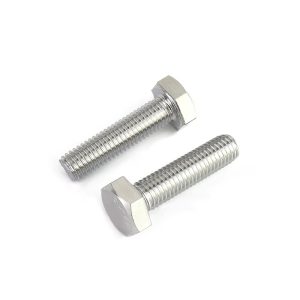
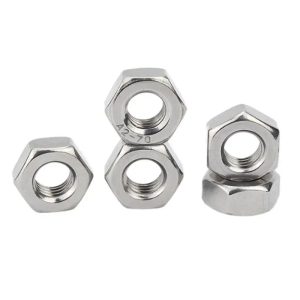
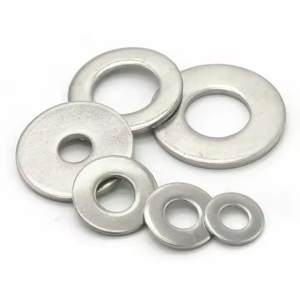
Most custom parts are standard parts with one or two parameters changed, which makes a published standard a good baseline — provided the deviations are written down. Take the base standard (DIN 933 or its ISO equivalent for a full-thread hex bolt, DIN 934 for a hex nut, DIN 125 for a plain washer), then list what you changed:
| Base standard and clause |
Standard value |
Required value |
Reason |
| DIN 934, nut height |
Standard for M12 |
+1.5 mm |
Extra thread engagement in a soft alloy housing |
| DIN 934, across flats |
Standard for M12 |
+0.3 mm |
Socket clearance in an existing housing |
| Base standard, coating |
Not specified |
Zinc flake, thickness and test agreed in writing |
Outdoor service, dissimilar metals |
Before writing a deviation, check whether a standard already covers the variant. A partially threaded hex bolt, for instance, is a DIN 931 part rather than a modified DIN 933 part — citing the right standard usually gets you a standard price instead of a custom one. Two rules keep the approach workable. Name the standard by number, not by description — “a standard hex bolt” is not a reference. And state that the standard governs wherever the deviation list is silent, so the supplier cannot redesign the part around your one changed dimension.
2.3 What a photo or sample can and cannot replace
A photo confirms shape, colour and proportions; a sample confirms fit, assembly feel and surface appearance. Neither confirms material grade, heat-treatment condition, thread tolerance band or coating thickness — the four things that most often differ between an approved sample and a delivered lot.
Sending a sample to be “matched” is a legitimate way to open a conversation with a custom fastener supplier, but it is not a specification. The workable middle ground is to send the sample and a one-page parameter sheet: the material you believe it is, the class you need, the dimensions that must be held, the finish you expect. The supplier then quotes against a claim you can verify, not an object it must guess about.
3. Material, Dimensions, Tolerance and Finish: The Four Specifications That Drive Price
Four specification families account for most of the technical gap between two quotes for the same part: material, dimensions, fastener tolerance, and surface finish. Each can be written loosely, and each costs money when it is.
3.1 Material grade and property class are not the same specification
Carbon steel fasteners are classified by property class — 4.8, 8.8, 10.9, 12.9 — which fixes nominal tensile strength, the yield ratio and minimum elongation. The class implies a material and a heat-treatment route; it is not a label you attach to any steel. Stainless follows a separate system, where A2 (304-type) and A4 (316-type) are qualified by strength grades such as 70 and 80.
- “Stainless” is not a specification. A2 and A4 differ in alloy content, chloride resistance and price. That is a design decision, not a purchasing preference.
- “High strength” is not a class. If the assembly needs 10.9, writing “8.8 or better” invites the cheapest interpretation.
- Class and coating interact. A 12.9 part that is electroplated carries a hydrogen embrittlement risk that a 4.8 part does not, and the mitigation has to be specified rather than assumed.
3.2 Dimensions, thread and head form
State the thread system explicitly: metric coarse, metric fine, or inch (UNC/UNF). Mixing them is a classic error when a drawing is adapted from an imperial assembly.
Then separate the cheap dimensional decisions from the expensive ones:
- Keeping a standard head form and changing only length is usually tooling-free.
- Changing across-flats or head height normally needs a new die or a machining step.
- Moving from cut to rolled thread, or adding a shoulder, changes the process route and the price.
This is where non-standard fasteners earn the name: usually one or two parameters, not all of them. For custom bolts and nuts, the practical rule is to change as few parameters as possible, and to state which ones changed while the rest follows the base standard.
3.3 Tolerances: mark what is functional
Fastener dimensions are governed by product tolerance grades — typically A, B and C, tight to loose — plus the thread tolerance band. Those grades describe what the process holds by default. Your functional requirement is a separate question: which dimensions affect fit, torque, fatigue life or sealing.
Most custom parts need two to four dimensions held tightly and the rest at the standard grade. Marking the whole drawing ±0.05 mm does not improve the part; it raises price, adds inspection cost, and invites either a refusal to quote or a quiet non-compliance.
3.4 Surface finish: specify the requirement, not the process name
“Zinc plated” and “galvanized” get used interchangeably for at least three different systems: electroplated zinc in several thicknesses, hot-dip galvanizing, and zinc-flake coatings. They differ in coating thickness, behaviour on threaded parts, corrosion performance and cost.
Write the requirement in three parts: the coating system; the coating thickness or weight with a measurement method; the corrosion test, standard and duration. Then add the constraint that catches buyers out: high-strength parts and electroplating. At the upper property classes, absorbed hydrogen from pickling and plating can cause delayed brittle failure. The usual mitigation is a de-embrittlement bake within a defined window after plating, at a defined temperature and duration. If your part is high-strength and electroplated, ask for those parameters in writing. A supplier that cannot describe them is not automatically incapable — but you cannot assume the step happened, and the requirement belongs on the drawing, not in an email.
| Vague on the RFQ |
Quotable version |
What it changes |
| “M8 stainless hex bolt, 30 mm” |
M8×1.25, A2-70, hex head per base standard, 30 mm, thread 6g, plain finish, marked A2-70 |
Material, class, band and finish become priceable |
| “8.8 grade” |
Property class 8.8, carbon steel, coating system and thickness stated |
Strength route fixed; coating still open |
| “Tolerance: precise” |
Two critical dimensions at ±0.1 mm, remainder at product grade B |
Inspection scope and price defined |
| “Zinc plated” |
Electroplated zinc, thickness and salt-spray duration stated, test standard named |
Coating cost and acceptance test defined |
4. Quantity, Packaging and Acceptance Terms
These three are usually treated as administrative detail. In custom fasteners they move the unit price and decide who pays for a rejected lot.
4.1 Order quantity, annual volume and MOQ
Quote the first order and the annual volume together. A supplier pricing a one-off must assume the worst case on material buying, set-up and coating batch size; the same part against a twelve-month forecast usually comes back lower because those costs are spread.
Tooling deserves its own line. Ask whether the die is charged separately or amortised, who owns it, and what happens to it if the programme ends. A low unit price with an unstated tooling charge is not a lower price.
4.2 Packaging and marking
Specify three levels separately: unit (bulk, bagged, individually packed), inner box, and export carton or pallet. Add label content — description, size, property class, batch code, quantity, production date — and the rust-prevention method for plated parts stored long-term. A few cents per part in packaging is easy to miss in a quote comparison and impossible to ignore at goods-in.
4.3 Acceptance criteria and inspection level
Write acceptance as a clause: sampling standard and AQL values, the dimensions to be reported, the appearance standard, the certificate type, who initiates and pays for third-party testing, and what happens to a nonconforming lot.
Acceptance (example wording). Sampling per ISO 2859-1, AQL [value] for major and [value] for minor defects. Dimensional report for [n] pieces per lot against the approved drawing. Material certificate to EN 10204 3.1. Coating thickness measured on [n] parts per lot. Nonconforming lots sorted or replaced at the supplier’s cost, with the sorting record submitted.
Fill the bracketed values from your own quality plan, and check the current editions of the referenced standards before the clause enters a contract. An acceptance clause citing obsolete standards is an argument waiting to happen.
5. Sample Approval and Document Review
5.1 What the sample must prove
Four questions: are the critical dimensions inside tolerance on every piece measured; does the part assemble and torque as intended; does the coating measure as specified; are marking and packaging as agreed? A fifth question — will the next batch match — cannot be answered by a sample at all, only by process data.
5.2 Documents to lock before mass production
- The approved drawing, with revision number and the buyer’s sign-off recorded against it.
- A first-article inspection report listing every drawing dimension, measured, with the instrument used.
- Material and heat-treatment records traceable to the certificate.
- Process capability data where a characteristic is safety- or fit-critical — or an explicit note that none is available.
- A change-notification clause: material substitution, process change, die repair or re-opening triggers re-approval or written confirmation.
5.3 What a sample approval record should contain
Drawing number and revision; sample date and quantity; measured dimensions against limits; assembly or torque result; coating thickness; marking check; decision (approved, approved with conditions, or rejected); validity and the conditions that void it. That record is what protects both sides two years later, when nobody remembers the email thread.
6. How to Verify a Custom Metal Fasteners Manufacturer Before You Commit
Capability questions (“can you make this?”) produce reassurance. Process questions produce evidence. The difference matters most when the part is new to both parties.
6.1 Ask about process, not capacity slogans
- Is the head cold-formed or machined, and does that change with size?
- Is the thread rolled or cut, and what does that do to fatigue performance and cost?
- Are heat treatment and coating in-house or subcontracted? If subcontracted, to whom, and who is accountable?
- Who builds the die, and what is its expected life in strokes?
- What is the comfortable size range the process runs — not the catalogue limit?
- When did you last run a part like this, and what did the first-article report show?
A custom metal fasteners manufacturer answering at this level has a process, not just a catalogue. One that answers in adjectives is telling you something else.
6.2 Evidence worth requesting
- Certification scope, not a certificate image: which processes and sites does it cover?
- Inspection reports for comparable parts, with the standard and acceptance values visible.
- Batch data: three consecutive lots of critical-dimension measurements, where fit matters.
- A plant walk-through — in person, or video showing heading, threading, heat-treatment and coating areas rather than the reception desk.
- Customer industry and volume range, where confidentiality allows. Sector experience predicts familiarity with your acceptance expectations.
6.3 Trading company or factory: what actually changes
An integrated manufacturer usually gives a shorter chain between a process question and a process answer, and clearer traceability when something goes wrong. A trading company can offer wider range, smaller minimums through consolidation, and faster response on mixed orders — but process accountability sits one step further away and must be written into the contract rather than assumed.
The useful test is not “are you a factory?” but “who signs for the dimensional deviation, and can you show me the record?” Ask that, and organisational form stops being a proxy for capability.
| Question |
Weak answer |
Strong answer |
| How is the thread produced? |
“High precision, international standard” |
“Rolled at this size; cut above M30 because of die load” |
| Who performs the coating? |
“We have a coating line” |
Names the line, process, thickness range, test method |
| Can you hold this tolerance? |
“Yes, no problem” |
States capability and inspection method, or declines |
| Tooling ownership |
“Included” |
Cost, amortisation, ownership, end-of-programme handling |
| Batch consistency |
“Stable quality” |
Three lots of measurements for the critical dimension |
7. Turning It Into a Comparable Quote
7.1 A one-page RFQ
Send every candidate the same document, with the same attachments, named the same way. Comparability is created by the buyer, not the supplier.
Subject: RFQ — [part description], drawing [number] rev [x], [qty] pcs + [annual volume]/year
We are sourcing a custom fastener and would like a quotation against the attached drawing (rev [x]) and parameter sheet. Please quote unit price at [qty] and at [annual volume]/year; tooling cost and ownership; sample and production lead time from drawing approval; coating system with thickness and test method; packing per the attached specification; and your stated assumptions. Please confirm the deviations you cannot meet rather than quoting around them. Delivery to [place], [Incoterms 2020 term]. Quotation valid [x] days. Technical contact: [name].
The request to flag unmet deviations is the line that saves the most time: it surfaces at quotation what would otherwise appear at the sample.
7.2 Normalise before comparing
Put every quote on the same basis before looking at the unit price:
- Tooling — separate or absorbed? Refundable if the programme ends?
- Coating — same system, thickness and test? A cheap quote on a thinner coating is not cheaper.
- Packing — same three levels, same labelling?
- Inspection and certificates — included, or billed per lot?
- Freight and insurance — to the named place, or ex-works?
- Payment terms and currency basis.
- Lead-time start point — order date, deposit date, or drawing approval. These can differ by weeks.
- Validity — a quote with no validity date is a placeholder.
7.3 Quote red flags
No response to the tolerance or property-class questions. A lead time materially shorter than the sampling process described elsewhere in the same quote. Refusal to provide measurement data. No assumptions, no validity date, no named technical contact. An unusually low unit price paired with a separate, non-refundable tooling charge.
8. Pre-Order Checklist
Run this before the purchase order, not after. Every row is cheap now and expensive later.
| # |
Confirm |
What “complete” looks like |
Cost of leaving it blank |
| 1 |
Drawing revision |
Numbered, signed off, referenced in the PO |
Production runs to an older version |
| 2 |
Material and class |
Grade and property class both stated |
Supplier picks the cheapest passing option |
| 3 |
Critical characteristics |
2–4 marked with tolerances |
Inspection scope undefined |
| 4 |
Coating |
System, thickness, test method, duration |
Lot fails with no contractual basis |
| 5 |
Volumes |
First order and annual volume stated |
Price quoted on worst-case assumptions |
| 6 |
MOQ and tooling |
MOQ, tooling cost, amortisation, ownership |
Hidden cost appears after approval |
| 7 |
Packing and labelling |
Three levels plus label content |
Goods-in rejection or rework |
| 8 |
Acceptance and AQL |
Clause with sampling standard and values |
Dispute over who pays for sorting |
| 9 |
Sample approval |
Measured, signed, dated |
No baseline for later comparison |
| 10 |
Document list |
Certificate type, FAI, test reports |
Cannot verify the batch received |
| 11 |
Change notification |
Written clause and contact |
Silent substitution goes unnoticed |
| 12 |
Lead-time basis |
Start point named in the PO |
Delivery dispute at the first delay |
| 13 |
Trade terms |
Incoterms 2020 term, payment schedule |
Cost and risk allocation unclear |
| 14 |
Traceability |
Batch code on label, linked to records |
A complaint cannot be traced |
9. FAQ
Do I need a full drawing to get a custom fastener quote?
No, but you need a minimum set: base standard, the parameters you are changing, material and property class, quantity, finish. A standard plus a deviation list (Section 2.2) is quotable. A photograph alone is not.
What MOQ should I expect?
There is no universal number, and a supplier quoting one without asking about your part is guessing. MOQ is set by the die, the mill’s minimum coil quantity, and the coating batch size. Ask which of the three drives their figure — the answer tells you whether the number is real.
Can tolerances be tighter than the standard?
Often, but the supplier must state the achievable range and the inspection method in writing, and the price reflects the added operation and inspection. A verbal “no problem” is not an acceptance criterion.
Are material and inspection certificates available?
This should be settled at quotation. Ask for the certificate type (EN 10204 3.1 is the usual request), which tests are included, and who pays for third-party testing.
How long does sampling take?
It depends on material availability, whether a new die is needed, and whether coating is subcontracted. Ask for the lead time broken into those three steps rather than a single figure; a supplier that can break it down usually knows its own bottlenecks.
10. What a Complete RFQ Actually Buys You
Three things, and none of them is a discount. A complete package buys comparability — quotes that differ for reasons you can see. It buys a first-pass sample — a part that matches a drawing both sides have read the same way. And it buys traceability — records that still answer questions after the person who placed the order has moved on.
So the next step is not another email. Fill in the checklist, attach the drawing with its revision number, and state which parameters you are changing and which you are not. Send that package to every candidate — including any custom metal fasteners manufacturer you are already inclined to use — and compare their answers rather than their adjectives.












