Sleeve anchors are commonly used to secure fixtures and components to suitable concrete or masonry substrates. However, not all sleeve anchors have the same fastening configuration. Some are supplied with a hex bolt, while others use a hex nut as the external fastening feature.
Although both configurations use an expansion sleeve, their component arrangements, tightening points, and fixture connection methods can differ. Understanding these differences helps construction material buyers, anchor distributors, and installers identify a product that matches the intended application.
This guide explains the basic structure of sleeve anchors, compares hex bolt and hex nut configurations, discusses installation and selection considerations, and outlines the product information buyers should confirm before placing an order.
1. What Is a Sleeve Anchor?
A sleeve anchor is an expansion-type mechanical anchors designed to secure objects to suitable base materials, such as concrete and certain types of masonry. It generally consists of an expansion sleeve and a fastening assembly that produces outward expansion during installation.
The exact construction can vary according to the product design and configuration.
1.1 Basic Structure of a Sleeve Anchor
A typical sleeve anchor may include the following components:
- Expansion sleeve: A metal sleeve surrounding part of the anchor body. It expands against the wall of the drilled hole during installation.
- Bolt or threaded body: The central fastening component that forms part of the anchor assembly.
- Expansion cone or tapered section: A component that interacts with the sleeve to produce outward expansion in designs that use this mechanism.
- Hex bolt head or hex nut: The external fastening feature used during tightening, depending on the configuration.
- Washer: Some designs include a washer to provide a bearing surface at the fixture connection.
Not every product contains these components in exactly the same arrangement. Buyers should check the product drawing and technical description rather than assuming that all sleeve anchors share an identical structure.
1.2 How Does a Sleeve Anchor Work?
A sleeve anchor generally secures a fixture through mechanical expansion against the surrounding base material.
In a typical expansion design, movement between the fastening component and the expansion section causes the sleeve to press outward against the wall of the drilled hole. This mechanical engagement helps hold the anchor in the substrate.
The exact expansion mechanism and tightening sequence depend on the product’s internal construction. Installation performance also depends on factors such as the base material, hole dimensions, embedment, installation method, and product specifications.
For this reason, the manufacturer’s installation instructions should always be followed. A sleeve anchor should not be assumed suitable for every concrete or masonry condition simply because it uses an expansion sleeve.
2. Hex Bolt vs. Hex Nut Sleeve Anchor Configurations
The main difference between a sleeve anchor with a hex bolt and one with a hex nut is the external fastening arrangement.
Both are sleeve anchor configurations, but their component arrangements and tightening points may differ.
2.1 Sleeve Anchor with a Hex Bolt
A sleeve anchor with a hex bolt uses a hexagonal bolt head as the external tightening feature.
The bolt forms part of the anchor assembly. Depending on the product design, tightening the bolt may operate the expansion mechanism and secure the anchor in the prepared hole.
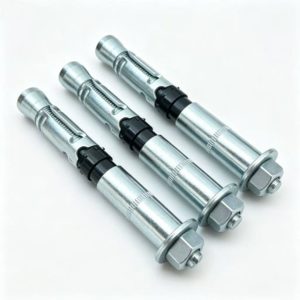
This arrangement provides a bolt-head fastening point at the fixture surface. Buyers should confirm the bolt length, head dimensions, thread details, washer arrangement, and included components before ordering.
The exact relationship between the bolt and expansion sleeve should be checked against the product drawing and installation instructions.
2.2 Sleeve Anchor with a Hex Nut
A sleeve anchor with a hex nut uses a hex nut as its external fastening feature. The complete assembly may include a bolt body, expansion sleeve, washer, and hex nut, depending on the product design.
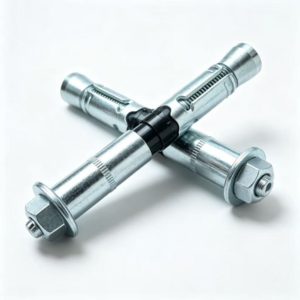
The nut provides the external point for tool engagement. Its relationship with the bolt body and expansion components determines how the anchor is tightened and how the fixture is secured.
Buyers should not assume that every hex nut sleeve anchor uses a separate threaded stud or follows the same internal arrangement. The product drawing should identify the actual components and their positions.
Before ordering, confirm whether the nut is a standard hex nut or a hex flange nut, whether a washer is included, and whether the supplied assembly matches the required connection arrangement.
2.3 Key Differences Between the Two Configurations
The following table summarizes common differences buyers should consider.
| Comparison Point | Sleeve Anchor with Hex Bolt | Sleeve Anchor with Hex Nut |
| External fastening feature | Hex bolt head | Hex nut |
| Main component arrangement | Bolt-based anchor assembly | Anchor assembly with a hex nut |
| Tightening point | Bolt head | Hex nut |
| Tool requirement | Suitable wrench or socket for the bolt head | Suitable wrench or socket for the nut |
| Fixture connection | Depends on the bolt and fixture arrangement | Depends on the nut, bolt body, and fixture arrangement |
| Components to confirm | Bolt, sleeve, expansion components, and any included washer | Nut, bolt body, sleeve, expansion components, and any included washer |
| Selection considerations | Bolt-head access, connection layout, and required bolt dimensions | Nut access, component arrangement, and required fastening dimensions |
The table describes common configuration differences rather than universal construction rules. Actual component arrangements and installation procedures can vary between manufacturers and product models.
Neither configuration should automatically be considered stronger, safer, or more suitable for a wider range of applications. Such comparisons require product-specific technical data and, where relevant, test information.
3. Installation and Connection Differences
Although both configurations use a sleeve-based expansion arrangement, their tightening points and fixture connection details may differ.
Understanding these differences before installation helps avoid ordering a product that does not match the intended assembly.
3.1 Fastening Method and Connection Arrangement
For a sleeve anchor with a hex bolt, the installer applies tightening force at the bolt head. The bolt head provides the external point for tool engagement and may also form part of the fixture’s fastening arrangement.
For a sleeve anchor with a hex nut, the installer applies tightening force at the nut. The nut and the other components form the external fastening arrangement, while the bolt body and expansion components perform their respective roles within the assembly.
The choice depends on the required connection layout. Buyers may need to consider whether the assembly requires a bolt head at the exposed surface or a nut-based fastening arrangement.
The available clearance around the fastening point is also important. The installer must have enough room to position and operate the required tool.
3.2 General Installation Steps and Required Tools
The precise installation procedure must follow the manufacturer’s instructions for the selected anchor. A typical installation process may include the following stages:
- Confirm the anchor and substrate requirements. Check that the selected anchor is intended for the actual base material and installation conditions.
- Prepare the installation location. Identify the fixing position and check the fixture layout, edge distances, and spacing requirements specified for the product.
- Drill the hole. Use the specified drilling method and hole dimensions. The required hole diameter and depth depend on the anchor size and product instructions.
- Clean the hole when required. Remove drilling debris according to the manufacturer’s installation procedure.
- Insert the anchor. Position the sleeve anchor in the prepared hole and follow the specified installation orientation.
- Tighten the fastening component. Use the appropriate tool and follow the tightening sequence specified for the particular hex bolt or hex nut configuration.
- Check the completed connection. Inspect the installation and confirm that the fixture is secured as required.
Common tools may include a drill, a suitable drill bit, a hole-cleaning tool where required, and a wrench or socket that matches the fastening component.
Do not apply a universal torque value or drilling dimension to all sleeve anchors. These details must be obtained from the relevant product documentation.
3.3 Installation Conditions to Consider
Before installation, check the following points:
- Is there sufficient space to access the bolt head or nut with the required tool?
- Does the fixture require a particular bolt-head or nut arrangement?
- Are the anchor dimensions compatible with the fixture thickness and connection layout?
- Does the product have documented suitability for the actual base material?
- Are the required hole dimensions, embedment, and tightening instructions available?
The final installation method should be based on the complete assembly requirements and the manufacturer’s product information, not solely on the external shape of the fastening component.
4. How to Choose Between Hex Bolt and Hex Nut Sleeve Anchors
Selecting the appropriate configuration requires more than comparing the bolt head and nut. Buyers should consider the connection design, base material, installation conditions, and dimensional requirements together.
4.1 Start with the Required Connection
First, determine how the anchor will connect the fixture to the base material.
A hex bolt configuration may be considered when the assembly calls for a bolt-head fastening arrangement. A hex nut configuration may be considered when the design requires a nut-based fastening arrangement.
Before making a decision, confirm:
- The type of fixture being secured.
- The required fastening arrangement.
- The available space around the fixing point.
- Whether a separate nut or washer is needed.
- The required bolt or thread dimensions.
- Whether the anchor is supplied as a complete assembly or as separate components.
A product drawing can help buyers check whether the supplied configuration matches the intended connection.
4.2 Consider the Base Material and Installation Conditions
The base material is an important factor in sleeve anchor selection.
Common considerations include:
- Concrete condition: Confirm whether the concrete is cracked or uncracked when this distinction is relevant to the product approval or technical specification.
- Masonry type: Do not assume that an anchor suitable for one masonry material is suitable for every brick, block, or masonry construction.
- Base material condition: Check for damaged, deteriorated, or otherwise unsuitable material around the proposed fixing location.
- Installation position: Consider whether the anchor will be installed in a floor, wall, ceiling, or another structural position.
- Edge distance and spacing: Check the manufacturer’s requirements for the distance from edges and between adjacent anchors.
- Embedment and fixture thickness: Confirm that the selected dimensions are appropriate for the installation arrangement.
The suitability of a sleeve anchor for a particular substrate must be supported by the product’s technical documentation. Where the application is structural or safety-critical, the selection should also follow the applicable design requirements and professional guidance.
4.3 Check Anchor Dimensions and Thread Requirements
The dimensions of the anchor must match the installation design.
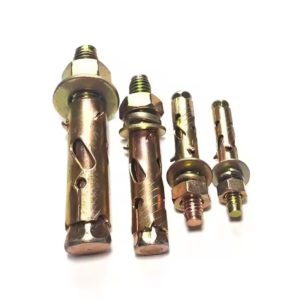
Important dimensions may include:
- Anchor diameter: The nominal diameter of the anchor.
- Overall length: The total length of the assembled product.
- Sleeve length: The length of the expansion sleeve.
- Thread diameter and pitch: The dimensions of the threaded section.
- Threaded length: The available length for the fastening connection.
- Fixture thickness range: The thickness of the component being secured, where specified.
- Drill-hole diameter and depth: The required hole dimensions stated in the installation instructions.
For a hex bolt configuration, buyers should also check the bolt-head dimensions and usable bolt length.
For a hex nut configuration, buyers should check the nut dimensions, thread compatibility, and the arrangement of the nut and bolt body.
Do not select an anchor based on nominal diameter alone. The complete dimensional arrangement must be compatible with the fixture, substrate, and installation instructions.
5. Materials, Finishes and Specifications
Material and surface finish affect product identification, corrosion considerations, and compatibility with the intended environment. Buyers should confirm these details as part of the sleeve anchor specifications.
5.1 Common Materials and Surface Finishes
Sleeve anchors may be manufactured using different metal materials and surface treatments, depending on the product design and intended use.
Common options may include:
- Carbon steel: Used in many general-purpose mechanical fastening products.
- Stainless steel: May be selected when corrosion resistance is an important requirement. The specific stainless steel grade should be confirmed.
- Zinc plating: A surface treatment commonly specified for certain steel fasteners.
- Other protective finishes: May be available depending on the product and manufacturing specification.
The suitability of a material or finish depends on the service environment. Buyers should consider moisture, exposure to chemicals, outdoor conditions, and other relevant environmental factors.
A surface finish should not be treated as proof that an anchor is suitable for every corrosive environment. Where corrosion resistance is important, confirm the material grade, coating specification, and any applicable performance documentation.
5.2 Important Sleeve Anchor Specifications
When comparing products, buyers should review the full specification rather than relying on a product name or photograph.
| Specification | What Buyers Should Confirm |
| Product configuration | Hex bolt or hex nut |
| Nominal diameter | Required anchor diameter |
| Overall length | Total anchor length |
| Sleeve dimensions | Sleeve diameter and length, where specified |
| Thread specification | Thread diameter, pitch, and applicable thread system |
| Fastening component | Bolt-head or nut dimensions and details |
| Mea | Carbon steel, stainless steel, or another specified material |
| Surface finish | Zinc plating or another confirmed finish |
| Installation requirements | Hole diameter, hole depth, embedment, and tightening instructions |
| Application suitability | Documented base materials and installation conditions |
| Packaging | Quantity, labeling, and packaging requirements |
Some specifications may be available only in a product drawing or technical data sheet. If a specification is not stated in the supplier’s product information, buyers should request clarification before confirming the order.
5.3 Confirm Compatibility Between Components
A sleeve anchor is a complete fastening assembly. Its components should be compatible with one another and with the intended installation.
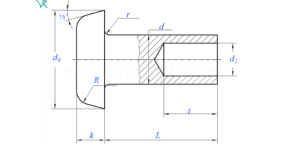
For a hex bolt configuration, check that the bolt, sleeve, and expansion components belong to the specified product design. Confirm the bolt dimensions and any required washer arrangement.
For a hex nut configuration, check the nut, bolt body, sleeve, and expansion components. The thread system and dimensions must match the product specification.
If replacement nuts, bolts, or washers are required, do not assume that a visually similar component is interchangeable. Confirm the thread specifications, dimensions, material requirements, and compatibility with the original anchor design.
6. What to Confirm When Purchasing Sleeve Anchors
For construction material buyers and anchor distributors, a clear product specification helps reduce misunderstandings during quotation, sampling, production, and delivery.
Before placing an order, confirm the following information with the supplier.
6.1 Product Type and Configuration
Clearly identify which configuration is required:
- Sleeve anchor with hex bolt.
- Sleeve anchor with hex nut.
Do not rely only on a general description such as “sleeve anchor.” Include the required configuration in the inquiry and, where possible, provide a reference drawing or product photograph.
Also confirm:
- Whether the product is supplied as a complete assembly.
- Which components are included.
- Whether the nut is a standard hex nut or a hex flange nut.
- Whether washers are included.
- The required product dimensions.
- Any differences between the requested design and the supplier’s standard product.
This information helps ensure that the quoted product matches the intended fastening arrangement.
6.2 Technical Specifications and Application Details
Provide the supplier with the technical and application information needed to identify a suitable product.
Relevant details include:
- Required diameter and overall length.
- Thread diameter and pitch.
- Required material and surface finish.
- Base material and its condition.
- Fixture thickness and connection arrangement.
- Installation position and relevant site conditions.
- Any applicable design requirements or product approvals.
- Required installation instructions or technical documents.
If the anchor is intended for a structural or safety-critical application, provide the relevant design requirements and request supporting technical documentation. Do not rely on a general product description as proof of load capacity or application suitability.
6.3 Samples, Quality Requirements and Packaging
Before confirming a bulk order, buyers may request samples or product drawings to check whether the configuration and dimensions match the purchasing requirements.
The following items can be included in the order confirmation:
- Approved product drawings and dimensions.
- Material and surface-finish requirements.
- Component configuration and quantity.
- Agreed inspection requirements.
- Sample approval, where applicable.
- Packaging method and labeling details.
- Quantity per package or carton.
- Batch identification and shipping marks, where required.
For repeat orders, retain the approved specifications and sample records as references. This helps both parties identify the agreed product configuration and reduce the risk of differences between orders.
A clear purchase specification should describe the product in measurable terms rather than relying only on a product name or photograph.
7. Conclusion
Sleeve anchors with hex bolts and sleeve anchors with hex nuts use different external fastening arrangements, even though both may rely on a sleeve expansion mechanism.
The hex bolt configuration uses a bolt head as the tightening feature, while the hex nut configuration uses a nut as the external fastening feature. Their component arrangements, connection details, and tool access requirements should be considered before selection.
For buyers and installers, the most important factors are the required fixture connection, base material, installation conditions, dimensions, material, surface finish, and compatibility of the supplied components.
Before ordering, confirm the exact configuration and request the relevant product drawing and technical information. This provides a clearer basis for comparing products and checking whether the supplied sleeve anchor matches the intended application.
8. Frequently Asked Questions
8.1 What Is the Difference Between a Sleeve Anchor with a Hex Bolt and One with a Hex Nut?
The main difference is the external fastening feature. A hex bolt configuration uses a bolt head as the tightening point, while a hex nut configuration uses a nut. The exact component arrangement depends on the product design.
8.2 Can Both Configurations Be Used for the Same Applications?
Not necessarily. Their suitability depends on the fixture connection, base material, installation conditions, and product specifications. Buyers should check the manufacturer’s documentation before treating the two configurations as alternatives for the same application.
8.3 Can a Hex Bolt Sleeve Anchor Be Replaced with a Hex Nut Sleeve Anchor?
Replacement should not be assumed to be possible. The overall dimensions, component arrangement, installation requirements, and fixture connection may differ. Confirm compatibility with the manufacturer before replacing one configuration with another.
8.4 What Base Materials Are Suitable for Sleeve Anchors?
Sleeve anchors are commonly associated with concrete and certain masonry applications, but suitability depends on the specific product design and its technical documentation. Check whether the anchor is documented for the actual substrate and its condition.
8.5 What Specifications Should Be Confirmed Before Ordering?
Buyers should confirm the product configuration, diameter, overall length, thread dimensions, material, surface finish, included components, installation requirements, and intended application. A product drawing or technical data sheet can help clarify these details.
8.6 Do Hex Bolt and Hex Nut Sleeve Anchors Require Different Installation Tools?
They may require different tool engagement points. A hex bolt configuration is tightened at the bolt head, while a hex nut configuration is tightened at the nut. The appropriate wrench or socket size and the complete installation procedure should be confirmed from the product specifications and manufacturer’s instructions.












